How to Reset Your Sleep Schedule: Fixed Early Hours Moved Clocks 1.4 Hours
Late nights pushed your body clock later and the alarm now feels brutal. What the trials show about moving it back: wake time, morning light, dim evenings.
Researchers at Brown University advertised for "struggling night owls" aged 18 to 30. The 25 who took part usually went to bed around 1:45 a.m. and got up around 9:30. For six days they kept a fixed, earlier schedule: in bed around midnight, up around 7:25. In that 2011 trial, their body clocks moved about 1.4 hours earlier, and 18 of the 25 moved an hour or more.
That is the core of resetting a sleep schedule after the holidays, a vacation or a run of late nights. You do not wait to feel sleepy earlier. You get up earlier, on a fixed time, and let light do the rest.
The numbers
30.5% of adults slept less than 7 hours on average in a 24-hour period in 2024, according to the CDC's National Health Interview Survey of US adults.
15.4% of US adults had trouble falling asleep most days or every day in 2024, in the same CDC report.
About 1 hour a day. The CDC Yellow Book (2026 edition) puts the average rate of adjustment at 1 hour a day after eastward travel, where the clock has to move earlier, and 1.5 hours a day going west, where it moves later.
1.4 hours in 6 days. That was the average shift in the 2011 Brown University trial of 25 young adults who kept a fixed earlier schedule at home.
Why earlier is the hard direction
Your body clock sets when you feel sleepy and when you wake easily. Light keeps it in step with the day. The CDC Yellow Book says bright light in the morning shifts the clock earlier, making it easier to fall asleep and wake up earlier, while light in the evening generally shifts it later.
In the words of the Rush University sleep researchers who have run a series of these trials, shifting the clock earlier "is more difficult and typically takes longer" than shifting it later. (For time zones, see how to get over jet lag.)
None of the trials below tested a post-holiday reset; they set out to move young, healthy adults' clocks earlier on purpose.
Step 1: fix the wake time and move bedtime with it
In the Brown trial, participants' wake time moved about 2 hours earlier and their bedtime close to 2 hours earlier, all at once, with 7.5 hours in bed. Half sat in front of a blue light box for an hour after waking; the other half got dim light. Both groups shifted by about the same amount, with no significant difference between them: 1.5 hours with dim light, 1.4 with blue. The authors concluded that the light and dark that came with a fixed early schedule were enough on their own.
Everyone was given amber filters for computer and TV screens after sunset. And the week was not free: self-reported sleep fell from about 455 to 427 minutes a night on average, and 19 of the 25 said they slept less.
Step 2: get bright light soon after waking
Shift your sleep in dim rooms and the clock lags far behind. In a 2013 Rush University trial, 12 adults moved their sleep 1 hour earlier each day for 3 days while living in a lab where room light stayed under 60 lux. On placebo, their clocks moved only 0.7 hours, although their sleep had moved 3 hours.

Morning light changes that. In a 2015 Rush University study, 50 adults also shifted sleep 1 hour earlier a day for 3 days, and sat at a light box of about 5,000 lux right after waking. Two hours of light, given in four 30-minute blocks, moved the clock 2.4 hours (that group came from the lab's earlier study, used for comparison). A single 30-minute session moved it 1.8 hours, 75% as much. Every group in that study also took 0.5 mg of melatonin in the afternoon, so the numbers show light plus melatonin, not light alone. The study was funded by the National Institutes of Health; the melatonin was provided by a supplement maker.
So get outside, or in front of bright light, soon after waking (more in morning light and the body clock).
Step 3: keep the evening dim
The CDC's sleep advice includes going to bed and getting up at the same time every day, and turning off electronic devices at least 30 minutes before bedtime. Screens alone matter less than many people assume (see screens before bed), but dim, warm evening light fits the direction you want.
What about melatonin?
Timed right, melatonin can help move the clock earlier, but the timing is unusual. In the 2013 Rush trial, 3 mg taken in the afternoon, about 11 hours before the middle of the participants' usual sleep, moved the clock 1.3 hours against 0.7 on placebo. It also made people sleepy and slower on attention tests in the hours before bed, and the authors suggested relying on morning light and perhaps a lower dose. The NIH funded that trial; the melatonin and placebo pills were provided by a supplement maker.
For people whose sleep is late enough to be a clinical problem, the American Academy of Sleep Medicine's 2015 guideline gives strategically timed melatonin only a weak recommendation for adults, on low-quality, partly contradictory evidence. It made no recommendation for adults on prescribed sleep schedules or light therapy, citing insufficient evidence. If you are thinking of trying melatonin, talk to a doctor or pharmacist first.
What can help:
- Light therapy lamp: in the 2015 lab study, 30 minutes at a light box of about 5,000 lux after waking gave 75% of the shift that 2 hours of light gave, in healthy young adults who were also taking afternoon melatonin; no home trial has tested a holiday reset.
- Sunrise alarm clock: can make an earlier alarm feel gentler, but in the home study covered in our sunrise alarm clock article it did not measurably shift the clock.
- Amber glasses: the Brown trial used amber filters on screens, not glasses, and did not test them separately, so the evidence for this step is thin.
Where people go wrong
Going to bed 2 hours early without getting up earlier. Your clock has not moved yet, so an early bedtime on its own may leave you lying awake. In the Brown trial the earlier bedtime came with an earlier alarm, and most people who were asked said falling asleep was not a problem. Set the wake time first, and move bedtime earlier by the same amount, as the trial did. If you lie wide awake, see getting up after 20 minutes.
Sleeping in on Saturday. A late morning in a dark room pushes the clock back toward where it was, and a lie-in repays less than people hope (see weekend catch-up sleep).
Taking melatonin at bedtime and expecting a shift. In the trials above, it was taken in the afternoon.
Skipping the light. Shifting your sleep without bright morning light moved the clock only 0.7 hours in 3 days in the 2013 trial.
This plan may not suit everyone. If your sleep has run late for months rather than weeks, and an early alarm leaves you exhausted however you try, that can be delayed sleep-wake phase disorder: the AASM describes sleep timing that is late, usually by more than 2 hours, compared with conventional times. That is worth raising with a sleep clinician.
A one-week reset plan
- Pick the wake time you need on workdays and set it for every day, weekends included.
- If you are 1 to 2 hours off, you can move to the new time at once, as the Brown trial did; if you are further off, move about 1 hour a day.
- Get outdoor light, or 30 minutes at a light box, in the first hour after waking.
- Dim the house and switch off screens in the last 30 minutes before bed.
- Go to bed at the matching earlier time, about 7.5 to 8 hours before the alarm, not hours before, and expect a few short nights in the first week.
This article is general information, not medical advice. If you have ongoing trouble sleeping, daytime sleepiness that affects driving or work, or a mood disorder, talk to a doctor or sleep clinician. These statements have not been evaluated by the Food and Drug Administration. This product is not intended to diagnose, treat, cure, or prevent any disease.
Products mentioned
20 minutes of bright, UV-free light with breakfast anchors tonight's sleep.
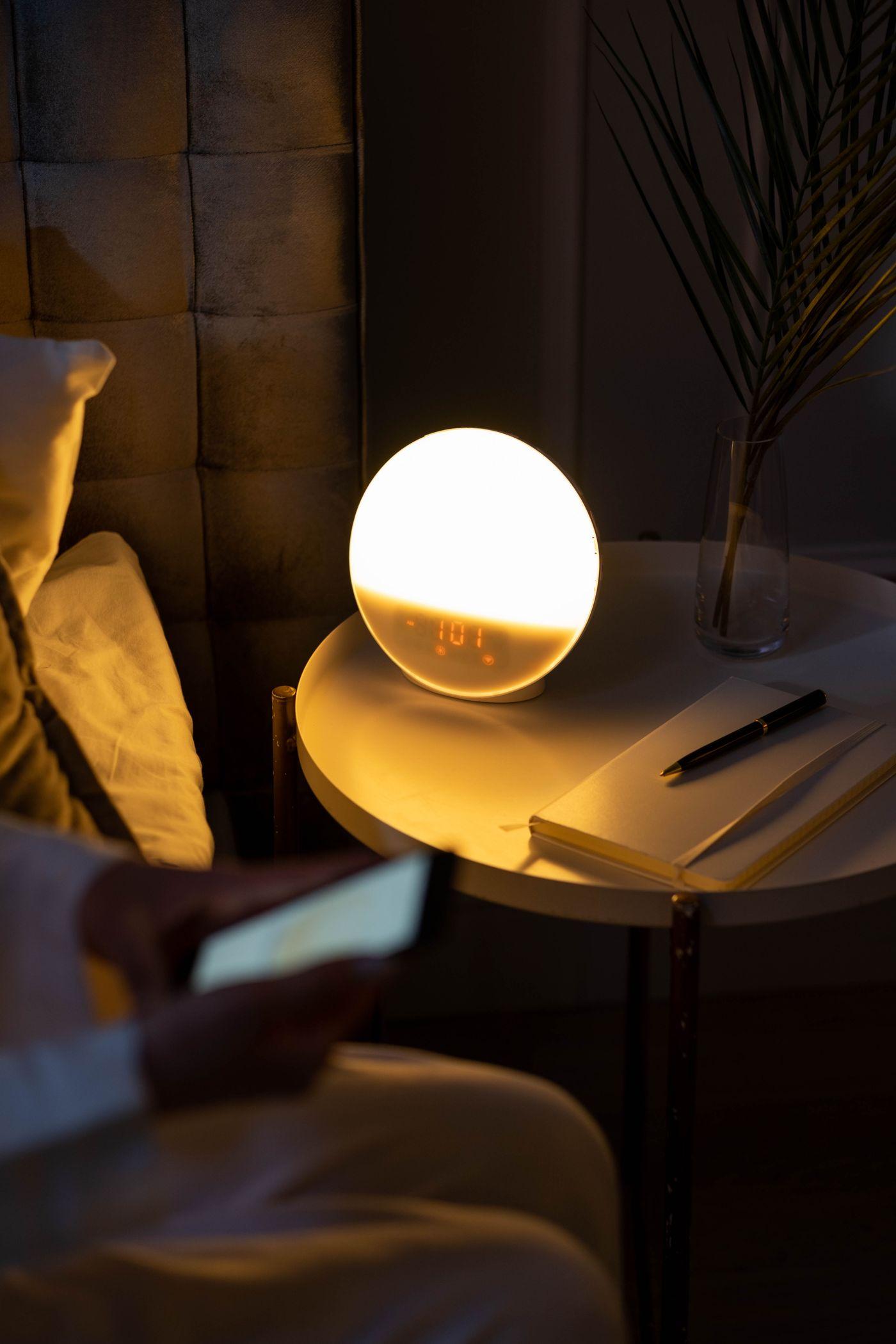
Brightens gradually over 20, 30 or 40 minutes so you wake before the sound does.
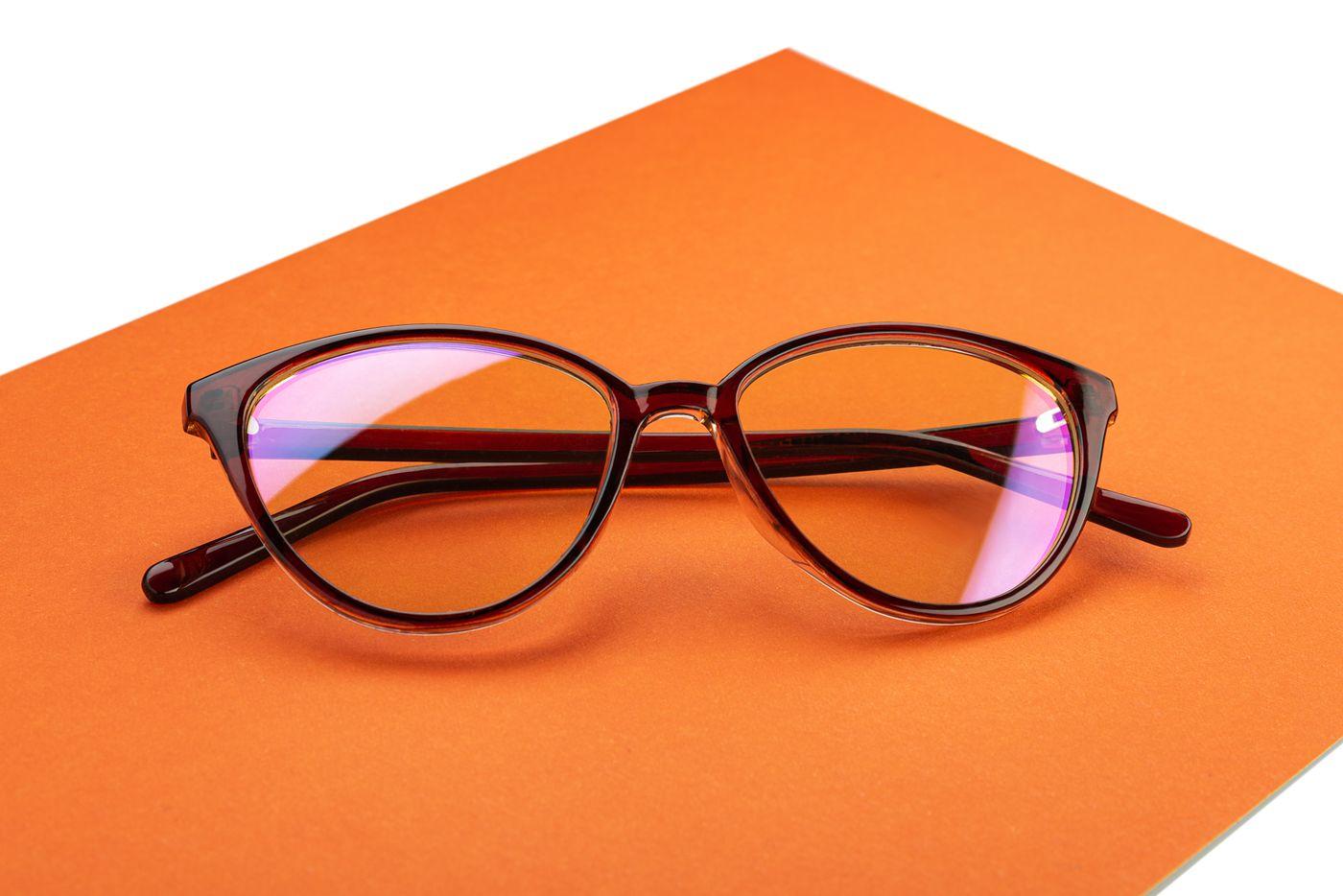
True amber lenses that cut the blue light your phone and TV pour out after dark.
Keep reading
- Morning Light Sets the Body Clock Earlier. A Week Outdoors Moved It 2 HoursMorning sunlight pulls your body clock earlier; evening light pushes it later. What the studies show, how much light you need and when to get it.7 min read
- Gifts for Someone Who Can't Sleep: Match the Gift to What Keeps Them UpBuying for someone who sleeps badly? Match the gift to what keeps them up, and see which sleep gifts have trials behind them and which have none.6 min read
- Do Light Therapy Lamps Work? Pooled Trials Say Yes for Winter DepressionDark mornings, low mood, hard to get up. What trials show about 10,000-lux lamps for winter depression and winter blues, and how to use one.6 min read
Sources
- Sharkey KM, Carskadon MA, Figueiro MG, Zhu Y, Rea MS (2011). Effects of an advanced sleep schedule and morning short wavelength light exposure on circadian phase in young adults with late sleep schedules. Sleep Medicine, 12(7):685-692 — https://pubmed.ncbi.nlm.nih.gov/21704557/
- Crowley SJ, Eastman CI (2015). Phase advancing human circadian rhythms with morning bright light, afternoon melatonin, and gradually shifted sleep: can we reduce morning bright-light duration? Sleep Medicine, 16(2):288-297 — https://pubmed.ncbi.nlm.nih.gov/25620199/
- Crowley SJ, Eastman CI (2013). Melatonin in the afternoons of a gradually advancing sleep schedule enhances the circadian rhythm phase advance. Psychopharmacology, 225(4):825-837 — https://pubmed.ncbi.nlm.nih.gov/23001190/
- Auger RR, Burgess HJ, Emens JS, Deriy LV, Thomas SM, Sharkey KM (2015). Clinical practice guideline for the treatment of intrinsic circadian rhythm sleep-wake disorders: advanced sleep-wake phase disorder (ASWPD), delayed sleep-wake phase disorder (DSWPD), non-24-hour sleep-wake rhythm disorder (N24SWD), and irregular sleep-wake rhythm disorder (ISWRD). An update for 2015. Journal of Clinical Sleep Medicine, 11(10):1199-1236 — https://pubmed.ncbi.nlm.nih.gov/26414986/
- CDC, National Center for Health Statistics (2026). Short sleep duration and sleep difficulties among adults: United States, 2024. NCHS Data Brief No. 559 — https://www.cdc.gov/nchs/products/databriefs/db559.htm
- CDC Yellow Book 2026 (2025). Jet lag disorder — https://www.cdc.gov/yellow-book/hcp/travel-air-sea/jet-lag-disorder.html
- CDC (2024). About sleep — https://www.cdc.gov/sleep/about/index.html