Awake at 3 a.m.? Get Up After 20 Minutes: The Rule From Insomnia Therapy
You wake at 3 a.m. and lie there. Insomnia therapy says get up after about 20 minutes. Here is the rule, what the trials show, and when to see a doctor.
In two experiments published in 2007, psychologists in London gave people who were trying to fall asleep one odd instruction: watch the clock. Among 30 good and 30 poor sleepers, those assigned to watch it reported more worry as they lay there and took longer to fall asleep, whichever kind of sleeper they had been. Among 38 people with diagnosed insomnia, clock-watchers worried more, took longer to drop off than on their baseline night, and overestimated how long they had lain awake.
That was at the start of the night. Anyone who has looked at 3:14 and started doing the arithmetic knows it is worse in the middle of it, and that is the problem the oldest behavioral treatment for insomnia was built for.
The numbers
Just under one in five US adults has trouble staying asleep. In the CDC's 2024 National Health Interview Survey, 18.1% of adults reported trouble staying asleep on most days or every day of the past 30.
A third of people wake at least three nights a week. In a 2008 telephone survey led from Stanford, of 8,937 adults in Texas, New York and California, 35.5% said they woke at least 3 nights a week.
A sleep cycle restarts every 80 to 100 minutes. The NHLBI counts four to six cycles a night and notes that you may wake briefly between them.
Why it is so often 3 a.m.
The night is front-loaded with deep sleep. In the NHLBI's account, slow-wave sleep comes mostly early and REM sleep mostly later. Three cycles of 80 to 100 minutes from an 11 p.m. bedtime land you between 3 and 4 a.m., in lighter sleep, at the seam between cycles where a brief wake is ordinary.
A wake like that usually ends on its own. The ones that don't are the ones where the clock-watching starts, in bed, every time, in the same place.
Richard Bootzin, the Arizona psychologist whose name is attached to the treatment, framed this as a learning problem. The bed is meant to be a cue for sleep. Spend enough hours in it awake, worrying and scrolling, and it becomes a cue for wakefulness instead. The AASM's 2021 guideline states the aim of the treatment, called stimulus control, in exactly those terms: to extinguish the association between the bed and being awake, and to fix a consistent wake-up time.
The rule
The AASM guideline lists five instructions. Go to bed only when sleepy. Get out of bed when you cannot sleep. Use the bed and bedroom for sleep and sex only, so no reading or TV in bed. Get up at the same time every morning. No daytime naps.
The guideline gives no number. The AASM's patient site does: after 20 minutes, get out of bed, do something quiet without much light, and stay off electronics. MedlinePlus says 30 minutes, then another room until you feel sleepy. Both are estimates made without looking; none of the instructions mentions a clock, and the London experiments above are the reason not to check it. If you have been awake long enough to wonder how long, that is about 20 minutes.
What the trials show
The strong evidence is for the package, cognitive behavioral therapy for insomnia, of which stimulus control is one part. A 2015 meta-analysis in the Annals of Internal Medicine pooled 20 randomized trials of face-to-face CBT-I in 1,162 adults with chronic insomnia. After treatment, people fell asleep 19 minutes faster and spent 26 minutes less awake during the night; total sleep time rose by 7.6 minutes, which was not statistically significant. The therapy barely lengthens sleep; what it does is shrink the hour awake at 3 a.m. back toward the brief wake it was meant to be.
The get-up rule on its own has thinner support. The AASM's 2021 guideline gives multicomponent CBT-I its only strong recommendation. Stimulus control alone gets a conditional "we suggest", resting on what the guideline calls low-quality evidence from 8 trials. In the accompanying review, pooled trials put time to fall asleep about 10 minutes lower and time awake in the night about 19 minutes lower than control, but both confidence intervals crossed zero and neither reached the task force's 20-minute bar for a clinically meaningful change.
The best single trial is from 2012. At a Veterans Affairs center, 179 older adults with chronic insomnia were randomized to six weeks of stimulus control alone, sleep restriction alone, both together, or a wait list. All three treatments beat the wait list on diary sleep. Stimulus control alone had the largest share of responders, 57% against 15% on the wait list, and the gains held at one year.
Doing it at 3 a.m.
You wake. Don't check the time. If you are plainly awake and it feels like 20 minutes, get up.
Leave the bedroom if you can, and keep the light low. In a Harvard lab study, 12 volunteers kept awake in room light of about 200 lux through their usual sleep hours lost more than half their melatonin in 11 of 13 trials, and an action-spectrum study in 72 people found blue light, 446 to 477 nanometers, the most potent band for suppressing it. So: the dimmest, warmest light you can read by, and no phone.
Do something dull: a paper book you have read before, or the laundry. Go back when sleepy, which is a feeling in the eyelids, not a decision that it is time. If you lie there again, get up again.
Get up at your usual time whatever the night was like, and skip the nap. Those are the fourth and fifth instructions, and the night rule needs the morning rule. Give it the length of a trial, not a night: the Veterans Affairs study ran six weeks.
What can help: the rule needs no equipment. Two things in our range fit the time out of bed or the reason you woke, and the evidence for each is thinner than for the rule itself.
- A dim red reading light. The case is mechanism only: dim light suppresses melatonin far less than room light, and blue is the most potent band, so a low red light is the least disruptive thing to read by at 3 a.m. We found no trial that has tested a red lamp during night-time awakenings.
- Foam earplugs, if noise is what wakes you. In a 2026 seven-night lab study of 25 healthy adults, earplugs blocked nearly all the sleep disruption from recorded environmental noise, though they began to fail at the loudest level tested, 65 decibels. Small, young and lab-based; in the same study, pink noise did worse than earplugs.
Where people go wrong
The first mistake is the clock. Turn it to the wall and leave the phone in another room; a phone is a clock with a feed attached.
The second is getting up into the kitchen lights and the news; the time out of bed is meant to be dim and dull. The third is compensating: sleeping in after a bad night, or napping at 3 p.m., breaks the two instructions that anchor the other three. The fourth is quitting after three nights; even in the trials, the technique was taught over weeks.
Some people should not do it unaided. The AASM says stimulus control may need adapting for people at high risk of falls, with mobility problems, or taking sedative-hypnotic sleeping pills.
And some 3 a.m. waking is not insomnia at all. If a partner reports loud snoring, gasping or breathing that stops and starts, or if you are sleepy and tired in the daytime, the NHLBI lists those as signs of sleep apnea. Trouble sleeping three or more nights a week for more than three months is chronic insomnia, a medical condition in its own right, and the first-line treatment is CBT-I with a clinician, in person, by phone or online.
Tonight, and for six weeks
Wake, don't look, estimate. Up after about 20 minutes. Dim light, dull task, another room if you have one. Back only when the eyes are heavy. Same alarm as always. No nap. Repeat until the bed means sleep again, which takes weeks, and see someone if it doesn't.
This article is general information, not medical advice. If you lie awake most nights, snore loudly or wake gasping, or feel unrefreshed every day, see a clinician.
Products mentioned
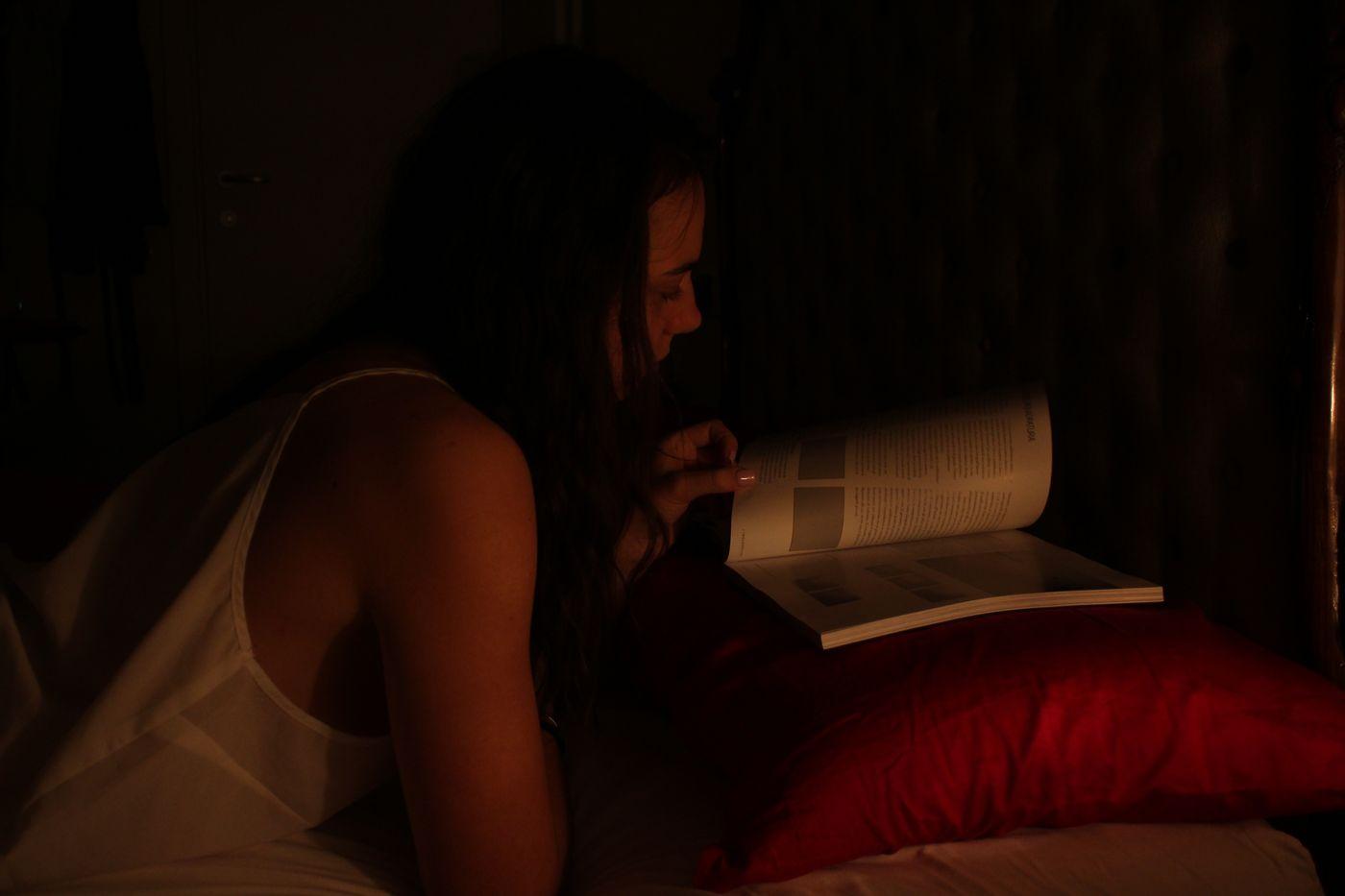
Read in bed without the blue light. Red LED, rechargeable, 3 brightness levels.
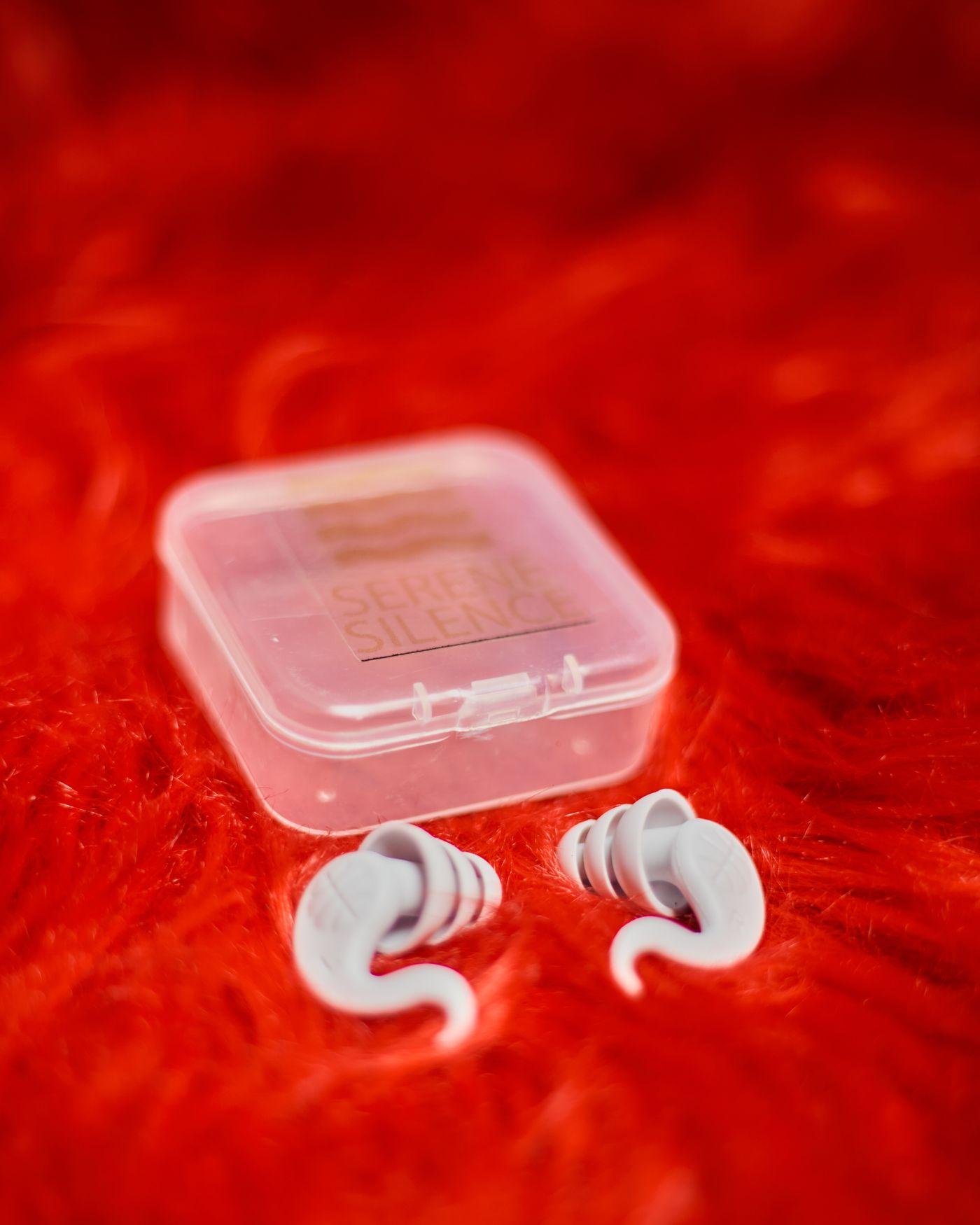
30 pairs, 33 dB rating. For snoring partners, hotels and thin walls.
Keep reading
- What to Put in a Sleep Kit: 5 Items and What the Evidence SaysPacking a sleep kit for home, travel or a hospital stay? Five items worth including, what the research found for each, and the mistakes to avoid.6 min read
- Nap for 10 to 20 Minutes: Why 30 Is Where the Grogginess StartsWake from naps groggy? In a 24-person trial, 10 minutes helped at once, 20 helped after a delay and 30 brought grogginess first. How long and when to nap.6 min read
- In Pooled Hospital Trials, an Eye Mask Worked and Earplugs Alone Did NotPooled hospital trials: a mask alone helped self-rated sleep, earplugs alone did not, the pair did most. At home, a mask sharpened next-day learning.7 min read
Sources
- Tang NK, Schmidt DA, Harvey AG (2007). Sleeping with the enemy: clock monitoring in the maintenance of insomnia. Journal of Behavior Therapy and Experimental Psychiatry, 38(1):40–55 — https://pubmed.ncbi.nlm.nih.gov/16793001/
- CDC/National Center for Health Statistics (April 2026). Short Sleep Duration and Sleep Difficulties Among Adults: United States, 2024. NCHS Data Brief No. 559 — https://www.cdc.gov/nchs/products/databriefs/db559.htm
- Ohayon MM (2008). Nocturnal awakenings and comorbid disorders in the American general population. Journal of Psychiatric Research, 43(1):48–54 — https://pubmed.ncbi.nlm.nih.gov/18374943/
- National Heart, Lung, and Blood Institute (March 24, 2022). Sleep Phases and Stages — https://www.nhlbi.nih.gov/health/sleep/stages-of-sleep
- Bootzin RR, Perlis ML (1992). Nonpharmacologic treatments of insomnia. Journal of Clinical Psychiatry, 53 Suppl:37–41 — https://pubmed.ncbi.nlm.nih.gov/1613018/
- Edinger JD, Arnedt JT, Bertisch SM, Carney CE, Harrington JJ, Lichstein KL, Sateia MJ, Troxel WM, Zhou ES, Kazmi U, Heald JL, Martin JL (2021). Behavioral and psychological treatments for chronic insomnia disorder in adults: an American Academy of Sleep Medicine clinical practice guideline. Journal of Clinical Sleep Medicine, 17(2):255–262 — https://pubmed.ncbi.nlm.nih.gov/33164742/
- Edinger JD, Arnedt JT, Bertisch SM, Carney CE, Harrington JJ, Lichstein KL, Sateia MJ, Troxel WM, Zhou ES, Kazmi U, Heald JL, Martin JL (2021). Behavioral and psychological treatments for chronic insomnia disorder in adults: an American Academy of Sleep Medicine systematic review, meta-analysis, and GRADE assessment. Journal of Clinical Sleep Medicine, 17(2):263–298 — https://pubmed.ncbi.nlm.nih.gov/33164741/
- American Academy of Sleep Medicine, sleepeducation.org (August 2020). Healthy Sleep Habits — https://sleepeducation.org/healthy-sleep/healthy-sleep-habits/
- MedlinePlus, National Library of Medicine (April 10, 2026). Changing your sleep habits — https://medlineplus.gov/ency/patientinstructions/000757.htm
- Trauer JM, Qian MY, Doyle JS, Rajaratnam SM, Cunnington D (2015). Cognitive Behavioral Therapy for Chronic Insomnia: A Systematic Review and Meta-analysis. Annals of Internal Medicine, 163(3):191–204 — https://pubmed.ncbi.nlm.nih.gov/26054060/
- Epstein DR, Sidani S, Bootzin RR, Belyea MJ (2012). Dismantling multicomponent behavioral treatment for insomnia in older adults: a randomized controlled trial. Sleep, 35(6):797–805 — https://pubmed.ncbi.nlm.nih.gov/22654199/
- Gooley JJ, Chamberlain K, Smith KA, Khalsa SB, Rajaratnam SM, Van Reen E, Zeitzer JM, Czeisler CA, Lockley SW (2011). Exposure to room light before bedtime suppresses melatonin onset and shortens melatonin duration in humans. Journal of Clinical Endocrinology and Metabolism, 96(3):E463–E472 — https://pubmed.ncbi.nlm.nih.gov/21193540/
- Brainard GC, Hanifin JP, Greeson JM, Byrne B, Glickman G, Gerner E, Rollag MD (2001). Action spectrum for melatonin regulation in humans: evidence for a novel circadian photoreceptor. Journal of Neuroscience, 21(16):6405–6412 — https://pubmed.ncbi.nlm.nih.gov/11487664/
- Basner M, Smith MG, Cordoza M, Kayser MS, Carlin M, Ecker AJ, Gilad Y, Park-Chavar S, Rennie K, Schneller V, Walsh S, Shou H, Cao Q, Younes M, Aeschbach D, Jones CW (2026). Efficacy of pink noise and earplugs for mitigating the effects of intermittent environmental noise exposure on sleep. Sleep, 49(5):zsag001 — https://pubmed.ncbi.nlm.nih.gov/41627391/
- National Heart, Lung, and Blood Institute (January 9, 2025). Sleep Apnea — Symptoms — https://www.nhlbi.nih.gov/health/sleep-apnea/symptoms
- National Heart, Lung, and Blood Institute (March 24, 2022). What Is Insomnia? — https://www.nhlbi.nih.gov/health/insomnia
- National Heart, Lung, and Blood Institute (March 24, 2022). Insomnia — Treatment — https://www.nhlbi.nih.gov/health/insomnia/treatment