What to Put in a Sleep Kit: 5 Items and What the Evidence Says
Packing a sleep kit for home, travel or a hospital stay? Five items worth including, what the research found for each, and the mistakes to avoid.
In a 2010 study at a hospital sleep lab in Fujian, China, fourteen healthy volunteers spent a night with a recording of an intensive care unit playing at 66 decibels and the room lit to intensive care levels. On another night they had the same noise and light, plus earplugs and an eye mask. With the two cheapest items in any sleep kit, they spent more of the night in REM sleep, 12.9% against 9.3%, had fewer arousals, and made more melatonin, judged by a marker in their urine.
That is the case for a sleep kit in one study: you cannot always choose the room, but you can choose what goes in the bag. Five items earn a place, and the evidence for each is different.
The numbers
About 3 in 10 adults are short on sleep. In the CDC's 2024 National Health Interview Survey, 30.5% of US adults slept less than 7 hours on average in a 24-hour period.
40 decibels outside the home. That is the yearly average night noise level, measured outdoors, that the World Health Organization's 2009 guidelines for Europe set as the target to protect health.
13 hospital trials. A 2021 meta-analysis from Kaohsiung Medical University in Taiwan, of 13 randomized trials in 797 intensive care patients, found eye masks alone, or masks with earplugs, improved self-rated sleep; earplugs alone did not.
About 90 minutes. In a 2011 Harvard study of 104 young adults, ordinary room light in the 8 hours before bed shortened melatonin production by about 90 minutes compared with dim light.
1. An eye mask
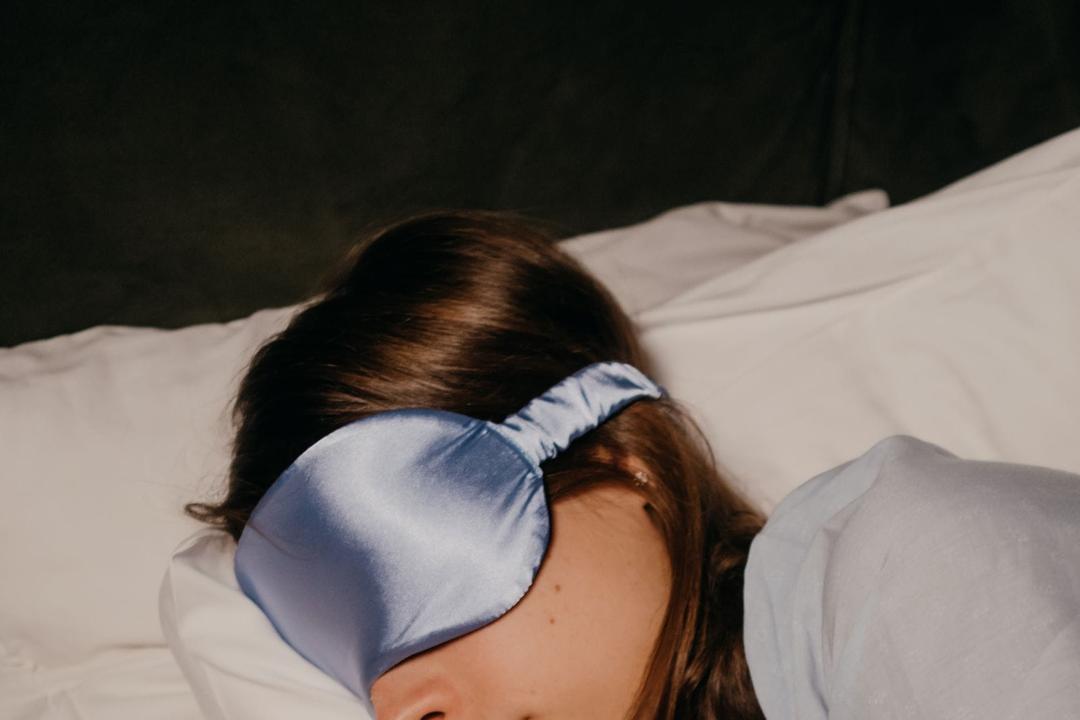
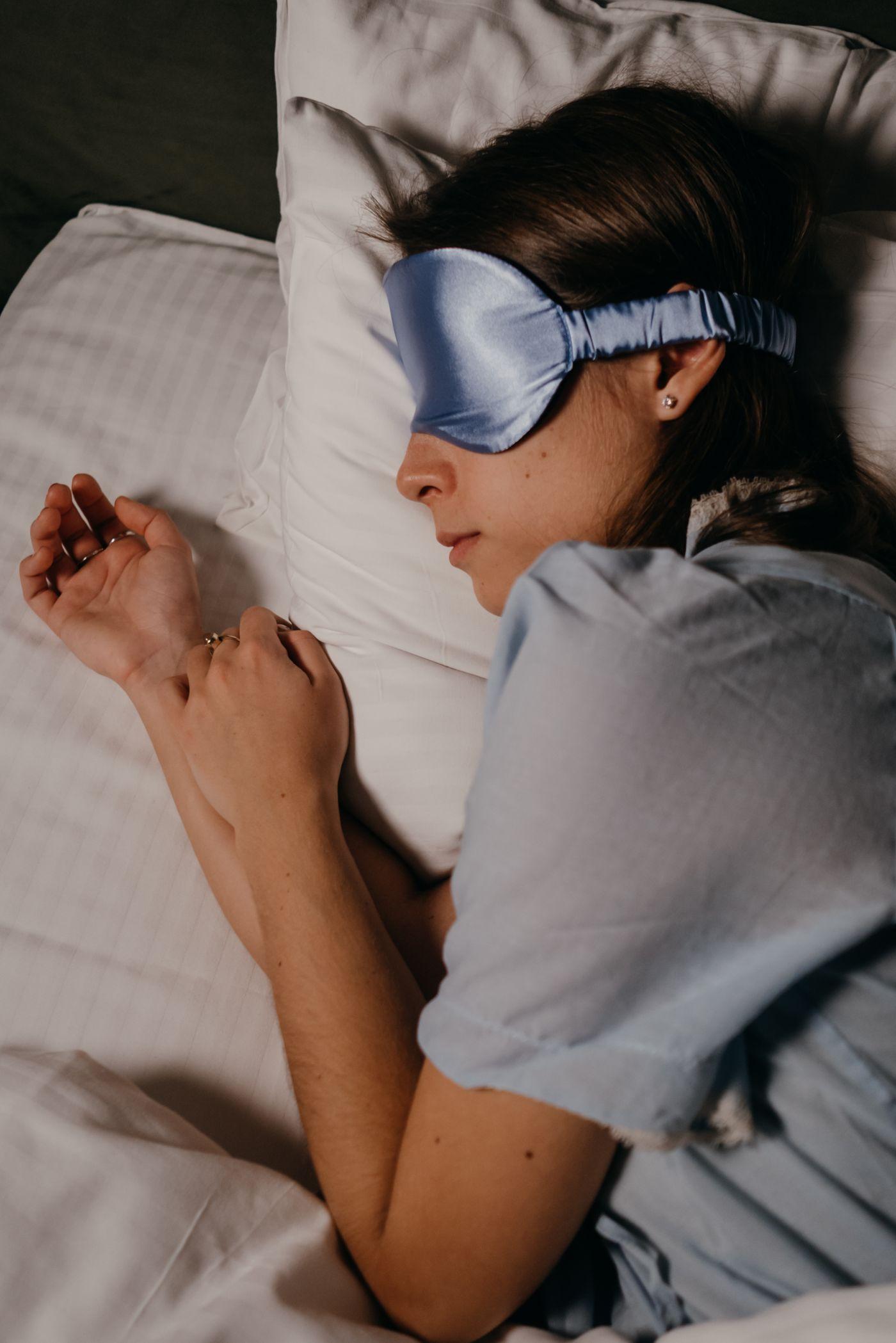
This is the item with the most evidence, though it is not strong: in the pooled hospital trials a mask alone improved self-rated sleep. At home, a 2023 Cardiff University study in SLEEP had 89 young adults sleep a week in an eye mask and a week with their eyes uncovered, either without a mask or in one with holes cut over the eyes. With the mask they learned word pairs slightly better and reacted slightly faster the next day. How long they slept did not change. In the 2010 lab study, 10 of the 14 volunteers found the mask comfortable.
2. Foam earplugs
On their own, earplugs made no significant difference to self-rated sleep in the pooled hospital trials, but that is not the whole story. In a 2026 University of Pennsylvania study, 25 healthy adults slept seven nights in a lab; on most of them, bursts of recorded noise from aircraft, road and rail traffic, a crying baby and a fire alarm played through the night. Foam earplugs blocked nearly all of the noise's effects on their sleep for noise peaking at up to 55 decibels, and began to fail at the loudest level tested, 65 decibels.
Comfort is the catch, at least for some people. In a 2017 trial of 64 intensive care patients at the Pitié-Salpêtrière hospital in Paris, 30% of the patients given earplugs and a mask did not keep the earplugs in all night; the main reasons were discomfort and anxiety. Earlier studies the authors cite recorded complaints of plugs not staying in and sore ears. The healthy adults in the 2026 study found them easier: only 2 of the 21 who answered rated them somewhat uncomfortable. Pack a few pairs and try them at home before a trip.
3. A steady sound source, maybe
A fan or a white noise machine is the item people expect in a sleep kit, and the evidence here is the least encouraging. A 2021 systematic review of 38 articles by the same University of Pennsylvania group rated the evidence that continuous noise improves sleep as very low, and warned it may also affect sleep and hearing. In the 2026 Pennsylvania study, pink noise reduced REM sleep and did worse than earplugs. If you pack one, keep it as quiet as you can and treat it as an experiment for rooms where earplugs fail; in that study, pink noise cut REM sleep even at 40 decibels on top of the recorded noise.
4. Something to stay cool
Heat costs sleep. In a 2022 University of Copenhagen analysis of over 7 million nights recorded by sleep-tracking wristbands in 68 countries, nights above 86°F (30°C) outdoors cost about 14 minutes of sleep. In a 2023 observational study by Harvard researchers in Boston, which tracked 50 adults aged 65 and over in their own homes, sleep was most efficient with the bedroom between 68 and 77°F (20 to 25°C). A cooling pillowcase is in our range for this, but we found no trial of one. It is a comfort item; the thermostat matters more.
5. A dim, warm light for the evening
Room light at night delays melatonin. In the Harvard study, ordinary room light before bed pushed melatonin onset later in 99% of the volunteers. A dim red reading light keeps the light low for reading in bed or getting up at night, but we found no trial of one; the case rests on how light affects melatonin. For blue-light filtering glasses, the group amber glasses belong to, a 2023 Cochrane review found 6 trials on sleep with 148 people: 3 showed better sleep scores and 3 no significant difference, and it rated the evidence very low certainty.
What can help: four items from our range, with evidence that runs from modest to none.
- A sleep mask: pooled hospital trials found masks improved self-rated sleep, and a week at home brought small gains in learning and alertness.
- Earplugs: in a 2026 lab study they blocked nearly all disruption from recorded noise peaking at up to 55 decibels, and began to fail at 65.
- A white noise machine: a review rated the evidence that continuous noise helps sleep as very low, and in the 2026 study pink noise cut REM sleep; if you use one, keep it quiet and save it for rooms where earplugs fail.
- A cooling pillowcase: no trial; a comfort item for hot sleepers.
Where people go wrong
Packing gadgets before the basics. A mask and a few pairs of earplugs weigh almost nothing and have the most evidence; start there.
Using earplugs only on the night of the trip. In the 2010 lab study only 6 of the 14 volunteers found the earplugs comfortable. Practice at home, and roll foam plugs thin before inserting them.
Leaving pink or white noise on all night. The newest lab study found pink noise cut REM sleep at both levels it tested, 40 and 50 decibels, and the review warned about hearing.
Reading under a bright overhead light. A kit that keeps out every sound but leaves the ceiling light on has missed the evening. More on light, noise and temperature in how to build a bedroom that puts you to sleep, and on the mask evidence in eye masks and earplugs.
Packing list
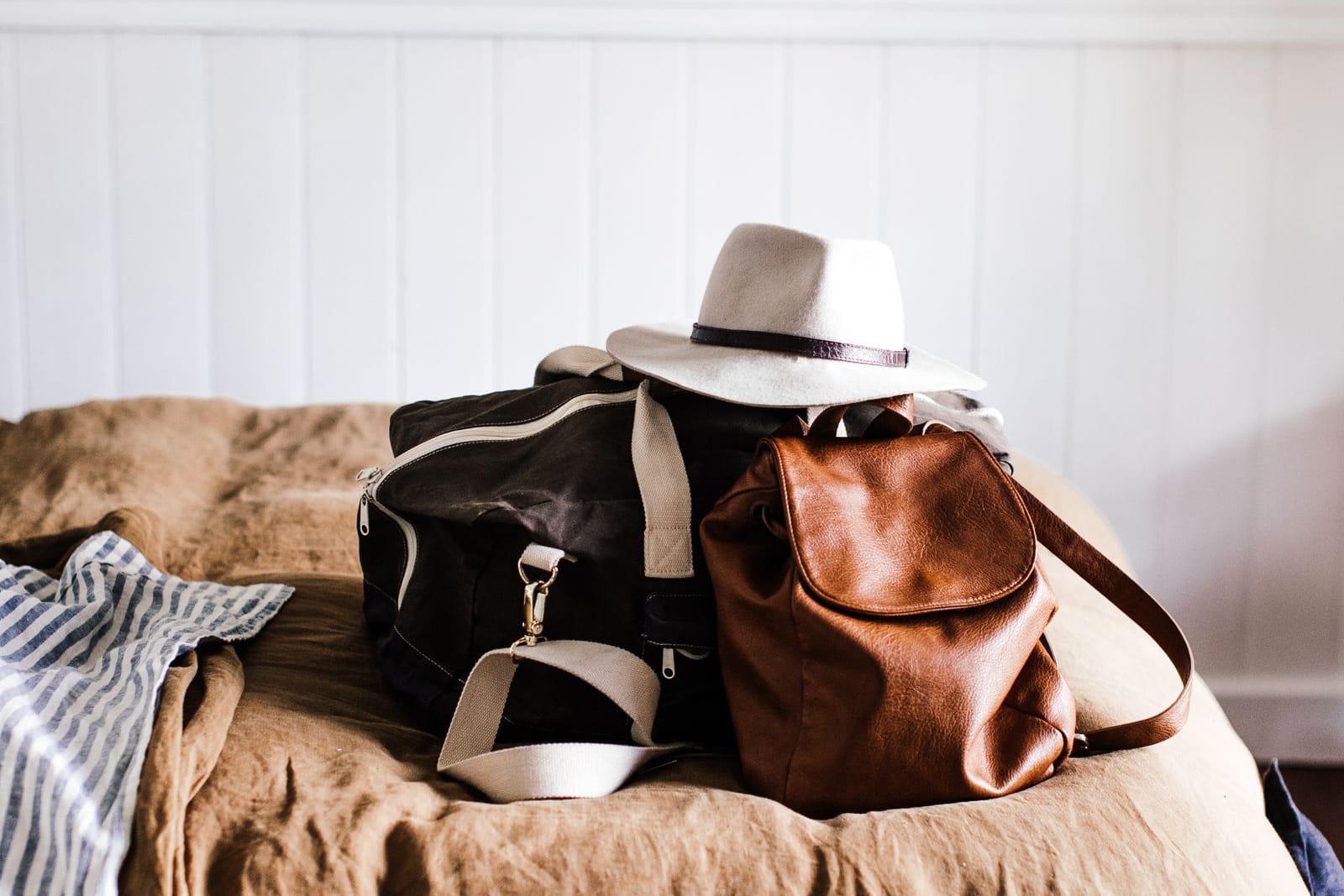
For home, travel or a hospital bag: an eye mask, several pairs of foam earplugs, a small fan or noise source only if earplugs fail you, something to keep the pillow cool, and a dim warm light for the evening. Our Sleep Kit holds the first two; the Sleep Kit Lux adds a white noise machine, a cooling pillowcase and a weighted blanket (choose about 10% of body weight, and never for a child under 3).
This article is general information, not medical advice. If you sleep badly most nights for several weeks, snore loudly or wake unrefreshed every day, talk to a doctor.
Products mentioned
Molded eye cups, zero pressure on the eyes, no light leaks around the nose.
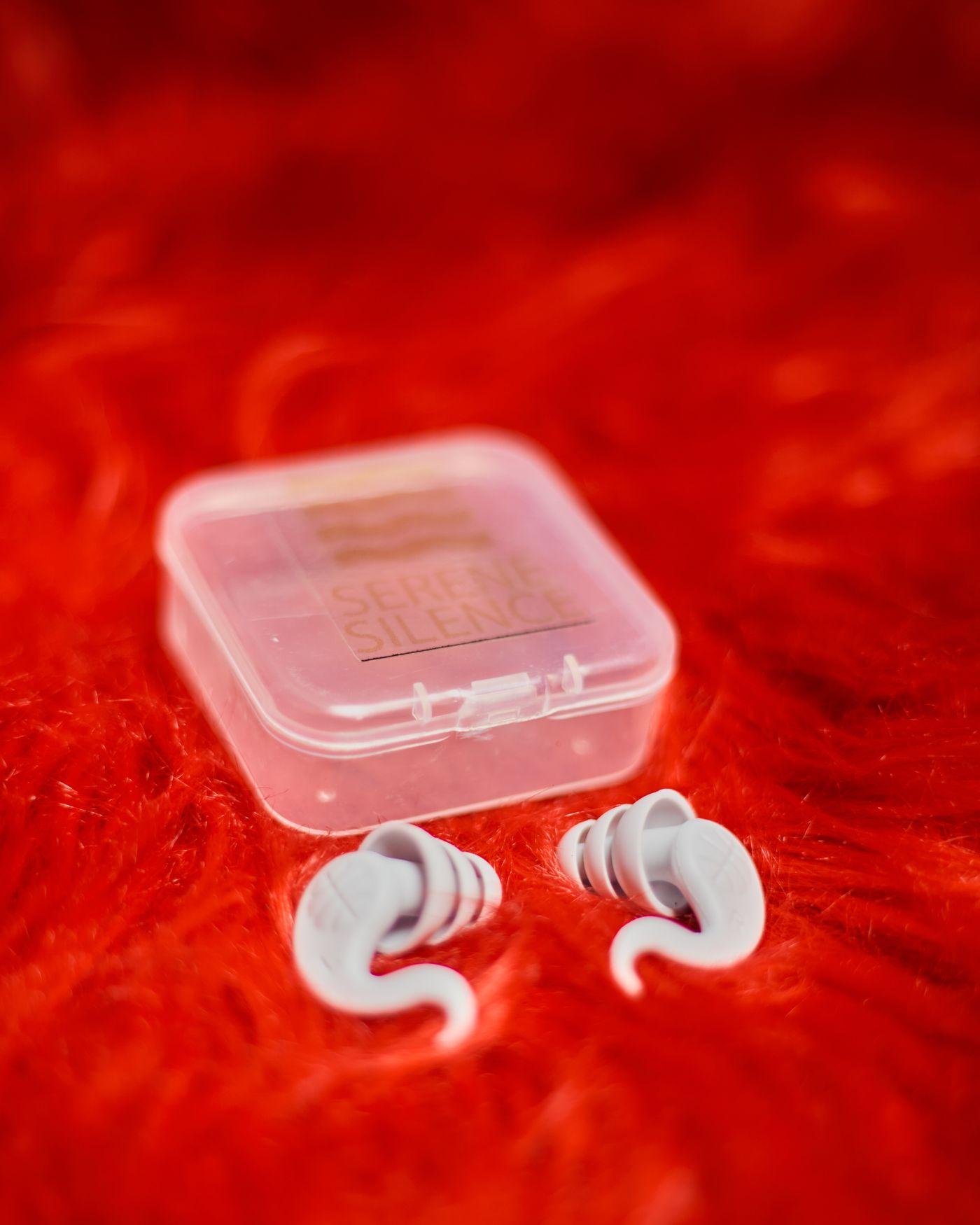
30 pairs, 33 dB rating. For snoring partners, hotels and thin walls.
Non-looping fan and pink noise with a timer. Masks the sounds that wake you.
A pair of cool-to-the-touch cases that pull heat away from your face.
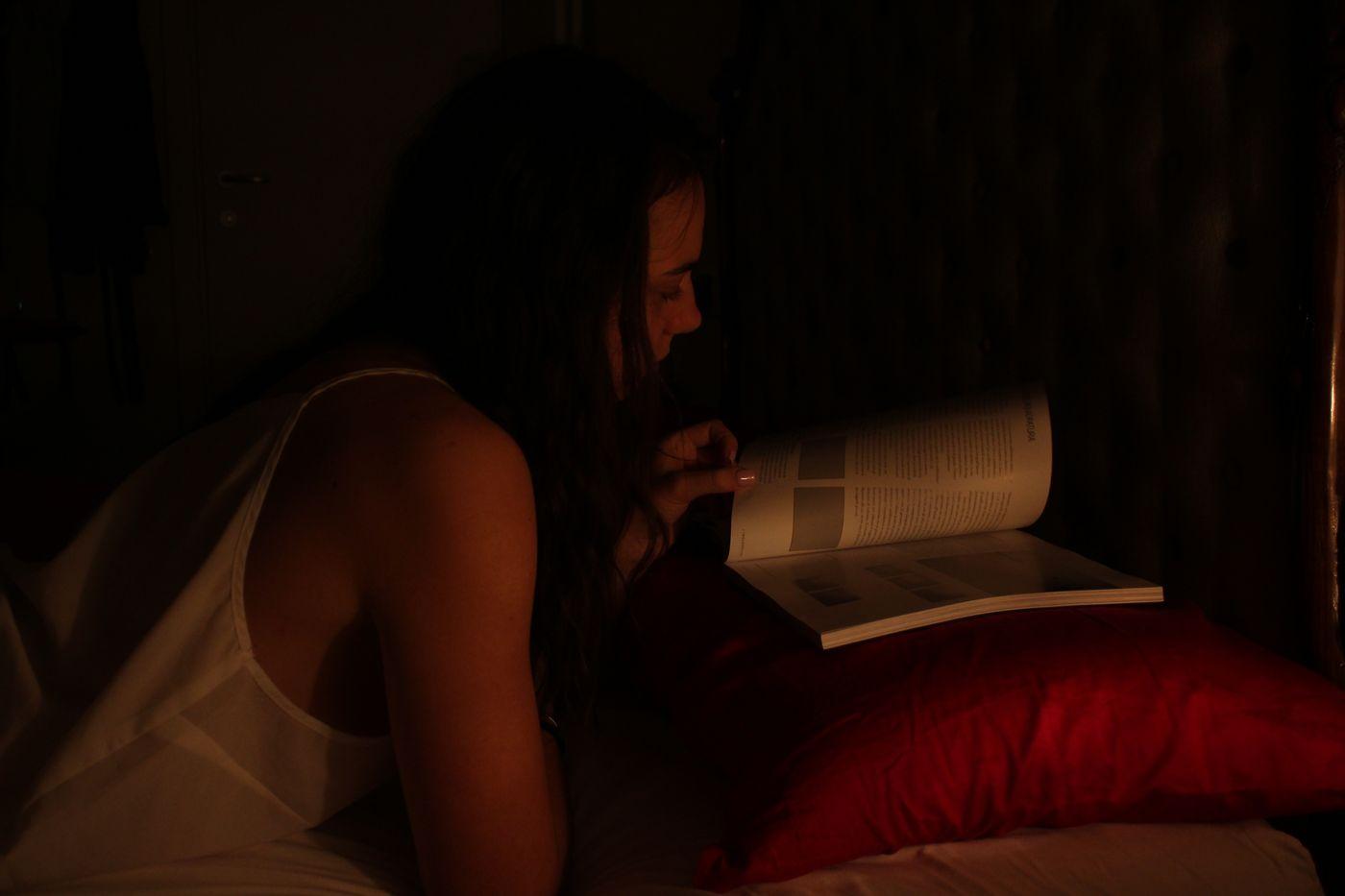
Read in bed without the blue light. Red LED, rechargeable, 3 brightness levels.
Keep reading
- How to Build a Bedroom That Puts You to Sleep: Light, Noise and Temperature, by the EvidenceWhat peer-reviewed studies and the Sleep Foundation say about the three physical conditions that decide whether you fall asleep—and which simple products fix each.5 min read
- How Much Sleep You Need by Age: Only 1 in 4 High Schoolers Gets ItFrom 14 to 17 hours for a newborn to 7 or more for most adults: the official chart by age, where its numbers come from, and how to plan your own night.6 min read
- Under 6 Hours of Sleep, the Odds of Catching a Cold Rise Over FourfoldVolunteers were given a cold virus after a week of sleep tracking. Who got sick, what sleep does to a vaccine, and the nights that matter most.7 min read
Sources
- Hu RF, Jiang XY, Zeng YM, Chen XY, Zhang YH (2010). Effects of earplugs and eye masks on nocturnal sleep, melatonin and cortisol in a simulated intensive care unit environment. Critical Care, 14(2):R66 — https://pubmed.ncbi.nlm.nih.gov/20398302/
- Ng AE, Black LI, Adjaye-Gbewonyo D (2026). Short Sleep Duration and Sleep Difficulties Among Adults: United States, 2024. NCHS Data Brief No. 559 — https://www.cdc.gov/nchs/products/databriefs/db559.htm
- World Health Organization Regional Office for Europe (2009). Night Noise Guidelines for Europe — https://www.who.int/europe/publications/i/item/9789289041737
- Fang CS, Wang HH, Wang RH, Chou FH, Chang SL, Fang CJ (2021). Effect of earplugs and eye masks on the sleep quality of intensive care unit patients: a systematic review and meta-analysis. Journal of Advanced Nursing, 77(11):4321–4331 — https://pubmed.ncbi.nlm.nih.gov/34096647/
- Greco V, Bergamo D, Cuoccio P, Konkoly KR, Muñoz Lombardo K, Lewis PA (2023). Wearing an eye mask during overnight sleep improves episodic learning and alertness. SLEEP, 46(3):zsac305 — https://pubmed.ncbi.nlm.nih.gov/36521010/
- Basner M, Smith MG, Cordoza M, Kayser MS, Carlin M, Ecker AJ, Gilad Y, Park-Chavar S, Rennie K, Schneller V, Walsh S, Shou H, Cao Q, Younes M, Aeschbach D, Jones CW (2026). Efficacy of pink noise and earplugs for mitigating the effects of intermittent environmental noise exposure on sleep. Sleep, 49(5):zsag001 — https://pubmed.ncbi.nlm.nih.gov/41627391/
- Demoule A, Carreira S, Lavault S, et al. (2017). Impact of earplugs and eye mask on sleep in critically ill patients: a prospective randomized study. Critical Care, 21(1):284 — https://pubmed.ncbi.nlm.nih.gov/29157258/
- Riedy SM, Smith MG, Rocha S, Basner M (2021). Noise as a sleep aid: a systematic review. Sleep Medicine Reviews, 55:101385 — https://pubmed.ncbi.nlm.nih.gov/33007706/
- Minor K, Bjerre-Nielsen A, Jonasdottir SS, Lehmann S, Obradovich N (2022). Rising temperatures erode human sleep globally. One Earth, 5(5):534–549 — https://doi.org/10.1016/j.oneear.2022.04.008
- Baniassadi A, Manor B, Yu W, Travison T, Lipsitz L (2023). Nighttime ambient temperature and sleep in community-dwelling older adults. Science of The Total Environment, 899:165623 — https://pubmed.ncbi.nlm.nih.gov/37474050/
- Gooley JJ, Chamberlain K, Smith KA, Khalsa SB, Rajaratnam SM, Van Reen E, Zeitzer JM, Czeisler CA, Lockley SW (2011). Exposure to room light before bedtime suppresses melatonin onset and shortens melatonin duration in humans. Journal of Clinical Endocrinology and Metabolism, 96(3):E463–E472 — https://pubmed.ncbi.nlm.nih.gov/21193540/
- Singh S, Keller PR, Busija L, et al. (2023). Blue-light filtering spectacle lenses for visual performance, sleep, and macular health in adults. Cochrane Database of Systematic Reviews, 8(8):CD013244 — https://pubmed.ncbi.nlm.nih.gov/37593770/