How Much Sleep You Need by Age: Only 1 in 4 High Schoolers Gets It
From 14 to 17 hours for a newborn to 7 or more for most adults: the official chart by age, where its numbers come from, and how to plan your own night.
Look up a newborn on the CDC's sleep chart and you get a range: 14 to 17 hours a day. Look up a 40-year-old and the answer is a floor, 7 or more hours, with no ceiling. That difference is deliberate, and it says a lot about what is known, and not known, about sleep need.
The numbers
Only about 1 in 4 high school students gets enough on school nights. In the CDC's 2025 Youth Risk Behavior Survey, 24% of US high school students said they got at least 8 hours on an average school night. The CDC rates the 10-year trend as getting worse.
About 1 in 3 children, by their parents' account. In a CDC analysis of the National Survey of Children's Health, 2016 to 2018, parents of 34.9% of children aged 4 months to 17 years reported less sleep than recommended for the child's age, from 31.2% of teens aged 13 to 17 to 40.3% of babies aged 4 to 11 months.
30.5% of US adults sleep under 7 hours. That is the CDC's National Health Interview Survey for 2024. The share was highest at ages 50 to 64, at 34.5%.
A panel of 15 experts started from 5,314 papers before the American Academy of Sleep Medicine and the Sleep Research Society set the adult figure in 2015. They agreed that 6 hours or less is not enough for optimal health in adults.
The chart, age by age
The CDC's table draws on three expert panels. Hours are per 24 hours.
- Newborns, 0 to 3 months: 14 to 17 hours
- Infants, 4 to 12 months: 12 to 16 hours, including naps
- Toddlers, 1 to 2 years: 11 to 14 hours, including naps
- Preschoolers, 3 to 5 years: 10 to 13 hours, including naps
- School age, 6 to 12 years: 9 to 12 hours
- Teens, 13 to 17 years: 8 to 10 hours
- Adults, 18 to 60 years: 7 or more hours
- Adults, 61 to 64 years: 7 to 9 hours
- Adults 65 and older: 7 to 8 hours
The rows from 4 months to 17 years come from the American Academy of Sleep Medicine's 2016 statement for children, a panel of 13 that worked from 864 papers. It left out babies under 4 months because normal sleep varies widely at that age and evidence linking it to health was too thin. The newborn row and the rows after 60 come from the National Sleep Foundation's 2015 panel, whose own figures differ slightly in places: 12 to 15 hours for infants, 9 to 11 for school-age children, 7 to 9 for adults.
Why adults get a floor, not a range
All three panels used the same formal expert voting method. The adult panel rated each hour of sleep from 5 to 10, judging whether it was appropriate for health. For adults up to 60, the AASM and SRS panel agreed that 7 or more hours, on a regular basis, is what promotes optimal health. It linked regular short sleep to weight gain, diabetes, high blood pressure, heart disease, stroke, depression, impaired immune function, more errors and more accidents.
The top end was a different story. Sleeping more than 9 hours regularly "may be appropriate" for young adults, for people recovering from sleep debt and for people who are ill, the statement says. For everyone else, the panel could not tell whether long sleep is harmful in itself. Its methods paper puts the link between long sleep and earlier death down most likely to uncontrolled chronic illness, which can both lengthen sleep and shorten life. So it set no upper limit.
The panel was frank about its evidence: most studies linking sleep length to health were one-time surveys of self-estimated sleep, which cannot show cause. It judged the strongest evidence was probably on mental performance, where lab experiments measured attention and reaction time directly.
The experiments behind the floor
In the best-known of them, published in 2003, healthy adults aged 21 to 38 lived in a lab for two weeks with 4, 6 or 8 hours in bed a night. By the end, the 6-hour group's attention lapses matched those of people kept awake for a whole night. They rated themselves only slightly sleepy. Our article on six-hour nights goes through it in detail.
A second experiment from Walter Reed researchers gave volunteers 3, 5, 7 or 9 hours in bed for a week. Even in the 7-hour group, reaction speed slowed and then held at the lower level; it had still not recovered after three nights of 8 hours in bed. Only the 9-hour group stayed at baseline.
Note what both studies set: hours in bed, not hours asleep. People in the 7-hour group slept less than 7.
Do you need less sleep as you get older?
Not much less, by the official advice. The National Institute on Aging says older adults need about the same amount of sleep as all adults, seven to nine hours a night, although their sleep tends to be shorter and lighter, with more waking. The CDC's 7 to 8 hours for people 65 and older comes from the National Sleep Foundation panel. The AASM panel stopped at 60, citing a meta-analysis that found no substantial decline in sleep duration after that age. If nights break up after 60, our article on sleep after 60 covers why, and what helped in trials.
How to set your own number
Start from the time you have to get up, count back the hours your row asks for, then add the minutes you usually take to fall asleep (our article on how long it should take has the details).
For an adult who wakes at 6:30 a.m. and wants 7 hours of sleep plus 20 minutes to drift off, lights go out by 11:10 p.m. For a 15-year-old with the same alarm, 8 hours means lights out by 10:10 p.m. Then hold that time on weekdays and weekends; one late weekend morning does not repay a week of short nights.
What can help: none of these adds hours. They deal with light and noise that cut into your sleep window; the evidence is modest.
- Sleep mask: in a Cardiff study of young adults, a week of wearing one brought small gains in word-pair learning and reaction time, with no change in hours slept.
- Earplugs: in a 2021 review of 13 hospital trials with 797 intensive-care patients, earplugs alone did not improve how people rated their sleep; a mask alone did, and the two together did best.
- White noise machine: a 2021 systematic review rated the evidence that steady noise improves sleep as very low, and its authors warned it could also disturb sleep and harm hearing.
All three are in our range, for adults and older children, not babies.
Where people go wrong
Counting hours in bed as hours asleep. The adult figure means sleep. If you go to bed at 11 and lie awake until midnight, you have not started.
Using the adult number for a child. A 9-year-old's range starts at 9 hours. The chart counts naps in the total up to age 5; from 6 on, it does not mention them.
Assuming more is always better. For adults the panel found no clear harm in long sleep itself, but the National Sleep Foundation panel noted that people who habitually sleep far outside their range may have a health problem. If you regularly need well over 9 hours and still wake unrefreshed, mention it to a doctor.
Trusting how you feel. In the 2003 experiment, the short-sleep groups felt only slightly sleepy.
Before tonight
- Find your row on the chart.
- Count back from your alarm, adding the minutes you take to fall asleep.
- Keep that bedtime for two weeks, weekends included, before judging the result.
- Darken and quiet the room so the hours you set are hours you sleep.
This article is general information, not medical advice. If you or your child regularly sleep much less or much more than the range for your age, snore loudly or stop breathing in sleep, or feel sleepy during the day despite enough hours in bed, talk to a doctor.
Products mentioned
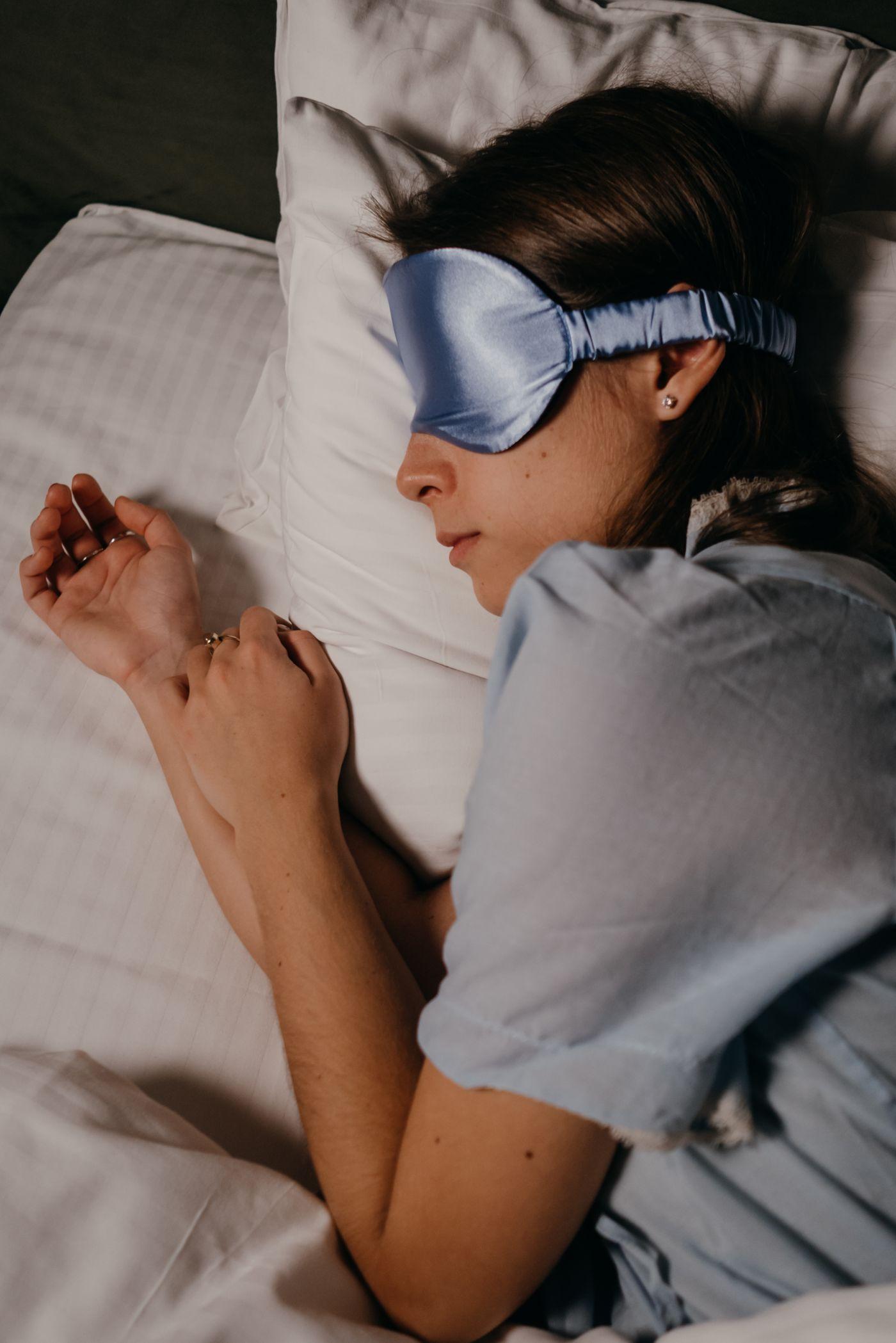
Molded eye cups, zero pressure on the eyes, no light leaks around the nose.
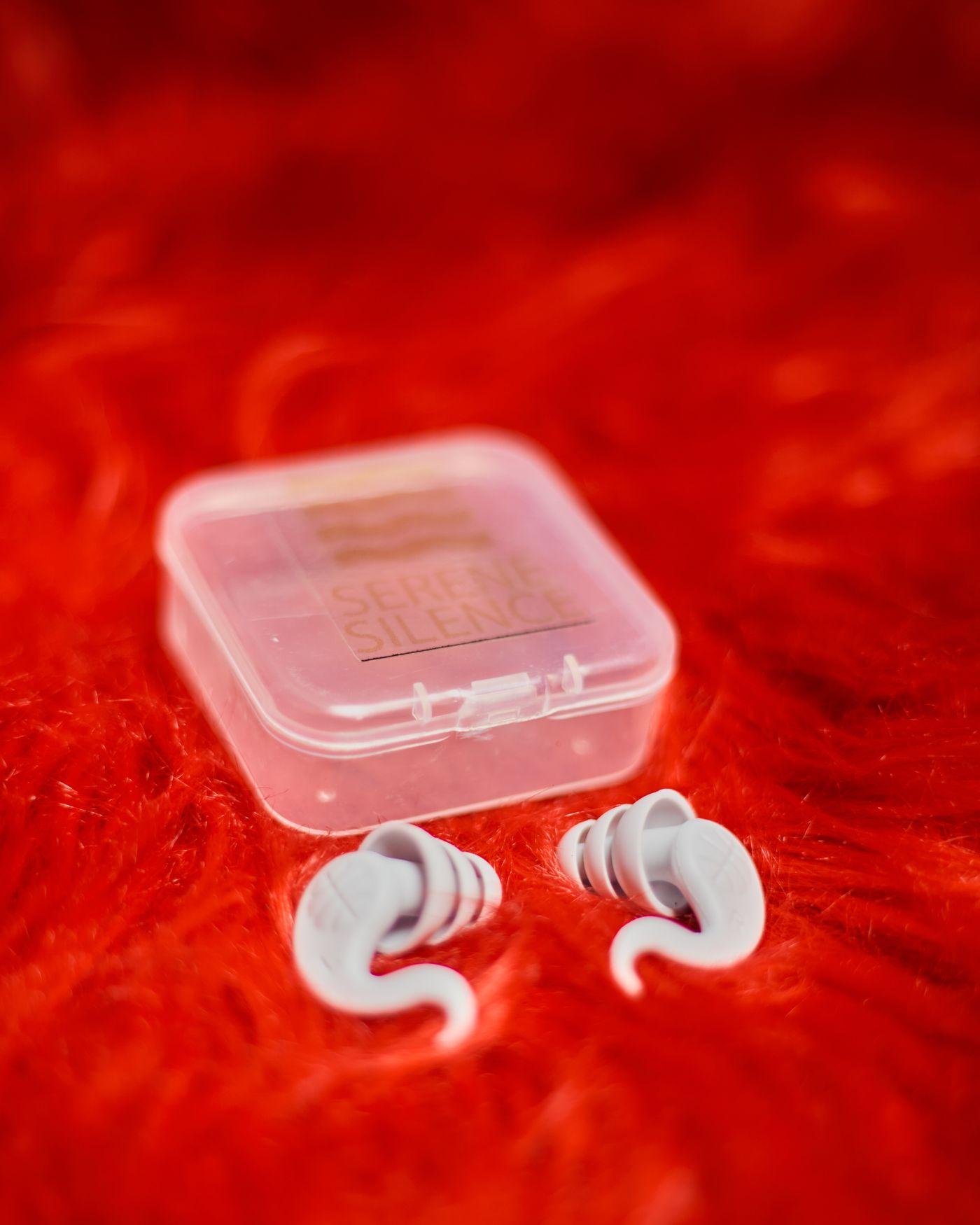
30 pairs, 33 dB rating. For snoring partners, hotels and thin walls.
Non-looping fan and pink noise with a timer. Masks the sounds that wake you.
Keep reading
- What to Put in a Sleep Kit: 5 Items and What the Evidence SaysPacking a sleep kit for home, travel or a hospital stay? Five items worth including, what the research found for each, and the mistakes to avoid.6 min read
- Under 6 Hours of Sleep, the Odds of Catching a Cold Rise Over FourfoldVolunteers were given a cold virus after a week of sleep tracking. Who got sick, what sleep does to a vaccine, and the nights that matter most.7 min read
- Six Hours a Night for Two Weeks: You Feel Fine. Your Reaction Time Doesn'tIn a lab study, two weeks of 6-hour nights hurt attention as much as a full night with no sleep, and people barely felt it. What that means for you.6 min read
Sources
- CDC (May 15, 2024). About Sleep: recommended hours of sleep by age group — https://www.cdc.gov/sleep/about/index.html
- Watson NF, Badr MS, Belenky G, et al. (2015). Recommended amount of sleep for a healthy adult: a joint consensus statement of the American Academy of Sleep Medicine and Sleep Research Society. Sleep, 38(6):843-844 — https://pubmed.ncbi.nlm.nih.gov/26039963/
- Watson NF, Badr MS, Belenky G, et al. (2015). Joint consensus statement of the American Academy of Sleep Medicine and Sleep Research Society on the recommended amount of sleep for a healthy adult: methodology and discussion. Sleep, 38(8):1161-1183 — https://pubmed.ncbi.nlm.nih.gov/26194576/
- Paruthi S, Brooks LJ, D'Ambrosio C, et al. (2016). Recommended amount of sleep for pediatric populations: a consensus statement of the American Academy of Sleep Medicine. Journal of Clinical Sleep Medicine, 12(6):785-786 — https://pubmed.ncbi.nlm.nih.gov/27250809/
- Hirshkowitz M, Whiton K, Albert SM, et al. (2015). National Sleep Foundation's sleep time duration recommendations: methodology and results summary. Sleep Health, 1(1):40-43 — https://pubmed.ncbi.nlm.nih.gov/29073412/
- CDC, Youth Risk Behavior Survey (September 18, 2026). Youth Health in Focus: Sleep (2025 data) — https://www.cdc.gov/yrbs/youth-health-in-focus/sleep.html
- Wheaton AG, Claussen AH (2021). Short sleep duration among infants, children, and adolescents aged 4 months–17 years — United States, 2016–2018. MMWR, 70(38):1315-1321 — https://www.cdc.gov/mmwr/volumes/70/wr/mm7038a1.htm
- CDC/NCHS Data Brief No. 559 (April 2026). Short Sleep Duration and Sleep Difficulties Among Adults: United States, 2024 — https://www.cdc.gov/nchs/products/databriefs/db559.htm
- National Institute on Aging (February 6, 2025). Sleep and Older Adults — https://www.nia.nih.gov/health/sleep/sleep-and-older-adults
- Van Dongen HPA, Maislin G, Mullington JM, Dinges DF (2003). The cumulative cost of additional wakefulness: dose-response effects on neurobehavioral functions and sleep physiology from chronic sleep restriction and total sleep deprivation. Sleep, 26(2):117-126 — https://pubmed.ncbi.nlm.nih.gov/12683469/
- Belenky G, Wesensten NJ, Thorne DR, et al. (2003). Patterns of performance degradation and restoration during sleep restriction and subsequent recovery: a sleep dose-response study. Journal of Sleep Research, 12(1):1-12 — https://pubmed.ncbi.nlm.nih.gov/12603781/
- Greco V, Bergamo D, Cuoccio P, Konkoly KR, Muñoz Lombardo K, Lewis PA (2023). Wearing an eye mask during overnight sleep improves episodic learning and alertness. SLEEP, 46(3):zsac305 — https://pubmed.ncbi.nlm.nih.gov/36521010/
- Fang CS, Wang HH, Wang RH, Chou FH, Chang SL, Fang CJ (2021). Effect of earplugs and eye masks on the sleep quality of intensive care unit patients: a systematic review and meta-analysis. Journal of Advanced Nursing, 77(11):4321-4331 — https://pubmed.ncbi.nlm.nih.gov/34096647/
- Riedy SM, Smith MG, Rocha S, Basner M (2021). Noise as a sleep aid: a systematic review. Sleep Medicine Reviews, 55:101385 — https://pubmed.ncbi.nlm.nih.gov/33007706/