Under 6 Hours of Sleep, the Odds of Catching a Cold Rise Over Fourfold
Volunteers were given a cold virus after a week of sleep tracking. Who got sick, what sleep does to a vaccine, and the nights that matter most.
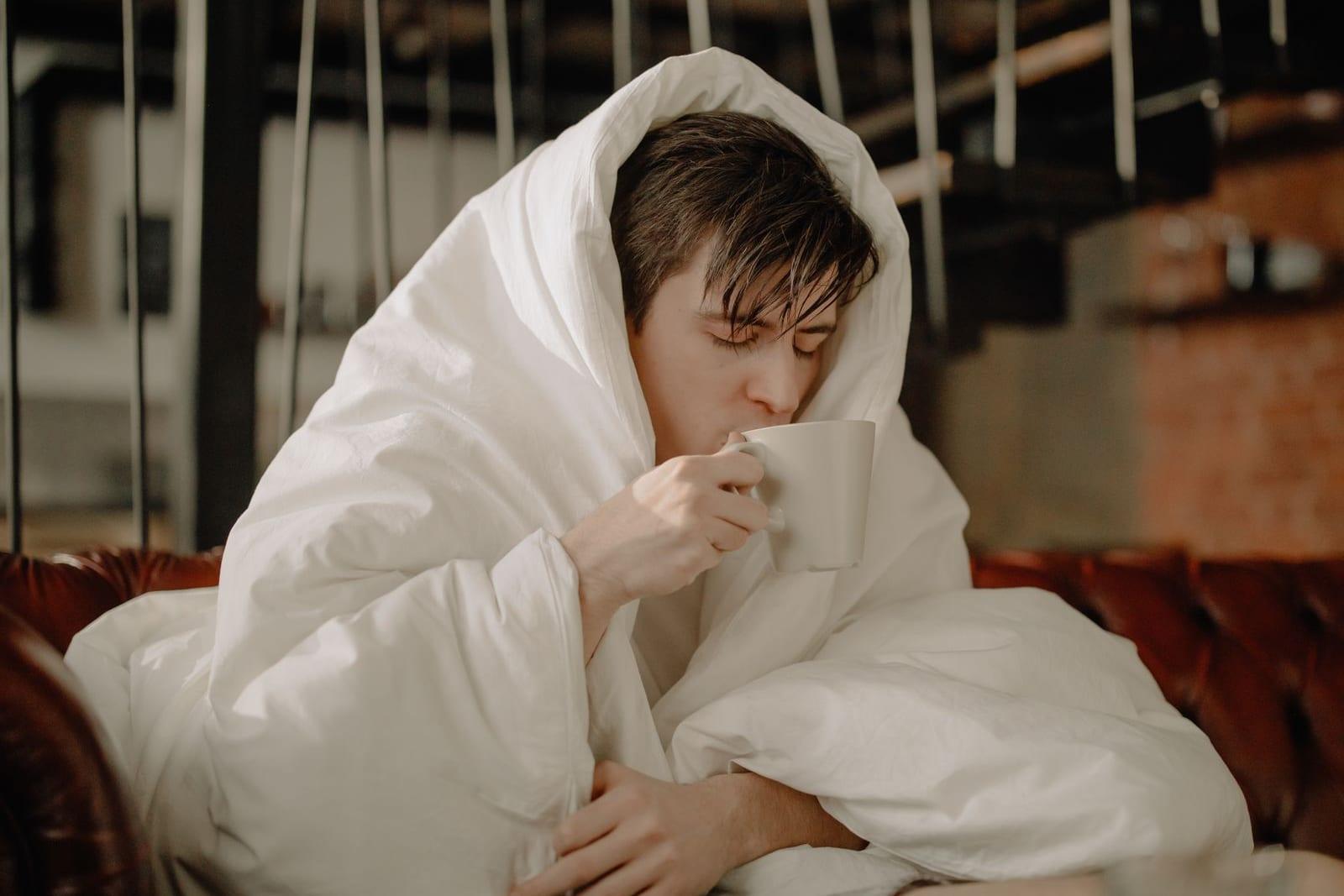
In 2015, researchers at Carnegie Mellon and the University of California, San Francisco asked 164 healthy adults to wear a wrist sleep monitor for a week. Then they put them in quarantine and gave each of them nasal drops containing a rhinovirus, a common cold virus, and watched for five days.
Three in four of the volunteers became infected. Only 48 developed a verified cold, and the monitor readings had predicted who. Compared with people who had averaged more than 7 hours of sleep, those who had slept 5 to 6 hours a night had an odds ratio of 4.24 for developing a cold. Under 5 hours, 4.50. Between 6 and 7 hours the odds were no longer significantly raised, which the authors read as a threshold at about six hours.
Short sleep did not change who got infected. The authors' reading is that it mainly changed whether an infection turned into a cold, though that second step on its own fell short of statistical significance.
The numbers
Three in ten American adults sleep under 7 hours. In the CDC's 2024 National Health Interview Survey, 30.5% of US adults averaged less than 7 hours in a 24-hour period.
Under 7 hours, the odds of a cold nearly tripled. In a 2009 Carnegie Mellon virus-challenge study of 153 adults aged 21 to 55, those averaging less than 7 hours had an odds ratio of 2.94 for a cold compared with those sleeping 8 or more.
Short sleep around a vaccine cuts the antibody response. A 2023 meta-analysis in Current Biology pooled 304 adults aged 18 to 60 whose sleep was measured objectively and found an effect size of 0.79, which its authors class as moderate to large.
What your immune system does while you sleep
The plain version: during sleep, immune cells leave the bloodstream, probably for the lymph nodes, where the cells carrying a new invader's signature and the cells that must learn it are most likely to meet. That is the account in a 2019 review in Physiological Reviews, which ties it to the hormones of deep, slow-wave sleep: more growth hormone and prolactin, less cortisol.
A 2011 experiment from Lübeck, Germany made the same point with a needle. Twenty-seven healthy men were vaccinated against hepatitis A three times. After each dose, one group slept normally and the other stayed awake all night. A year later, among the 12 men still followed, the sleepers had twice the frequency of T helper cells specific to the vaccine, and the effect tracked how much slow-wave sleep each man got on the night after the shot.
Two experiments with a cold virus
In the group's earlier 2009 study, 153 adults answered a daily phone interview about the previous night's sleep for 14 days, then received the rhinovirus drops in quarantine. Besides the near-tripling of the odds under 7 hours, sleep efficiency mattered even more: people who were asleep for less than 92% of their time in bed had an odds ratio of 5.50 compared with those above 98%.
The 2015 study added wrist monitors alongside the diaries, and only the monitors predicted colds, which is why its numbers are the ones in the title. Its confidence intervals ran from 1.08 to nearly 19, which is what 48 colds in 164 people can tell you; the direction is consistent across both studies, the exact multiple is not.
Sleep and the vaccine needle
In 2002, researchers at the University of Chicago restricted 25 young men to 4 hours in bed for four nights, gave them a flu shot, kept them at 4 hours for two more nights, then let them sleep 12 hours a night for a week, while controls got 8 hours. Ten days after the shot, the restricted group's antibody levels were less than half those of the controls.
The hepatitis B cohort is the largest of the three vaccine studies described here. At the University of Pittsburgh, 125 adults aged 40 to 60 received the standard three-dose series while keeping sleep diaries for the week around each dose, 104 of them with a wrist monitor as well around the first dose, 88 of whom produced usable recordings. Each additional hour of monitor-measured sleep went with 56% higher antibody levels after the second dose. Six months after the final dose, roughly one in seven participants had not reached the level counted as protection, and those averaging under 6 hours had an odds ratio of 0.09 for being protected compared with those over 7 hours; the interval ran from 0.01 to 0.94, so take the size loosely and the direction seriously.
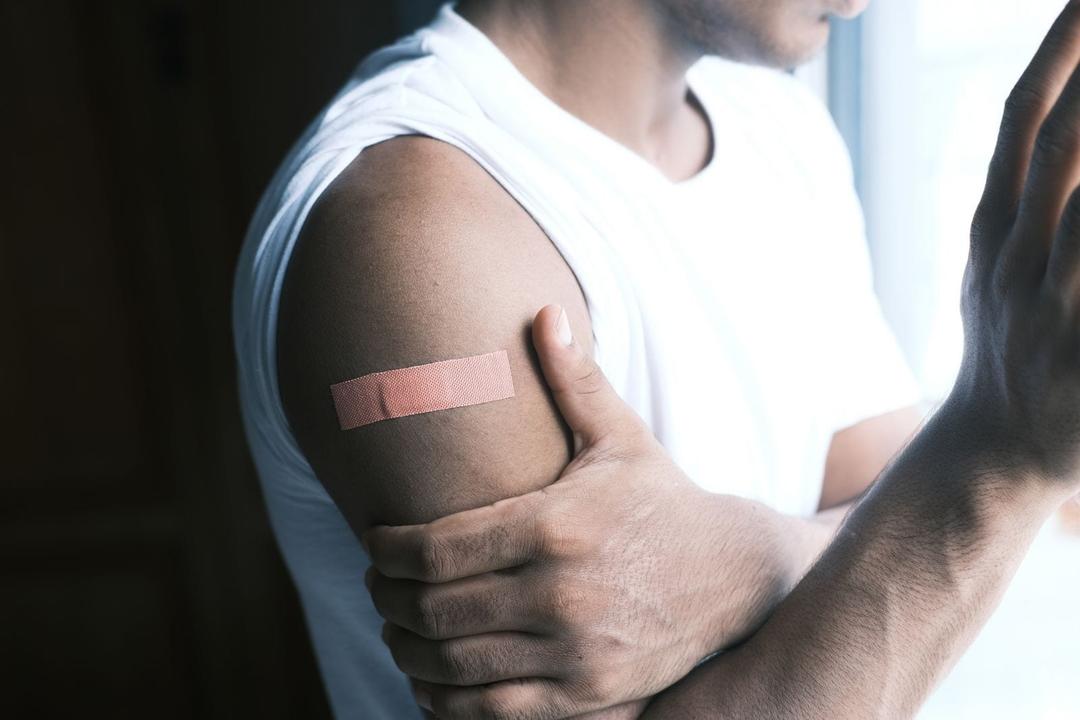
The 2023 meta-analysis went back to the authors of all seven qualifying studies for the data it needed. With sleep measured objectively, short sleep against normal sleep (under 6 hours against 7 to 9 in the cohort studies, a cut-short or sleepless night against a normal one in the experiments) gave an effect size of 0.79 across 304 adults. The split by sex is the finding to remember: 0.93 in men, which the authors call large, and 0.42 in women, which did not reach significance. Every study used flu or hepatitis vaccines; the one COVID-19 study found was left out because its antibody levels were measured anywhere from one week to five months after the shot.
What to do
Count the nights around the needle. The hepatitis B study measured the 3 nights before each dose, the night of it and the 3 after; the meta-analysis used sleep from within 7 days of vaccination and notes newer evidence, from one diary-based cohort of 83, that the 2 nights before the shot carry the most weight. So plan the week around a booked vaccine: no late flights or all-nighters, and 7 or more hours asleep each night. Recovery sleep afterwards did not rescue the 2002 men by day 10: a week of 12-hour nights still left them at less than half the antibody level, though by three to four weeks the two groups no longer differed significantly.
In cold season the threshold was the same, between 6 and 7 hours in both challenge studies; the 2009 study found the risk kept falling up to 8 hours and beyond, and the 2015 study had too few long sleepers to say.
Be honest about what sleep cannot do. It did not stop infection in the 2015 study; three-quarters caught the virus regardless. It is not a substitute for the vaccine. The clearest benefit is in men; the data in women are thinner.
What can help: nothing in our range was tested against colds or vaccines. The studies measured hours actually asleep; these protect the hours you already have in bed.
- A contoured sleep mask for a bedroom that is not fully dark. In the 2009 study, time awake in bed counted against you as much as a short night did.
- Soft foam earplugs if street noise or a partner's alarm cuts your mornings short; the evidence that they add measurable sleep in healthy adults is thin.
- A white-noise machine for the same job in a noisy apartment. An experiment to run with a wrist tracker, not a proven fix.
Where people go wrong
The first mistake is reading an odds ratio of 4.2 as "four times more likely." Odds and risk diverge when the outcome is common; about 3 in 10 of these volunteers got a cold, so the true multiple in risk is smaller.
The second is counting time in bed. In 2015 the wrist monitors predicted colds and the sleep diaries did not; in 2009 sleep efficiency was the stronger predictor, and an extra hour awake under the covers pushes it the wrong way. If you have insomnia, treat the insomnia rather than extend bedtime.
Some people should not expect the tidy picture at all. Every experiment here used young or middle-aged adults, both vaccine experiments used men only, and the one cohort of adults over 65 showed no link with self-reported sleep.
Before the next needle, or the next sniffle
Seven hours asleep, not in bed, on each of the two nights before a vaccine and the few nights after. The same seven through cold season, measured by a monitor if you doubt yourself. And get the shot: sleep raises the response to it, it does not replace it.
This article is general information, not medical advice. If you catch infections unusually often, or regularly sleep under six hours despite trying, see a doctor; both have causes that a blog post cannot sort out.
Products mentioned
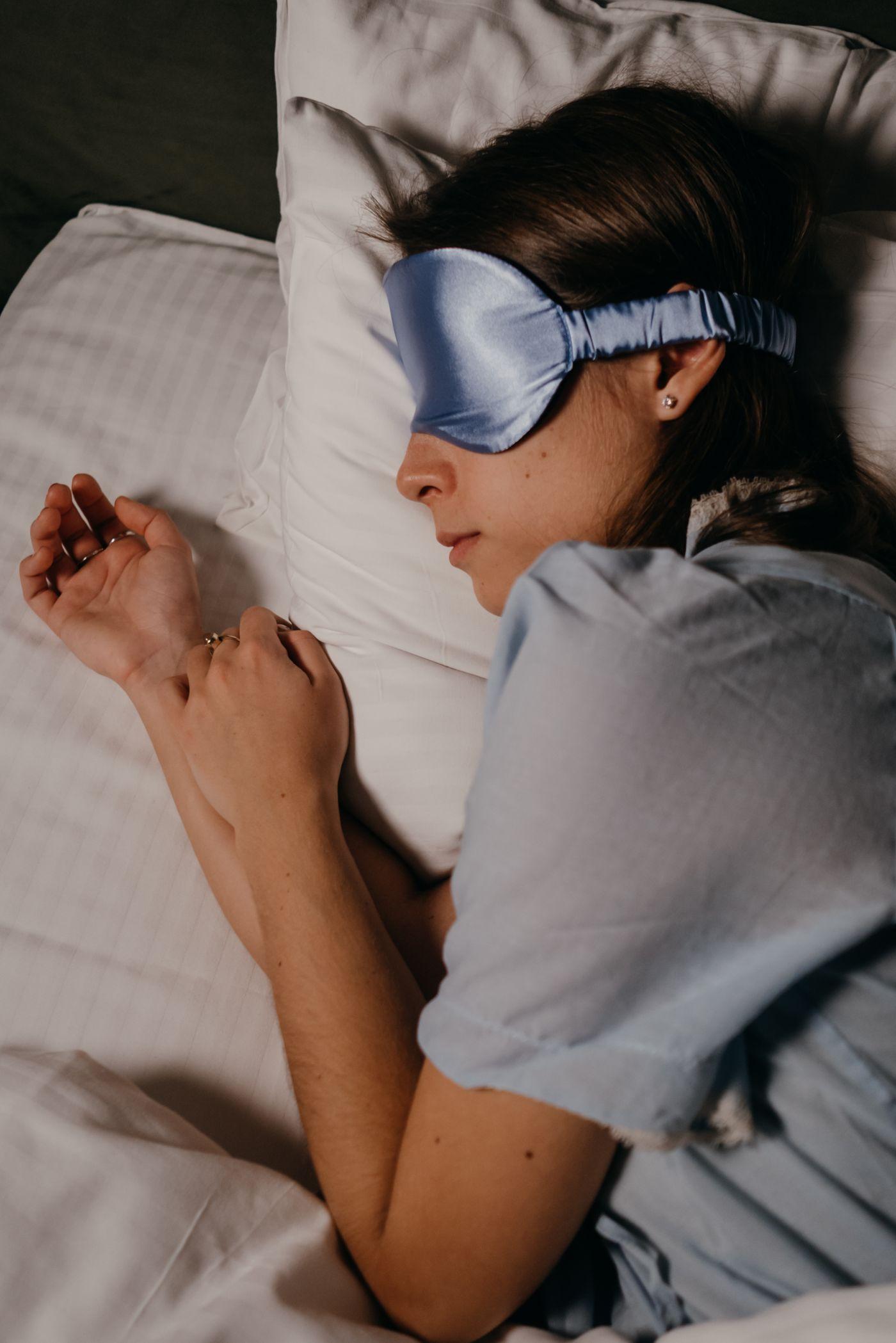
Molded eye cups, zero pressure on the eyes, no light leaks around the nose.
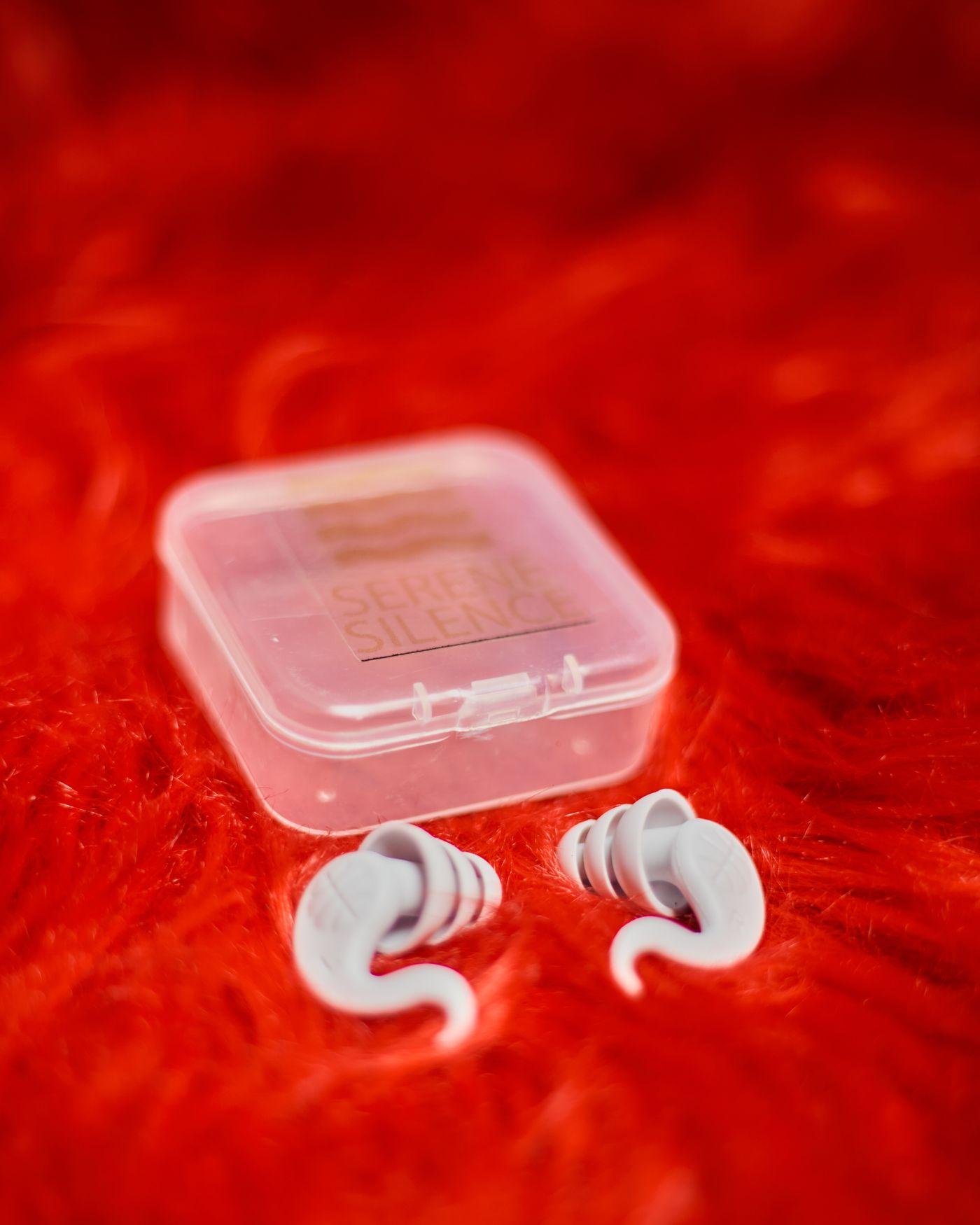
30 pairs, 33 dB rating. For snoring partners, hotels and thin walls.
Non-looping fan and pink noise with a timer. Masks the sounds that wake you.
Keep reading
- Six Hours a Night for Two Weeks: You Feel Fine. Your Reaction Time Doesn'tIn a lab study, two weeks of 6-hour nights hurt attention as much as a full night with no sleep, and people barely felt it. What that means for you.6 min read
- How Much Sleep You Need by Age: Only 1 in 4 High Schoolers Gets ItFrom 14 to 17 hours for a newborn to 7 or more for most adults: the official chart by age, where its numbers come from, and how to plan your own night.6 min read
- What to Put in a Sleep Kit: 5 Items and What the Evidence SaysPacking a sleep kit for home, travel or a hospital stay? Five items worth including, what the research found for each, and the mistakes to avoid.6 min read
Sources
- Prather AA, Janicki-Deverts D, Hall MH, Cohen S (2015). Behaviorally assessed sleep and susceptibility to the common cold. Sleep, 38(9):1353–1359 — https://pubmed.ncbi.nlm.nih.gov/26118561/
- Cohen S, Doyle WJ, Alper CM, Janicki-Deverts D, Turner RB (2009). Sleep habits and susceptibility to the common cold. Archives of Internal Medicine, 169(1):62–67 — https://pubmed.ncbi.nlm.nih.gov/19139325/
- Spiegel K, Sheridan JF, Van Cauter E (2002). Effect of sleep deprivation on response to immunization. JAMA, 288(12):1471–1472 — https://pubmed.ncbi.nlm.nih.gov/12243633/
- Prather AA, Hall M, Fury JM, Ross DC, Muldoon MF, Cohen S, Marsland AL (2012). Sleep and antibody response to hepatitis B vaccination. Sleep, 35(8):1063–1069 — https://pubmed.ncbi.nlm.nih.gov/22851802/
- Lange T, Dimitrov S, Bollinger T, Diekelmann S, Born J (2011). Sleep after vaccination boosts immunological memory. Journal of Immunology, 187(1):283–290 — https://pubmed.ncbi.nlm.nih.gov/21632713/
- Spiegel K, Rey AE, Cheylus A, Ayling K, Benedict C, Lange T, Prather AA, Taylor DJ, Irwin MR, Van Cauter E (2023). A meta-analysis of the associations between insufficient sleep duration and antibody response to vaccination. Current Biology, 33(5):998–1005.e2 — https://pubmed.ncbi.nlm.nih.gov/36917932/
- Besedovsky L, Lange T, Haack M (2019). The sleep-immune crosstalk in health and disease. Physiological Reviews, 99(3):1325–1380 — https://pubmed.ncbi.nlm.nih.gov/30920354/
- CDC/NCHS (April 2026). Data Brief No. 559: Short Sleep Duration and Sleep Difficulties Among Adults: United States, 2024 — https://www.cdc.gov/nchs/products/databriefs/db559.htm