How Long Should It Take to Fall Asleep? 30 Minutes or Less Is Good
Lying awake and counting the minutes? Here is what counts as normal, why the wait feels longer than it is, and what shortens it in trials.
In an experiment in the early 1980s, researchers let 25 people with insomnia and 10 good sleepers drift off, then woke them five minutes after the first sleep spindle, a brain-wave marker of light sleep, appeared on the recording. Asked whether they had been awake just before the call, the people with insomnia were more likely to say yes. The recording said they had been asleep. That experiment, retold in a 2012 review of sleep misperception, is worth knowing if you lie awake wondering whether your wait is normal. There is a number for that, and a reason your count may run fast.
The numbers
15.4% of US adults had trouble falling asleep most days or every day in the past 30 days, according to the CDC's 2024 National Health Interview Survey. Women reported it more than men (18.5% vs 12.2%), and the share fell with age, from 18.3% of adults 18 to 34 to 12.8% of those 65 and older.
30 minutes or less is the sleep-onset mark in the National Sleep Foundation's 2024 self-check for good sleep quality, the same for adults 18 to 64 and for those 65 and older.
277 studies were reviewed by the NSF's expert panel before it voted, over three rounds, on what counts as good sleep quality; sleep latency was one of the measures it agreed on (2017 consensus report).
31 minutes or more, on 3 or more nights a week, for 6 months or more is the insomnia cut-off, for time to fall asleep or time awake in the night, that a 2003 University of Memphis study found most defensible for research, after reviewing two decades of insomnia trials and testing cut-offs in a random sample.
What "normal" looks like, and what "too fast" might mean
The NSF's self-check asks four questions after a night's sleep; falling asleep within 30 minutes is the first. A night or two over the mark means little. A pattern does: the National Heart, Lung, and Blood Institute calls insomnia chronic when it happens 3 or more nights a week for more than 3 months.
Faster is not always better. In the daytime nap test sleep clinics use, people fall asleep sooner after sleep loss, on sedating medicines, and with conditions such as narcolepsy or sleep apnea, a 2005 review in the journal Sleep found. The same review says the results range too widely to set a single cut-off for excessive sleepiness or to tell patients from non-patients. So if you fall asleep very quickly every night and also fight to stay awake by afternoon, treat that daytime sleepiness as a possible sign of sleep loss or a sleep disorder rather than a talent.
Why the wait feels longer than it is
Time stretches when your mind is busy, and worrying in the dark is busy. The 2012 review by psychologists at UC Berkeley and the Institute of Psychiatry in London calls it a robust finding that many people with insomnia overestimate how long they take to fall asleep and underestimate how long they sleep, compared with lab recordings and wrist monitors. The authors stress two limits: the tendency is common but not universal (a few people do the opposite), and it does not mean the sleep problem is imagined.
The clock makes it worse. In two experiments from King's College London, published in 2007, 30 good and 30 poor sleepers were told either to watch a clock or not while trying to fall asleep; the clock watchers reported more worry and took longer to fall asleep. In a second test, 38 people with insomnia watched either a clock or a display of random digits. The clock group worried more and overestimated their time to fall asleep more.
What to do: turn the clock to the wall, put the phone out of reach, and stop measuring. To learn your number, keep a morning diary for two weeks: lights-out time, a rough guess of when you dropped off, wake-up time.
What shortens it, and by how much
The American Academy of Sleep Medicine pooled the randomized trials of behavioral treatments in adults with chronic insomnia for its 2021 systematic review. Cognitive behavioral therapy for insomnia (CBT-I), the full package, cut diary-reported time to fall asleep by about 13 minutes more than control conditions across 47 studies. Sleep restriction, which limits time in bed to the time you actually sleep, cut it by about 6 minutes (4 studies). Stimulus control (bed only when sleepy, up when you cannot sleep, a fixed wake time) cut it by about 10 minutes (4 studies), with a confidence interval that crossed zero. Sleep hygiene tips alone, in the one study that could be analyzed, changed it by less than a minute.
None of those reductions reached the 20 minutes the task force had set as clinically meaningful. Yet CBT-I earned the academy's only strong recommendation in the 2021 guideline. It moved the two outcomes the task force ranked most important: the share of patients in remission was 33 percentage points higher than with control (25 studies) and the share who responded 45 points higher (16 studies). The minutes shrink a little; the insomnia shrinks more.
What that means, starting tonight:
- Go to bed when you are sleepy, not at a time you think you should be asleep.
- Get up at the same time every morning, weekends included.
- If you have been lying awake long enough to get frustrated, get up, go somewhere dim, and do something dull until you feel sleepy. Our post on the 3 a.m. version of this rule covers how.
- If two weeks of diary show you spend far longer in bed than asleep, bring the diary to a clinician who offers CBT-I rather than cutting your time in bed hard on your own.
What can help:
- Amber evening glasses filter the blue part of evening light. In a 2018 Columbia University trial of 14 adults with insomnia symptoms, amber lenses worn for 2 hours before bed did not significantly shorten the time to fall asleep, though wrist monitors recorded more total sleep. Thin evidence.
- A red clip-on reading light keeps the light low if you get up to read in step 3. We know of no trial testing it for falling asleep.
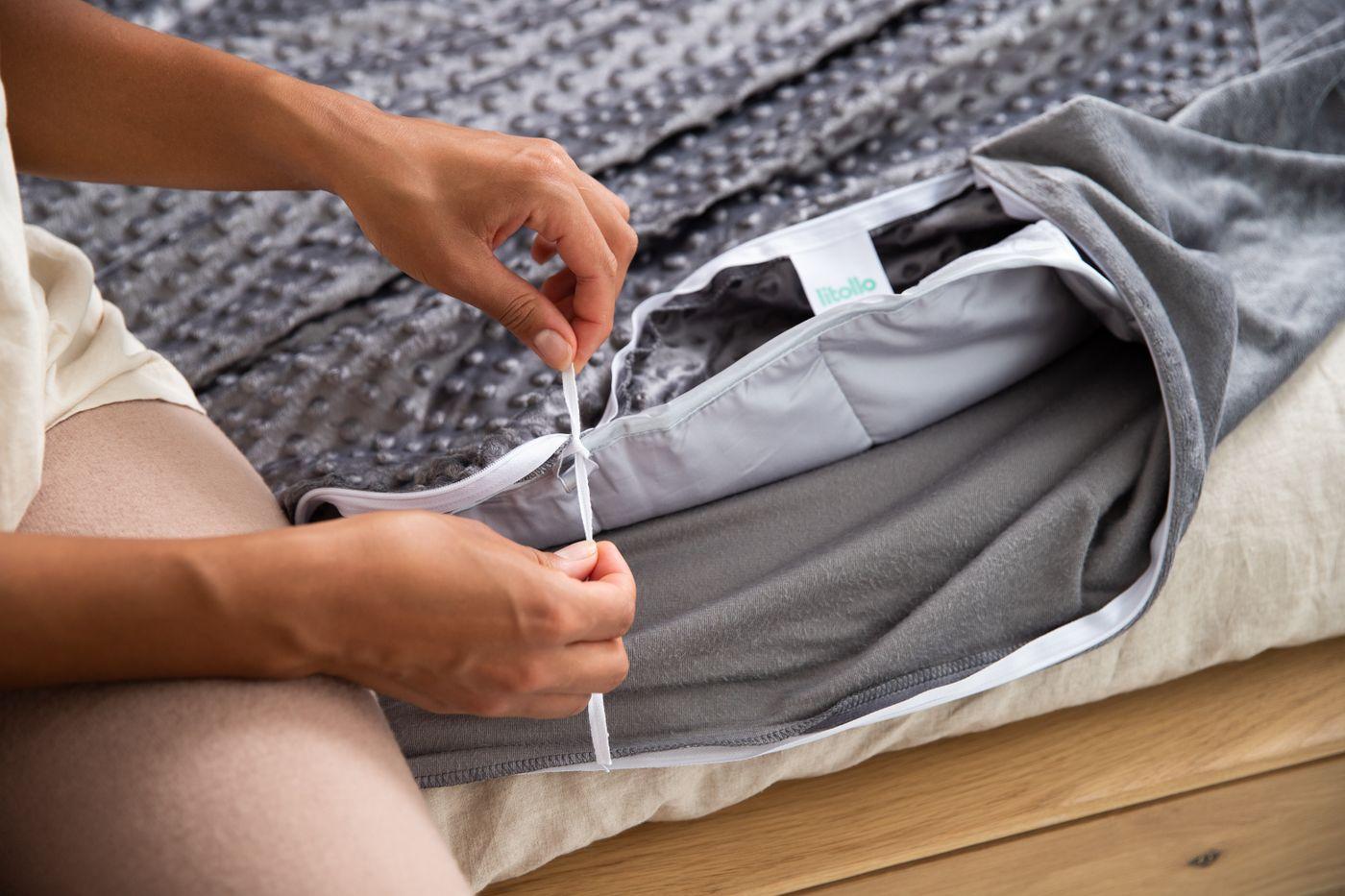
- A weighted blanket of about 10% of your body weight. In a 2020 Karolinska trial in Stockholm of 120 adults with insomnia and a psychiatric condition, insomnia severity fell much more under a heavy chain blanket than a light one, but wrist monitors showed no significant difference in total sleep time. Not for children under 3.
All three are in our range. They are comfort tools, not treatments, and none has been shown to cut the minutes to sleep.
Where people go wrong
Going to bed earlier for a head start is the natural move and usually wrong. More time in bed while not sleepy means more time awake there, which is what sleep restriction is designed to undo.
Trying harder backfires too. Insomnia therapists count the conscious effort to fall asleep as part of the problem, and the clock studies above show what monitoring your own progress does. The academy rated the evidence for one counterintuitive fix, deliberately trying to stay awake, as very low quality and noted it may raise anxiety in some people.
Sleep restriction is the part to respect. The academy's review notes that daytime sleepiness rises and performance on alertness tests slips in the early phase, so plan around driving and other tasks where drowsiness is dangerous. Getting out of bed at night may need adapting if you are at risk of falls.
See a clinician rather than self-treat if you snore loudly or gasp at night, if your legs feel restless as you lie down, if low mood or worry is keeping you up, or if trouble falling asleep comes 3 or more nights a week for more than 3 months.
A two-week plan
Week one: clock turned away, phone out of the bedroom, a morning diary, a fixed wake time. Week two: bed only when sleepy, up after a frustrating stretch awake, lights dim in the last hour. Then read the diary. If most nights land at 30 minutes or less, you likely meet the NSF's mark.
This article is general information, not medical advice. If trouble falling asleep lasts for months, comes with loud snoring, gasping or daytime sleepiness, or affects your mood or safety, talk to a doctor or a sleep specialist.
Products mentioned
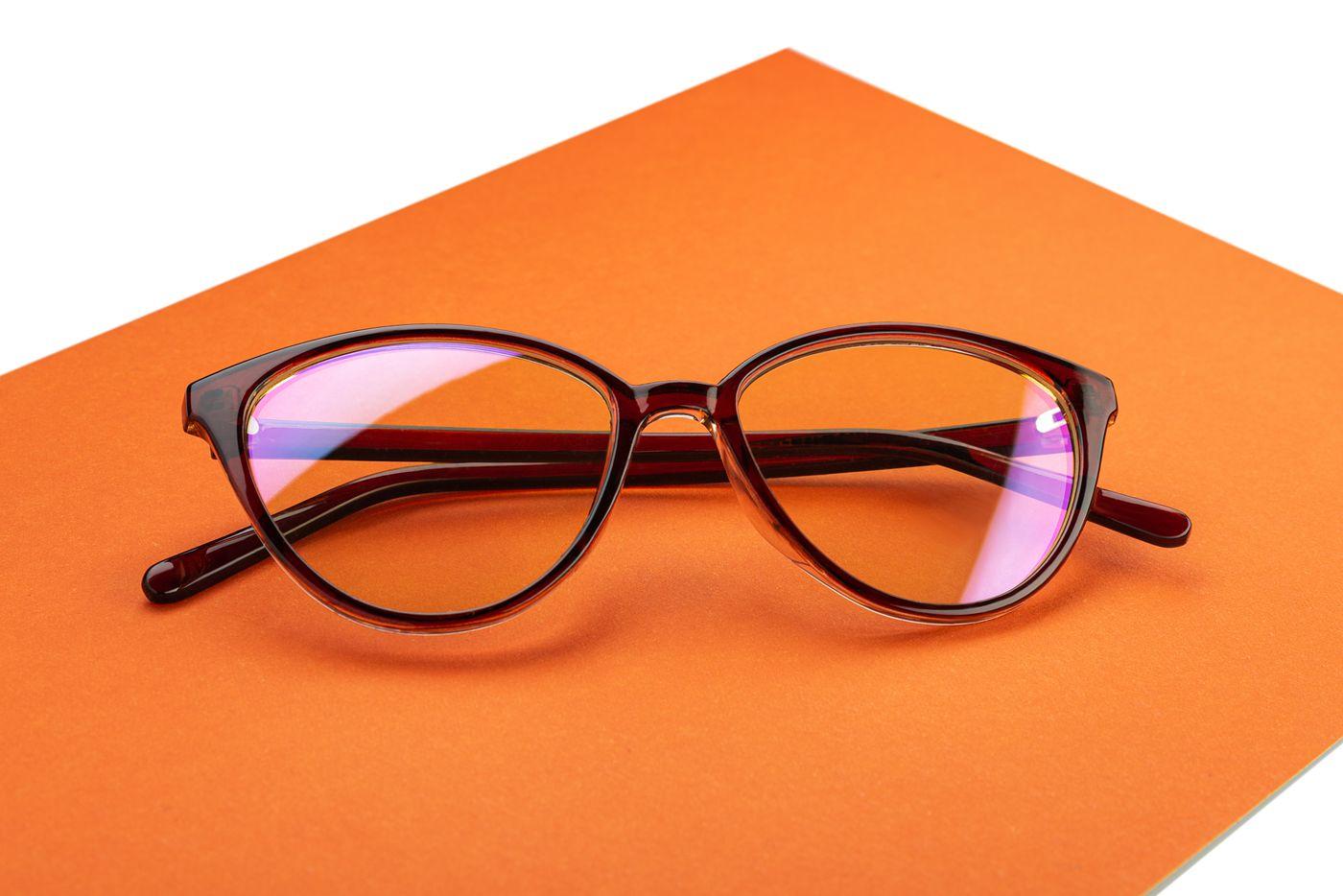
True amber lenses that cut the blue light your phone and TV pour out after dark.
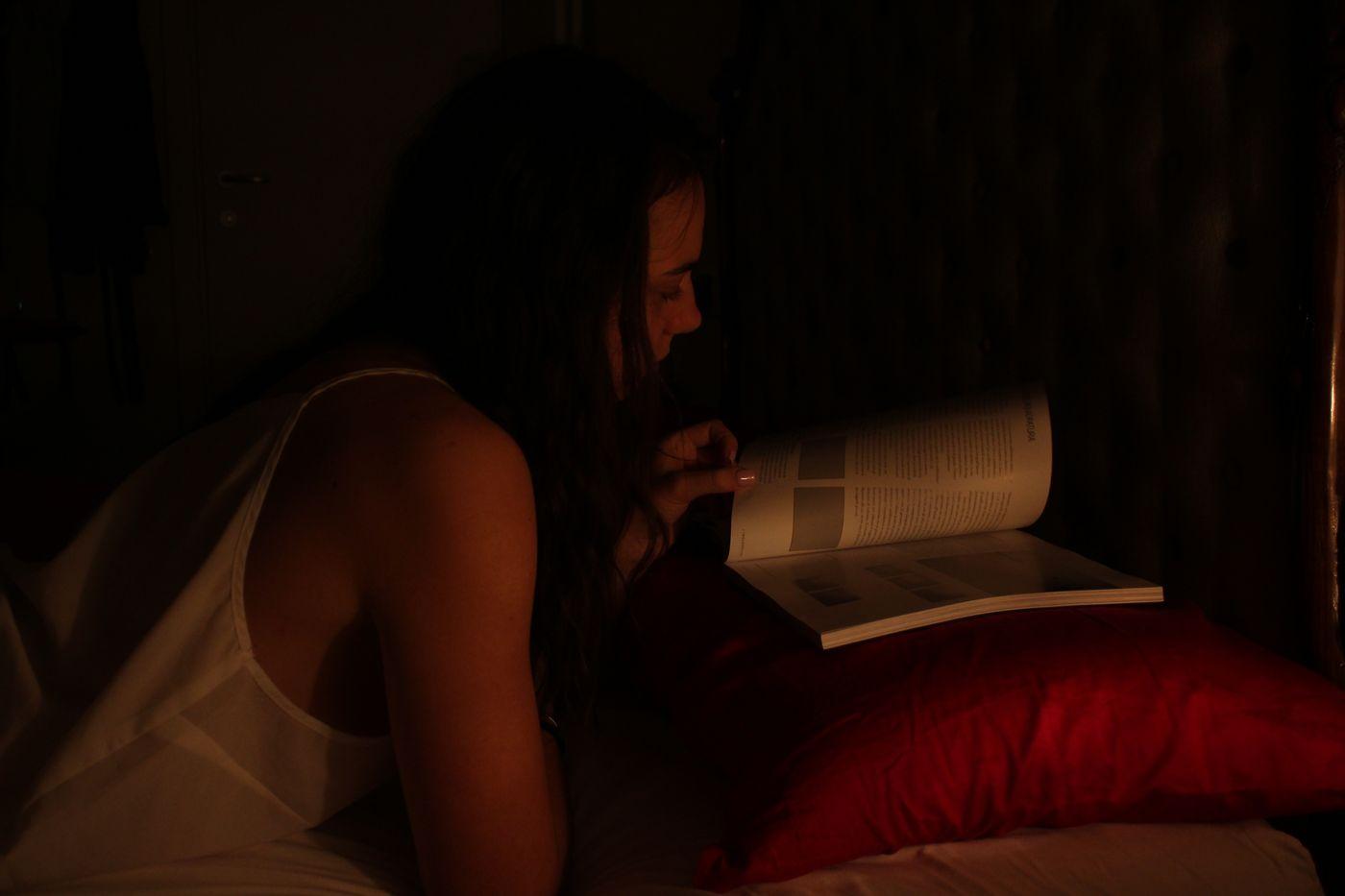
Read in bed without the blue light. Red LED, rechargeable, 3 brightness levels.
Keep reading
- Melatonin, Magnesium, Weighted Blankets and the Wind-Down Ritual: What the Evidence Actually SaysAn honest look at the trials behind the most popular sleep aids—melatonin, magnesium, weighted blankets, lavender and tea—plus how to build a routine that makes them work.6 min read
- Blue Light Before Bed: 4 Hours on a Tablet Delayed Sleep by 10 MinutesYou have heard that phone light ruins sleep. The lab delay is about 10 minutes, and experts split on light. Here is what the trials say to change.6 min read
- Nearly 1 in 3 American Adults Is Short on Sleep. Here's What the Numbers Say—and What Actually HelpsCDC, AASM, RAND and NHTSA data on how much Americans sleep, what it costs, and the five levers that research says move the needle.5 min read
Sources
- Harvey AG, Tang NK (2012). (Mis)perception of sleep in insomnia: a puzzle and a resolution. Psychological Bulletin, 138(1):77-101 — https://pubmed.ncbi.nlm.nih.gov/21967449/
- CDC/NCHS Data Brief No. 559 (April 2026). Short Sleep Duration and Sleep Difficulties Among Adults: United States, 2024 — https://www.cdc.gov/nchs/products/databriefs/db559.htm
- National Sleep Foundation (April 2024). What Is Sleep Quality? — https://www.thensf.org/what-is-sleep-quality/
- Ohayon M, Wickwire EM, Hirshkowitz M, et al. (2017). National Sleep Foundation's sleep quality recommendations: first report. Sleep Health, 3(1):6-19 — https://pubmed.ncbi.nlm.nih.gov/28346153/
- Lichstein KL, Durrence HH, Taylor DJ, Bush AJ, Riedel BW (2003). Quantitative criteria for insomnia. Behaviour Research and Therapy, 41(4):427-445 — https://pubmed.ncbi.nlm.nih.gov/12643966/
- Arand D, Bonnet M, Hurwitz T, Mitler M, Rosa R, Sangal RB (2005). The clinical use of the MSLT and MWT. Sleep, 28(1):123-144 — https://pubmed.ncbi.nlm.nih.gov/15700728/
- Tang NK, Schmidt DA, Harvey AG (2007). Sleeping with the enemy: clock monitoring in the maintenance of insomnia. Journal of Behavior Therapy and Experimental Psychiatry, 38(1):40-55 — https://pubmed.ncbi.nlm.nih.gov/16793001/
- Edinger JD, Arnedt JT, Bertisch SM, et al. (2021). Behavioral and psychological treatments for chronic insomnia disorder in adults: an American Academy of Sleep Medicine systematic review, meta-analysis, and GRADE assessment. Journal of Clinical Sleep Medicine, 17(2):263-298 — https://pubmed.ncbi.nlm.nih.gov/33164741/
- Edinger JD, Arnedt JT, Bertisch SM, et al. (2021). Behavioral and psychological treatments for chronic insomnia disorder in adults: an American Academy of Sleep Medicine clinical practice guideline. Journal of Clinical Sleep Medicine, 17(2):255-262 — https://pubmed.ncbi.nlm.nih.gov/33164742/
- Shechter A, Kim EW, St-Onge MP, Westwood AJ (2018). Blocking nocturnal blue light for insomnia: a randomized controlled trial. Journal of Psychiatric Research, 96:196-202 — https://pubmed.ncbi.nlm.nih.gov/29101797/
- Ekholm B, Spulber S, Adler M (2020). A randomized controlled study of weighted chain blankets for insomnia in psychiatric disorders. Journal of Clinical Sleep Medicine, 16(9):1567-1577 — https://pubmed.ncbi.nlm.nih.gov/32536366/
- National Heart, Lung, and Blood Institute (2022). Insomnia: What Is Insomnia? — https://www.nhlbi.nih.gov/health/insomnia