Blue Light Before Bed: 4 Hours on a Tablet Delayed Sleep by 10 Minutes
You have heard that phone light ruins sleep. The lab delay is about 10 minutes, and experts split on light. Here is what the trials say to change.
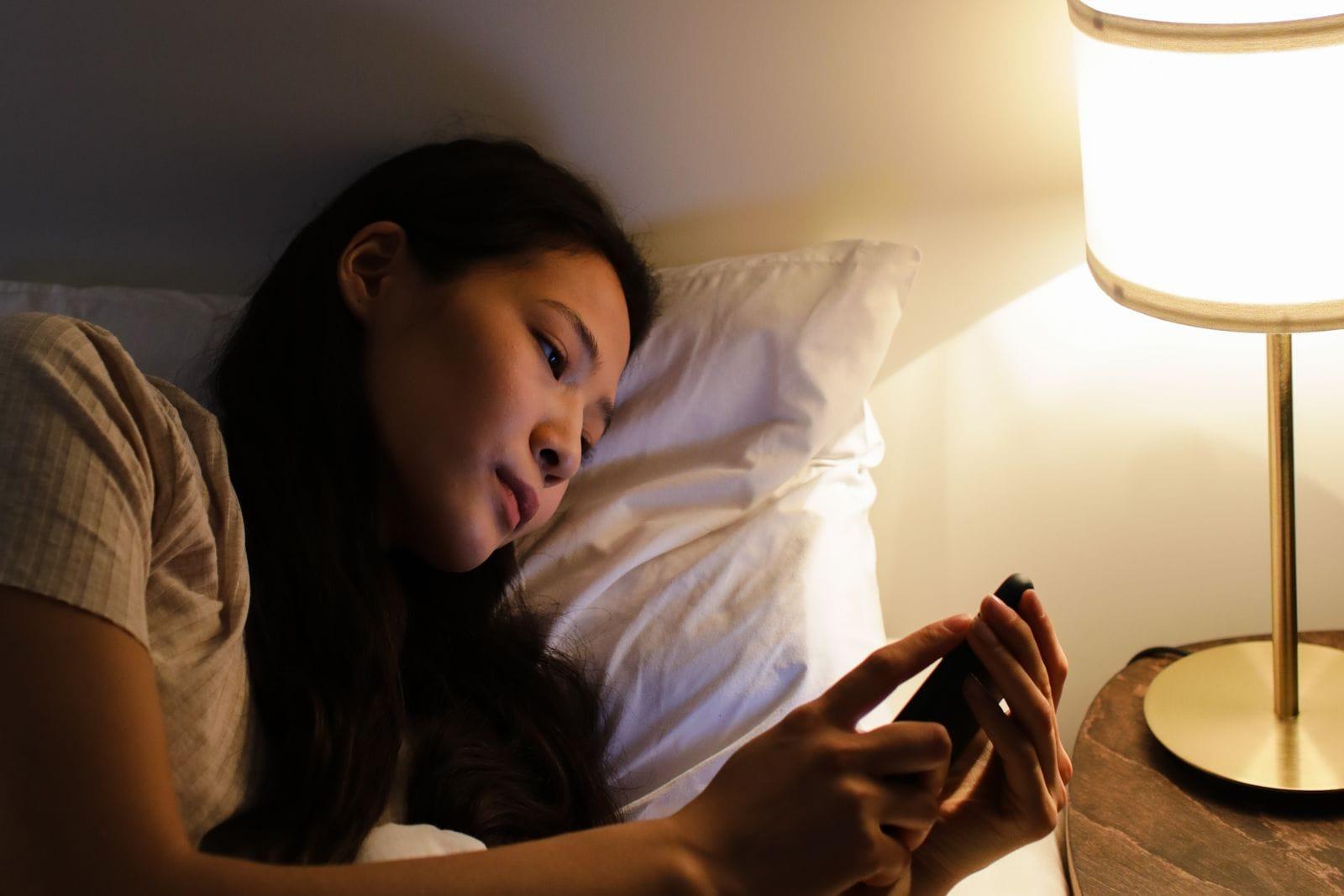
In a Boston hospital, 12 healthy young adults spent 14 days in rooms where researchers controlled the light. On 5 evenings they read on a tablet set to full brightness from 6 p.m. until a 10 p.m. bedtime. On 5 others they read printed books in the same dim room. After the tablet evenings they took nearly 10 minutes longer to fall asleep.
That 2015 experiment is behind many of the warnings about blue light. Ten minutes, after 4 hours at full brightness, is a smaller price than the warnings suggest. The studies since then point somewhere less technical: the time a screen takes from your night, and what you are doing on it.
The numbers
9 in 10. In the National Sleep Foundation's 2011 Sleep in America poll of 1,508 Americans aged 13 to 64, 9 of 10 reported using a technological device in the hour before bed.
41.2% every night. In a 2018 American Cancer Society survey of 122,058 US adults (median age 56), 41.2% said they looked at a phone, tablet or laptop in the hour before sleep every night, and 17.4% said they never did.
About 50 minutes a week. In that same American Cancer Society analysis, published in 2025, nightly users reported 7.64 fewer minutes of sleep on workdays than non-users, roughly 50 minutes less a week, and a 33% higher prevalence of poor sleep quality. It is a one-time survey, so it cannot show which came first.
No agreement on light. In 2023 the National Sleep Foundation asked a panel of 16 experts to vote on 10 statements about screens and sleep. The panel did not reach consensus that the light from pre-sleep screens impairs sleep in children, adolescents or adults.
24 minutes per hour. In a 2022 national survey of Norwegian university students aged 18 to 28, among the 38,809 who used screens in bed, each extra hour of screen time after going to bed went with 24 minutes less sleep and 59% higher odds of insomnia symptoms.
What the light does
Evening light tells the body clock that the day is not over, and it holds back melatonin, the hormone that rises before sleep. Short-wavelength blue light does this more strongly than the same amount of warmer light.
The Boston experiment measured the whole chain. Tablet reading suppressed evening melatonin by about 55%, and the next day's melatonin rise came more than 1.5 hours later. After the tablet evenings they got about 12 fewer minutes of REM sleep and rated themselves sleepier the next morning. Total sleep time did not differ, though bedtime and wake time were fixed by the protocol.
Twelve people, a tablet at maximum brightness, 4 hours a night, in a room otherwise kept very dim. The National Sleep Foundation panel reviewed 35 experimental and intervention studies and described the light effects that were reported as typically small, or as a product of lab setups unlike ordinary use. Most of the adult studies it found were in people under 30.
So the light effect is real and, at home, probably modest. Brightness and hours are the two dials the experiment turned all the way up. Turn both down: dim the screen after dinner and keep the last session short.
Why night mode disappoints
Phones and tablets now ship with a setting that warms the screen's color in the evening. Two tests are worth knowing.
In a 2021 trial at a US university, 167 adults aged 18 to 24 were randomly assigned to spend the hour before bed for 7 nights on a phone with the warm setting on, on a phone with it off, or with no phone. Wrist monitors found no significant differences in sleep between the three groups. In an exploratory look afterwards at people who averaged more than 6.8 hours a night, the no-phone group spent the least time awake in the night. Only the summary of that paper was available to us.
A 2019 lab study at Rensselaer Polytechnic Institute, funded by an alliance of lighting manufacturers, explains part of it. Twelve young adults spent 2 hours on a tablet with the setting at its warmest and at its coolest. Melatonin was suppressed by about 10% and 17%, a gap that was not statistically significant. The authors' reading: changing the color without lowering the brightness may not be enough.
The expert panel reached the same verdict on filters in general, writing that they "consistently showed only minimal improvements" in sleep.
What the screen keeps you doing
A screen is also a reason to stay awake.
The surveys fit that. In the American Cancer Society data, nightly screen users went to bed later: about 9 minutes later among morning types and about 16 minutes among evening types, on workdays. In the 2011 poll, interactive devices such as phones, computers and game consoles were linked with trouble falling asleep, while passive ones such as television were not. In Norway, social media was no worse than other screen activities; the hours counted.
One small trial tested the obvious fix. At a medical university in Shanghai, 38 young adults who slept poorly and used their phones in bed were randomized; half were told to stop using the phone 30 minutes before bedtime for 4 weeks. Their diaries showed time to fall asleep dropping from about 31 minutes to 18, against 29 to 27 in the comparison group, and their sleep lengthened from 6.2 to about 6.6 hours. It is a pilot with self-reported sleep, and nobody was blind to the instruction. The expert panel did agree on one thing that applies to every age: behavioral strategies can reduce the harm.
In practice:
- Pick a time 30 minutes before bed. Set the phone's own downtime or bedtime lock for it.
- Charge the phone outside the bedroom, or across the room.
- Have the replacement ready: a printed book, a podcast with the screen off, tomorrow's list on paper.
What can help: three product types in our range touch this, and the evidence for each is thin.
- Amber evening glasses. In a 2018 Columbia University crossover trial of 14 adults with insomnia symptoms, amber lenses worn for 2 hours before bed for a week added about 28 minutes of measured sleep compared with clear lenses; time to fall asleep did not change significantly. A 2023 Cochrane review, which counted that trial, found 6 trials with 148 people, 3 showing better sleep and 3 showing no difference, and rated the evidence very low certainty.
- A dim red reading light. It lets you read a printed book without the overhead light. We found no sleep trial of one.
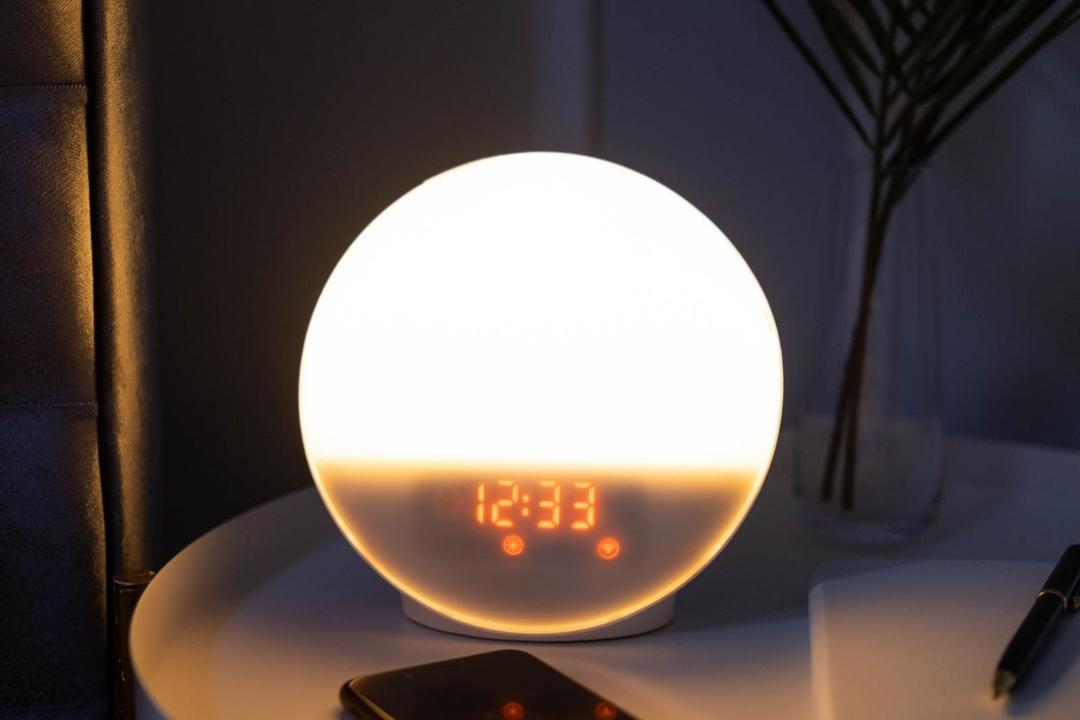
- A sunrise alarm clock. Its job here is to take over the alarm so the phone can leave the bedroom. It has not been tested for that.
Where people go wrong
Trusting the filter and keeping the hour. A warm-tinted screen at midnight is still a screen at midnight. The 2021 trial found nothing from the setting alone.
Blaming blue light for a late bedtime. If the show ends at 12:30, the 10-minute delay in falling asleep is the small part of the loss.
Reading surveys as proof. People who sleep badly also pick up the phone because they are awake. The Norwegian and American surveys cannot separate the two. Both were one-time snapshots, which their authors list as a limitation.
Assuming adults are in the clear. The panel's lack of consensus for adults may reflect too little published research, the panel wrote; it also raised the possibility that adults are more resilient to screens. Children and teenagers are where it did agree that screen use, and screen content before bed, impair sleep.
Phone habits will not fix loud snoring, breathing pauses or insomnia that has lasted for months. Those belong with a clinician.
A screen plan for tonight
- Decide when the last screen goes off: 30 minutes before bed is what the one trial tested.
- Before that, turn the brightness down; do not count on the warm tint.
- Keep the phone off the bed and out of reach.
- Give it 4 weeks, the length of the trial, before judging.
This article is general information, not medical advice. If you regularly take more than 30 minutes to fall asleep, wake unrefreshed, or feel sleepy during the day despite enough time in bed, talk to a doctor or a sleep specialist.
Products mentioned
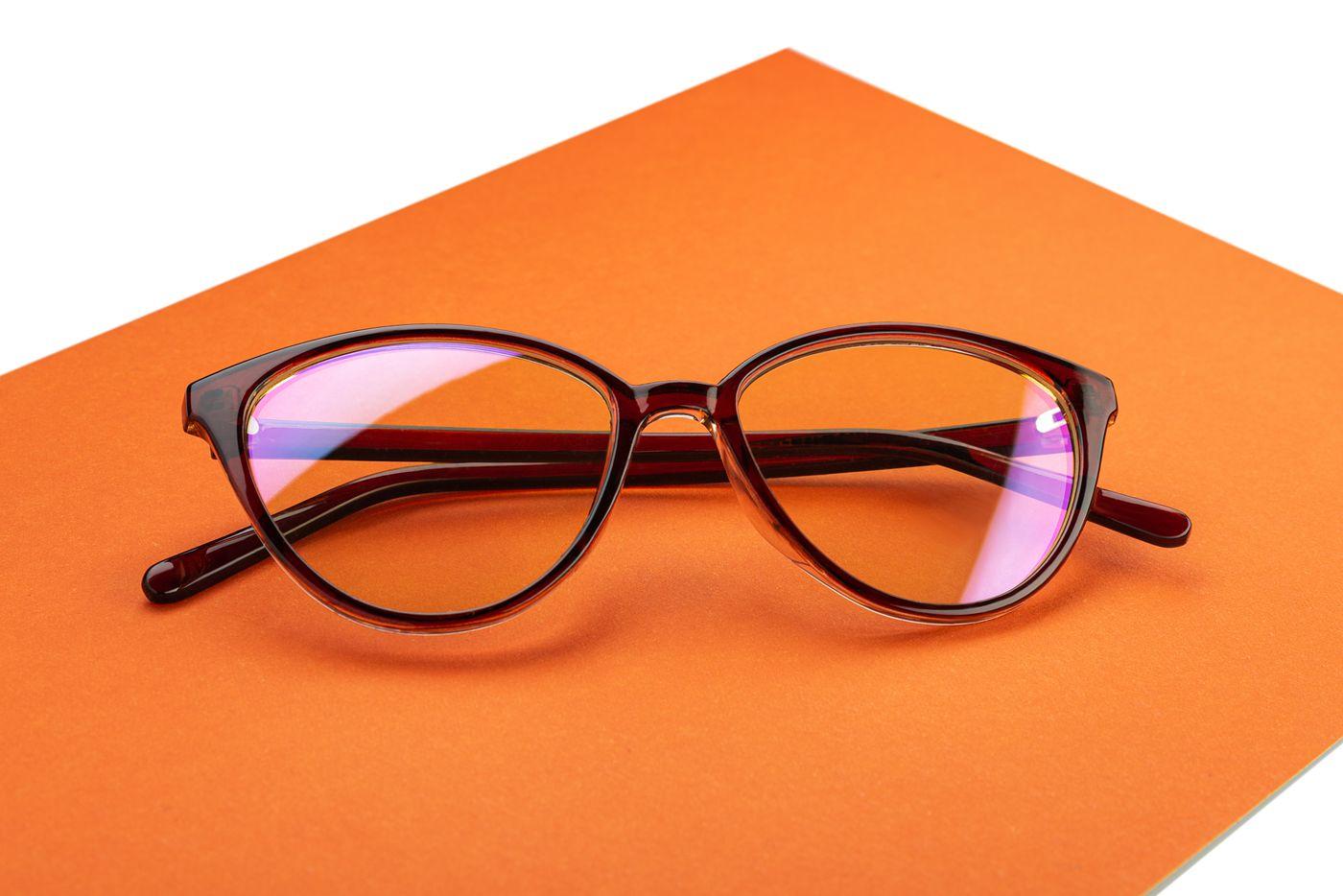
True amber lenses that cut the blue light your phone and TV pour out after dark.
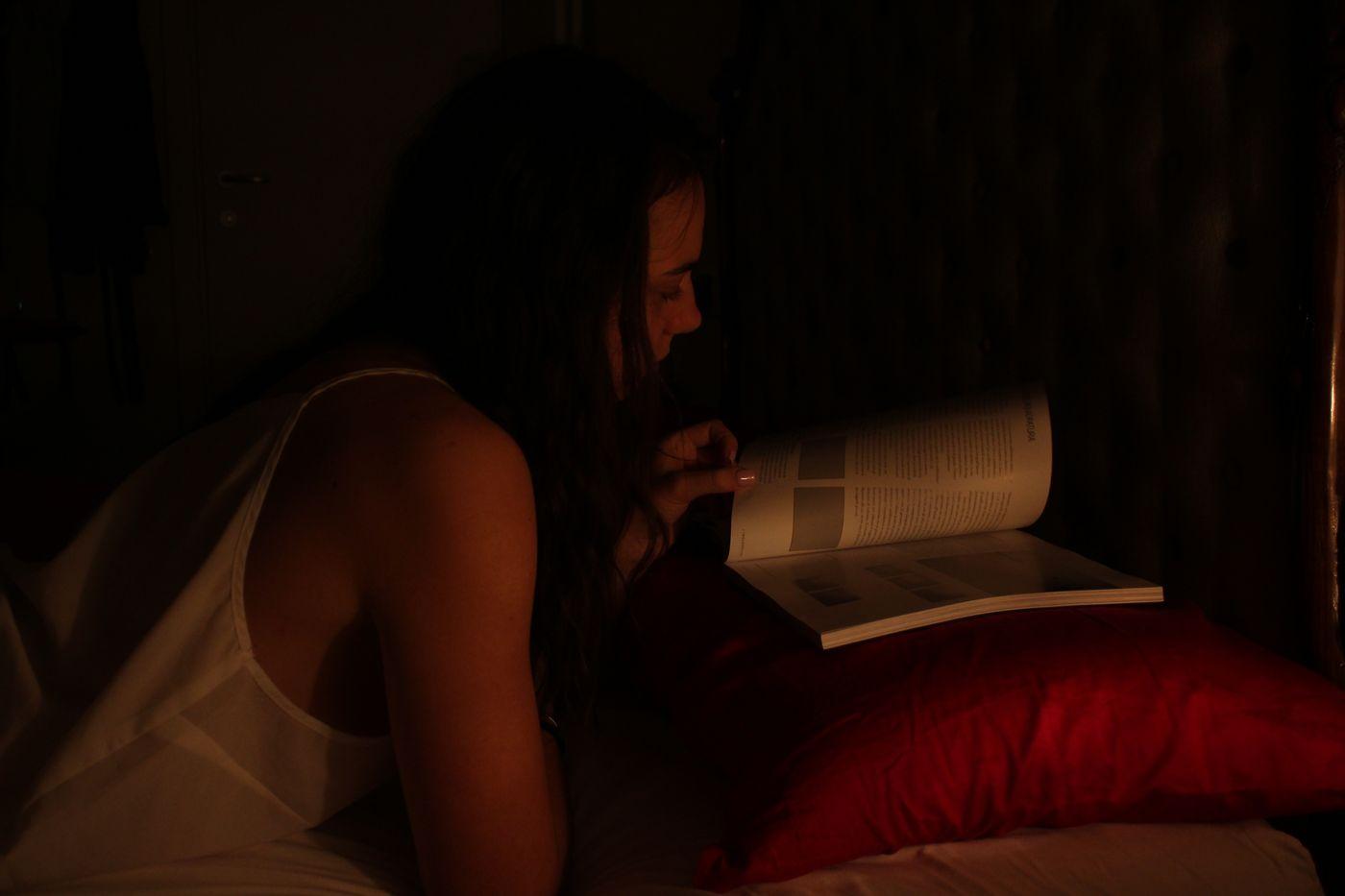
Read in bed without the blue light. Red LED, rechargeable, 3 brightness levels.
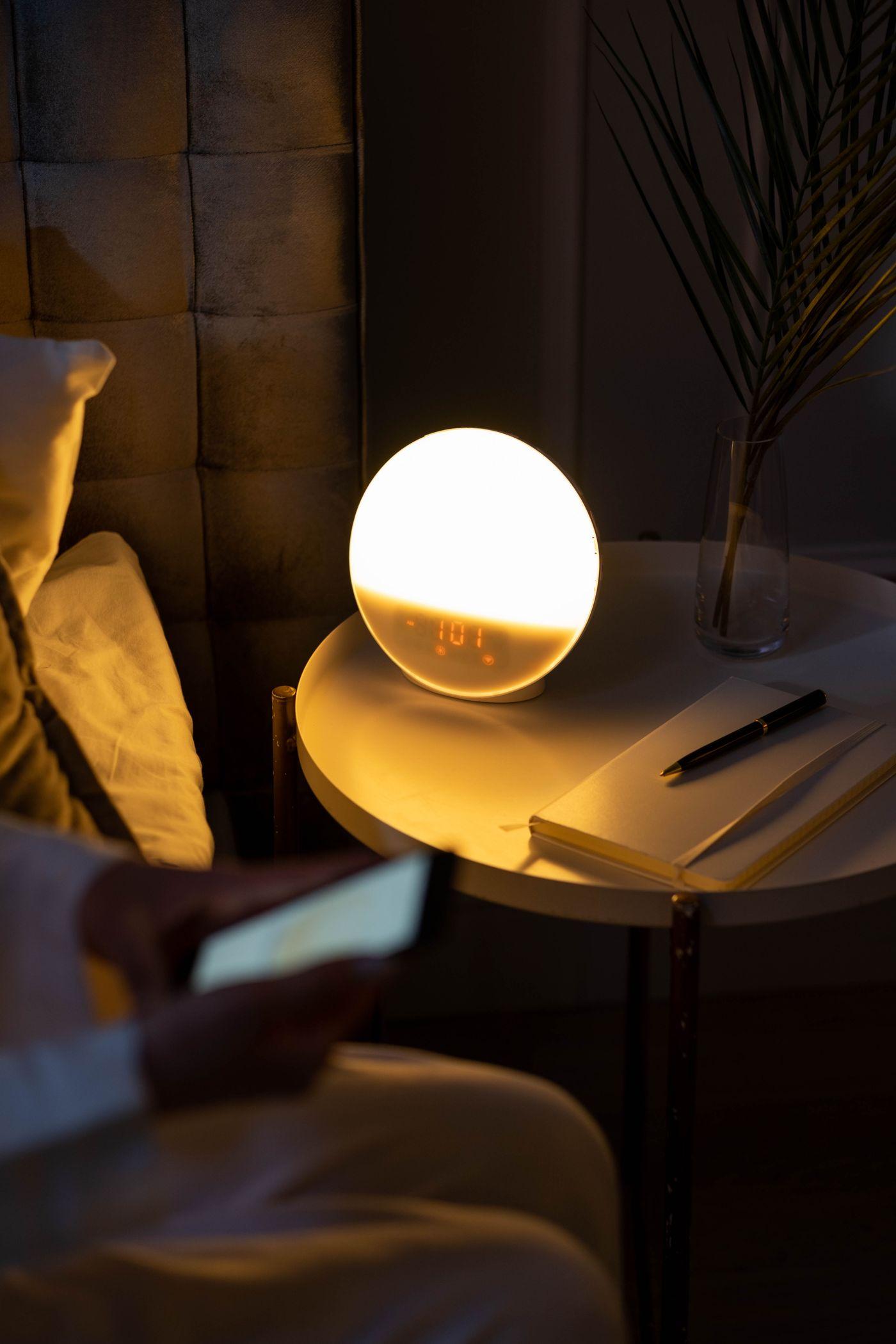
Brightens gradually over 20, 30 or 40 minutes so you wake before the sound does.
Keep reading
- Sleep 1.2 Hours More, Eat 270 Fewer Calories a Day: What the Trials ShowEating less is harder on short sleep. In a 2022 trial, adults who slept 1.2 hours longer ate 270 fewer calories a day, with no diet advice at all.7 min read
- Sleeping With a Light On: One Night at 100 Lux Raised Insulin ResistanceYou drift off with the lamp or the TV on. A 20-person lab study, a 43,722-woman cohort and 88,905 light-sensor wearers suggest what that light does.7 min read
- Morning Light Sets the Body Clock Earlier. A Week Outdoors Moved It 2 HoursMorning sunlight pulls your body clock earlier; evening light pushes it later. What the studies show, how much light you need and when to get it.7 min read
Sources
- Chang AM, Aeschbach D, Duffy JF, Czeisler CA (2015). Evening use of light-emitting eReaders negatively affects sleep, circadian timing, and next-morning alertness. Proceedings of the National Academy of Sciences, 112(4):1232-1237 — https://pubmed.ncbi.nlm.nih.gov/25535358/
- Gradisar M, Wolfson AR, Harvey AG, Hale L, Rosenberg R, Czeisler CA (2013). The sleep and technology use of Americans: findings from the National Sleep Foundation's 2011 Sleep in America poll. Journal of Clinical Sleep Medicine, 9(12):1291-1299 — https://pubmed.ncbi.nlm.nih.gov/24340291/
- Hartstein LE, Mathew GM, Reichenberger DA, et al. (2024). The impact of screen use on sleep health across the lifespan: a National Sleep Foundation consensus statement. Sleep Health, 10(4):373-384 — https://pubmed.ncbi.nlm.nih.gov/38806392/
- Zhong C, Masters M, Donzella SM, Diver WR, Patel AV (2025). Electronic screen use and sleep duration and timing in adults. JAMA Network Open, 8(3):e252493 — https://pubmed.ncbi.nlm.nih.gov/40146105/
- Hjetland GJ, Skogen JC, Hysing M, Gradisar M, Sivertsen B (2025). How and when screens are used: comparing different screen activities and sleep in Norwegian university students. Frontiers in Psychiatry, 16:1548273 — https://pubmed.ncbi.nlm.nih.gov/40270574/
- He JW, Tu ZH, Xiao L, Su T, Tang YX (2020). Effect of restricting bedtime mobile phone use on sleep, arousal, mood, and working memory: a randomized pilot trial. PLoS One, 15(2):e0228756 — https://pubmed.ncbi.nlm.nih.gov/32040492/
- Duraccio KM, Zaugg KK, Blackburn RC, Jensen CD (2021). Does iPhone night shift mitigate negative effects of smartphone use on sleep outcomes in emerging adults? Sleep Health, 7(4):478-484 — https://pubmed.ncbi.nlm.nih.gov/33867308/
- Nagare R, Plitnick B, Figueiro MG (2019). Does the iPad Night Shift mode reduce melatonin suppression? Lighting Research and Technology, 51(3):373-383 — https://pubmed.ncbi.nlm.nih.gov/31191118/
- Shechter A, Kim EW, St-Onge MP, Westwood AJ (2018). Blocking nocturnal blue light for insomnia: a randomized controlled trial. Journal of Psychiatric Research, 96:196-202 — https://pubmed.ncbi.nlm.nih.gov/29101797/
- Singh S, Keller PR, Busija L, et al. (2023). Blue-light filtering spectacle lenses for visual performance, sleep, and macular health in adults. Cochrane Database of Systematic Reviews, 8(8):CD013244 — https://pubmed.ncbi.nlm.nih.gov/37593770/