Sleeping With a Light On: One Night at 100 Lux Raised Insulin Resistance
You drift off with the lamp or the TV on. A 20-person lab study, a 43,722-woman cohort and 88,905 light-sensor wearers suggest what that light does.
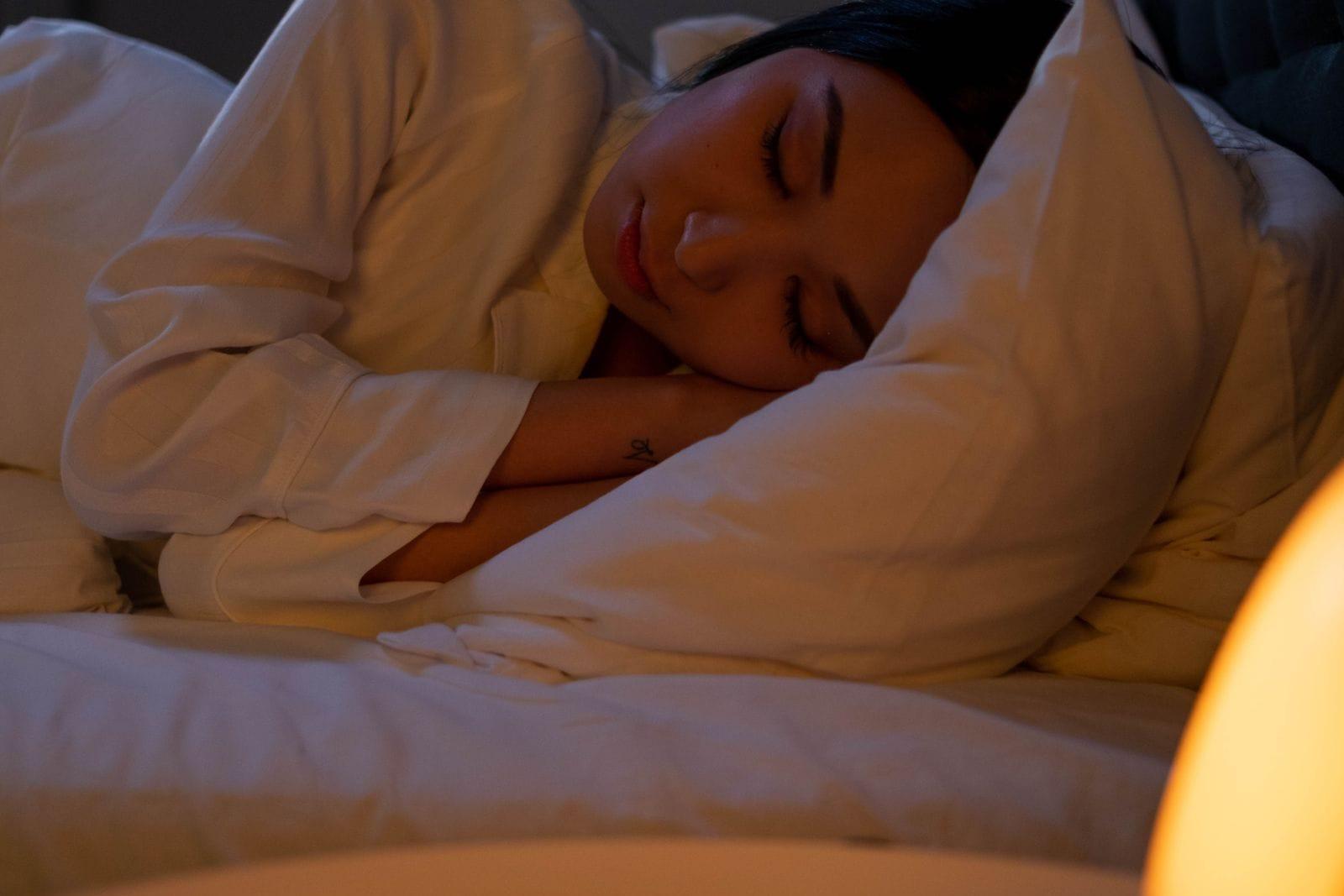
In a sleep laboratory at Northwestern University in Chicago, 20 healthy young adults, average age about 27, spent two nights wired to monitors. Ten slept both nights in near darkness, under 3 lux. The other 10 slept the first night in the dark and the second under an ordinary overhead room light of 100 lux. The next morning, the people who had slept under the light were more insulin resistant, and their hearts had beaten faster all night. The 2022 paper is one night in 20 people, and its authors say larger studies are needed to confirm it.
The numbers
- One night under 100 lux raised next-morning insulin resistance. In the Northwestern study (2022, 20 healthy adults, 14 of them women), a night under overhead room light raised nighttime heart rate, lowered heart rate variability and raised next-morning insulin resistance, compared with sleeping under 3 lux. Melatonin did not differ between the groups.
- Women who slept with a TV or light on gained more weight. In the NIH Sister Study (2019, 43,722 US women aged 35 to 74, followed for an average of 5.7 years), those who slept with a television or a light on in the room were 17% more likely to gain 11 pounds (5 kg) or more, and 33% more likely to become obese, than women who slept in the dark.
- 54% of older adults in a Chicago study had light during their darkest 5 hours. Among 552 Chicago adults aged 63 to 84 who wore wrist light sensors for a week (Northwestern, 2023), 297 had some light during their darkest 5 hours. They had 1.8 times the odds of obesity, 2.0 times the odds of diabetes and 1.7 times the odds of high blood pressure.
- Brighter nights went with higher mortality. In 88,905 UK Biobank participants (mean age 62) who wore light sensors for a week and were followed for 8 years (Flinders University, 2024), the tenth with the brightest nights (12:30 to 6 a.m.) had a 34% higher risk of death from any cause than the darker half after adjustment for age, sex and ethnicity, and 21% higher after further adjustment for income, education, smoking, alcohol and physical activity.
- 5 lux in the bedroom, nearly twice the depression risk. In 863 older adults in Nara, Japan (Nara Medical University, 2018), bedroom light averaging 5 lux or more went with 1.9 times the risk of developing depressive symptoms over a median of 2 years.
What light does while your eyes are closed
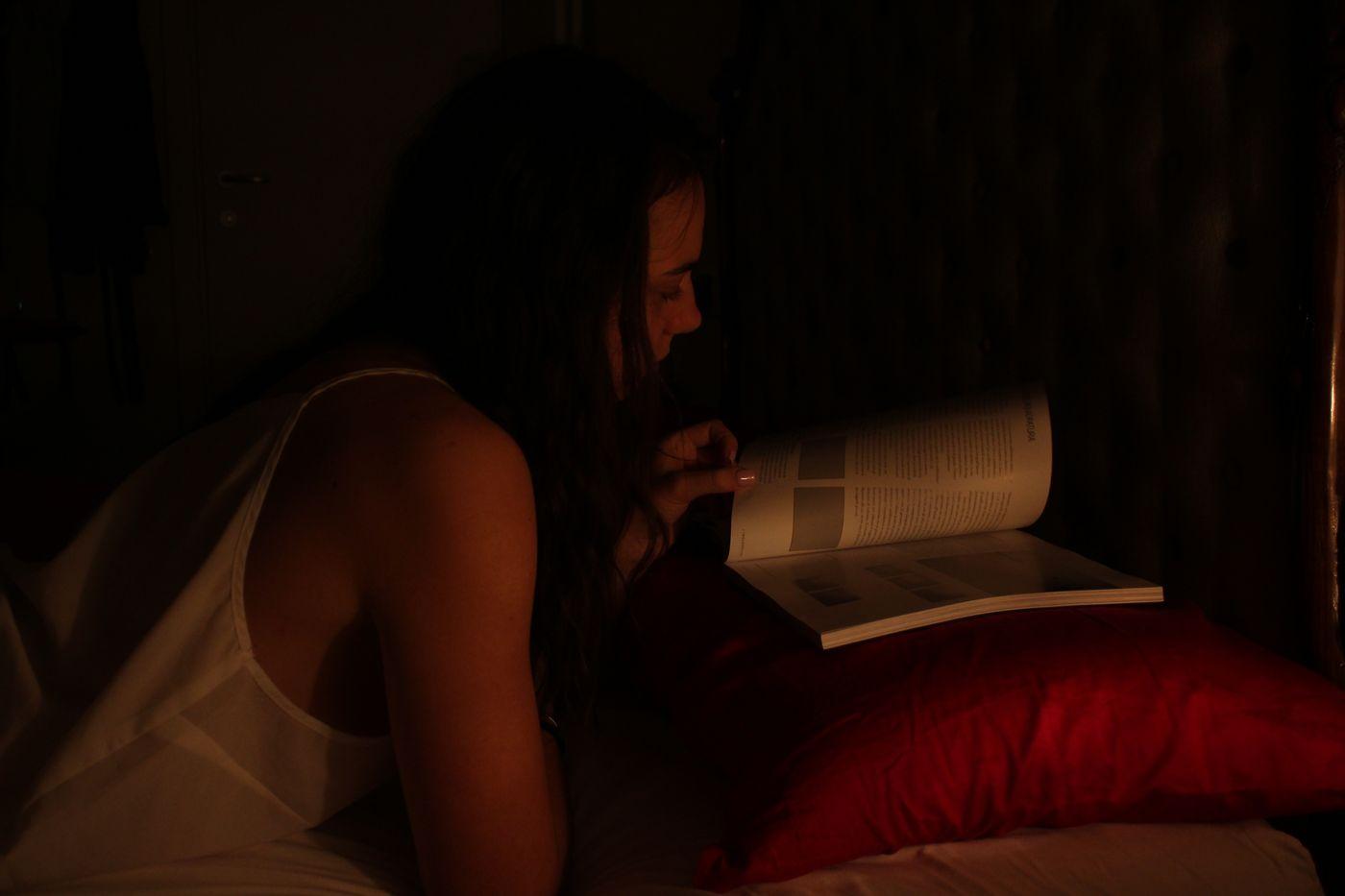
Closed eyelids are not a blackout: the Northwestern authors cite estimates that 5% to 9% of the light in the room reaches the retina through closed lids.
In their experiment melatonin did not explain it: its level and the time it began to rise changed no differently after the lit night than after a dark one, though the authors say their sample was too small to rule melatonin out. Heart rate was higher and heart rate variability lower all night under 100 lux, and the people whose heart rate variability shifted more tended to have a larger rise in early insulin release during a glucose test the next morning. Compared with the group that slept in the dark both nights, the lit night also brought proportionately less slow-wave and REM sleep, but no more awakenings. The authors' tentative reading is that light pushed the sleeping body's nervous system toward its 'fight or flight' side, and that this, rather than broken sleep, may explain the change.
Light in the room, years later
The cohorts cannot prove cause; people who fall asleep with the television on differ from people who do not.
The Sister Study asked 43,722 women once, at enrollment, what light was in their bedroom while they slept: nothing, a small night light, light from outside the room, or a light or television in the room. Over the following years, 21.5% of the last group gained 11 pounds or more, against 15.6% of the women who slept in the dark. Adjusted for age, income, smoking, alcohol, depression and other differences, that was a 17% higher risk, and it held when sleep length, diet and activity were added. The night-light group was no more likely to gain 11 pounds (15.9%), though its risk of becoming obese was 15% higher.
The older Chicago adults with any light during their darkest 5 hours had higher odds of obesity, diabetes and high blood pressure, but light and illness were measured at the same time, so the authors cannot say which came first. The UK Biobank analysis is the largest and the one to read most carefully: two of its authors have received research funding from lighting companies, a third co-founded the company that made the wrist sensors, and its "night" is a clock window, not time asleep. When the authors allowed for short sleep, the brightest tenth's extra risk fell to 11% and was no longer statistically significant.
How dark is dark enough
Most bedrooms in the Nara cohort were already dark: the median measured 0.74 lux at night (2015), and in the depression study the group that fared worse averaged 5 lux or more.
The NHLBI puts it plainly: keep your bedroom quiet, cool and dark, and "a dim night light is fine, if needed." For daytime sleepers it adds light-blocking curtains. In practice:
- Walk the room with the lights off. Cover standby LEDs and turn a glowing clock away from the bed.
- Block the window with blackout curtains or a blind, and close the gaps at the edges.
- If you need a light for the bathroom, make it dim, low and warm. The eye's clock receptors are most sensitive to blue light around 446 to 477 nanometers (2001 action spectrum, 72 volunteers), so a warm-toned source at floor level is the smaller insult.
- If the room cannot be made dark, block the light at the eyes with a sleep mask.
What can help:
- Contoured sleep mask. The only item in our range tested at home on this question: in a Cardiff experiment (2023) with 89 young adults, a week in a mask brought slightly better word-pair learning and slightly faster reactions. The trial did not measure insulin or blood pressure.
- Red clip-on reading light. A dim, warm, directional light for reading or a bathroom trip, far from the blue band the clock receptors respond to most. None of the studies here tested a red reading light against sleep.
- Sunrise alarm clock. The reverse idea: dark all night, light only in the last 30 minutes before the alarm. Two small crossover trials, of 16 and 8 people who struggled to wake, found better alertness after a simulated dawn. The larger trial had financial support from the maker of the wake-up light it tested. Nothing on metabolism.
Where people go wrong
Treating closed eyes as darkness. In the sleep-lab study, 100 lux through closed lids was enough to shift heart rate and next-morning insulin.
Falling asleep to the television. A television or a light on in the room was the exposure the Sister Study tied most strongly to weight gain, and the two did about equally badly. A sleep timer, or a bedroom without the set, is the smallest fix.
Overcorrecting. In the same study, women with a small night light were no more likely than women in the dark to gain 11 pounds, though slightly more likely to become obese, and the NHLBI says a dim one is fine. For anyone who gets up at night, that leaves room for a dim, low light.
Reading the cohorts as proof. Of the studies here, only the 20-person experiment tested light against blood sugar directly, and it covered one night. None of these studies tested whether darkening a bedroom lowers blood sugar or blood pressure over months. If you have diabetes, high blood pressure or a mood disorder, none of this replaces your treatment.
Tonight's dark-room check
- Television off or on a timer.
- Standby LEDs covered, clock face turned away.
- Curtains or a blind that meet at the edges.
- A dim, warm, low light for bathroom trips, on only when needed.
- A sleep mask if the room still is not dark.
This article is general information, not medical advice. If you have persistent trouble sleeping, or a condition such as diabetes, high blood pressure or depression, talk to a clinician before changing how you manage it.
Products mentioned
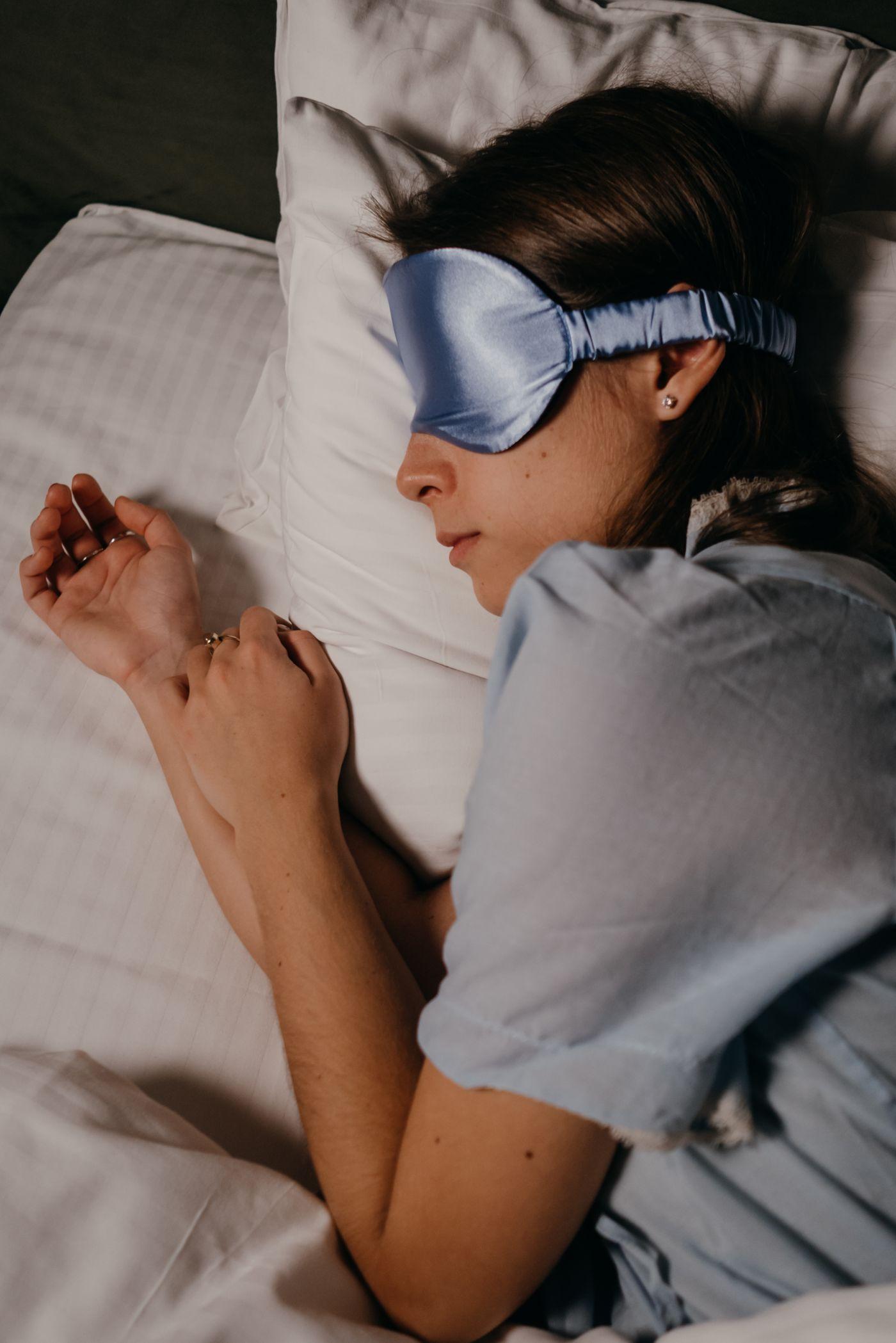
Molded eye cups, zero pressure on the eyes, no light leaks around the nose.
Read in bed without the blue light. Red LED, rechargeable, 3 brightness levels.
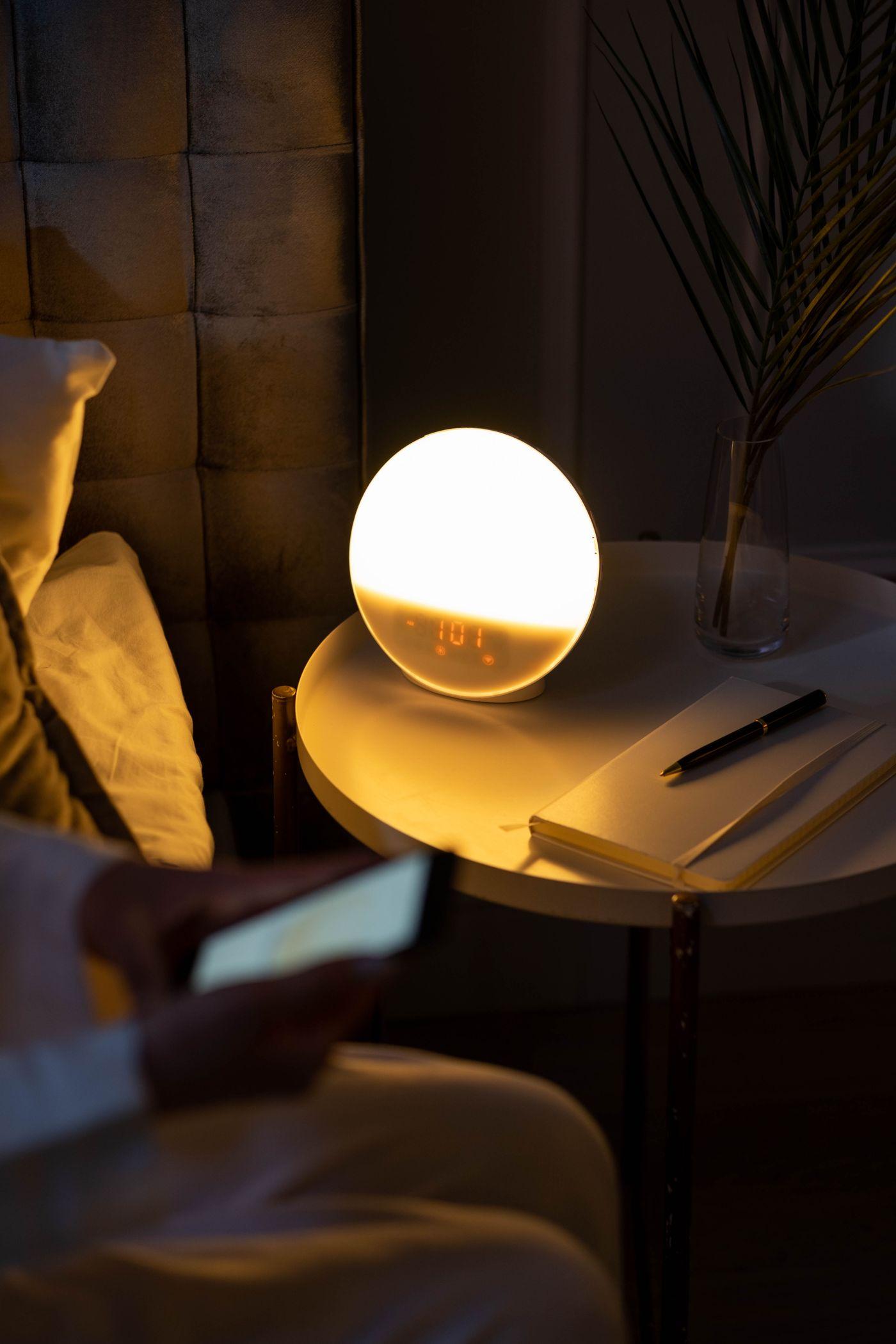
Brightens gradually over 20, 30 or 40 minutes so you wake before the sound does.
Keep reading
- Blue Light Before Bed: 4 Hours on a Tablet Delayed Sleep by 10 MinutesYou have heard that phone light ruins sleep. The lab delay is about 10 minutes, and experts split on light. Here is what the trials say to change.6 min read
- Weekend Catch-Up Sleep Repaid About 1 of 12 Lost Hours in a Lab TestShort on sleep all week and sleeping in on Saturday? What lab studies show a weekend repays, what it doesn't, and how to catch up without wrecking Monday.6 min read
- Sleep 1.2 Hours More, Eat 270 Fewer Calories a Day: What the Trials ShowEating less is harder on short sleep. In a 2022 trial, adults who slept 1.2 hours longer ate 270 fewer calories a day, with no diet advice at all.7 min read
Sources
- Mason IC, Grimaldi D, Reid KJ, Warlick CD, Malkani RG, Abbott SM, Zee PC (2022). Light exposure during sleep impairs cardiometabolic function. Proceedings of the National Academy of Sciences, 119(12):e2113290119 — https://pubmed.ncbi.nlm.nih.gov/35286195/
- Park YM, White AJ, Jackson CL, Weinberg CR, Sandler DP (2019). Association of exposure to artificial light at night while sleeping with risk of obesity in women. JAMA Internal Medicine, 179(8):1061-1071 — https://pubmed.ncbi.nlm.nih.gov/31180469/
- Kim M, Vu TH, Maas MB, et al. (2023). Light at night in older age is associated with obesity, diabetes, and hypertension. Sleep, 46(3):zsac130 — https://pubmed.ncbi.nlm.nih.gov/35729737/
- Windred DP, Burns AC, Lane JM, et al. (2024). Brighter nights and darker days predict higher mortality risk: a prospective analysis of personal light exposure in >88,000 individuals. Proceedings of the National Academy of Sciences, 121(43):e2405924121 — https://pubmed.ncbi.nlm.nih.gov/39405349/
- Obayashi K, Saeki K, Kurumatani N (2018). Bedroom light exposure at night and the incidence of depressive symptoms: a longitudinal study of the HEIJO-KYO cohort. American Journal of Epidemiology, 187(3):427-434 — https://pubmed.ncbi.nlm.nih.gov/28992236/
- Obayashi K, Saeki K, Kurumatani N (2015). Light exposure at night is associated with subclinical carotid atherosclerosis in the general elderly population: the HEIJO-KYO cohort. Chronobiology International, 32(3):310-317 — https://pubmed.ncbi.nlm.nih.gov/25357212/
- Brainard GC, Hanifin JP, Greeson JM, et al. (2001). Action spectrum for melatonin regulation in humans: evidence for a novel circadian photoreceptor. Journal of Neuroscience, 21(16):6405-6412 — https://pubmed.ncbi.nlm.nih.gov/11487664/
- Greco V, Bergamo D, Cuoccio P, Konkoly KR, Muñoz Lombardo K, Lewis PA (2023). Wearing an eye mask during overnight sleep improves episodic learning and alertness. Sleep, 46(3):zsac305 — https://pubmed.ncbi.nlm.nih.gov/36521010/
- Van de Werken M, Giménez MC, de Vries B, Beersma DG, Van Someren EJ, Gordijn MC (2010). Effects of artificial dawn on sleep inertia, skin temperature, and the awakening cortisol response. Journal of Sleep Research, 19(3):425-435 — https://pubmed.ncbi.nlm.nih.gov/20408928/
- Thompson A, Jones H, Gregson W, Atkinson G (2014). Effects of dawn simulation on markers of sleep inertia and post-waking performance in humans. European Journal of Applied Physiology, 114(5):1049-1056 — https://pubmed.ncbi.nlm.nih.gov/24509892/
- NHLBI (updated 24 Mar 2022). Sleep Deprivation and Deficiency: Healthy Sleep Habits — https://www.nhlbi.nih.gov/health/sleep-deprivation/healthy-sleep-habits