Weekend Catch-Up Sleep Repaid About 1 of 12 Lost Hours in a Lab Test
Short on sleep all week and sleeping in on Saturday? What lab studies show a weekend repays, what it doesn't, and how to catch up without wrecking Monday.
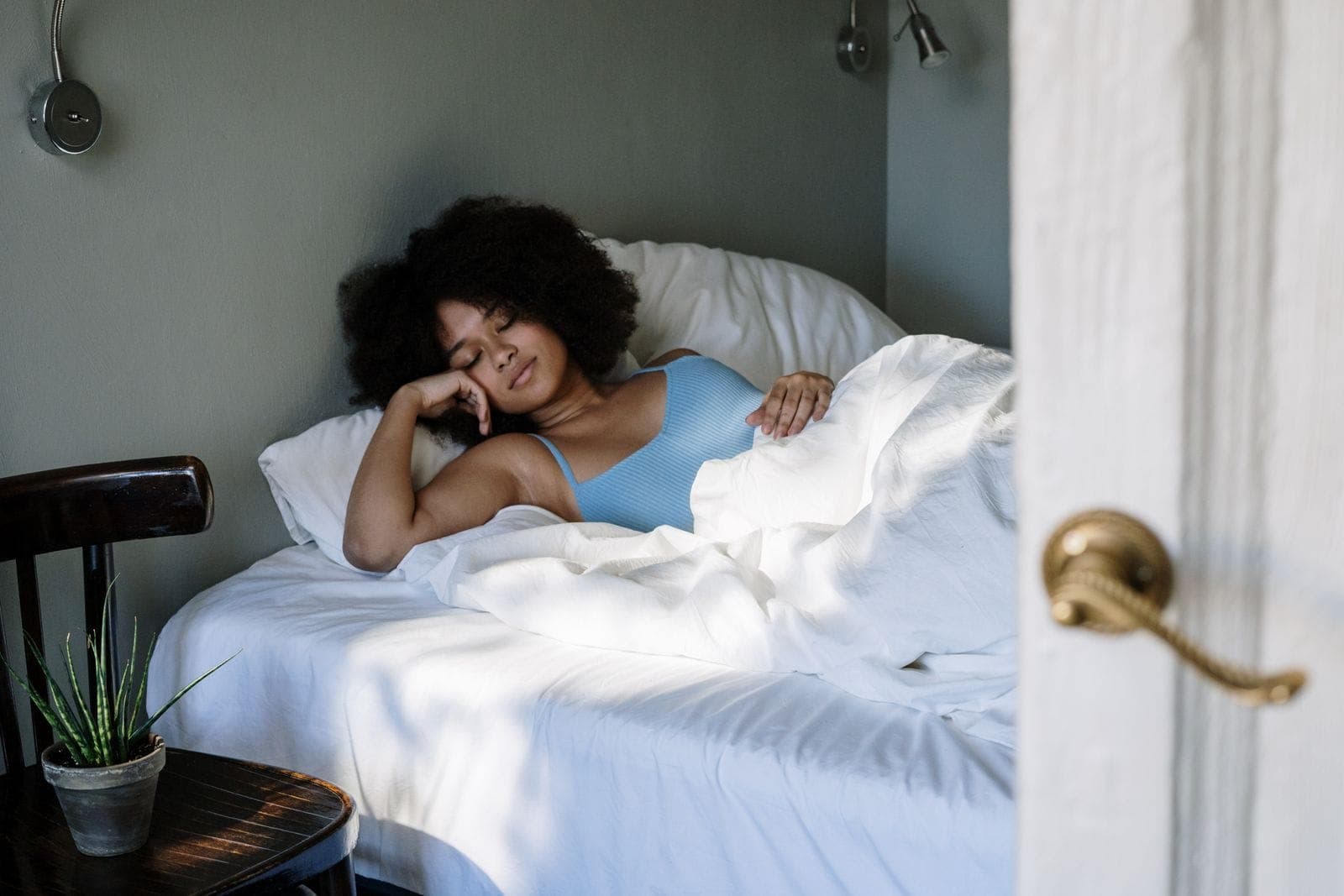
In a hospital sleep lab run by University of Colorado Boulder researchers, 14 young adults spent a simulated workweek with 5 hours in bed a night. Then came the weekend: two days to sleep as long as they liked, naps allowed. They slept in by hours. And when the researchers added it up, the weekend had paid back about 1 hour of the more than 12 the week had taken.
That doesn't make sleeping in useless. It means the weekend is a partial refund, and how you take it matters almost as much as how much you take.
The numbers
Three in ten adults are short. In the CDC's 2024 National Health Interview Survey, 30.5% of US adults slept less than 7 hours on average in a 24-hour period.
Weekends run about 55 minutes longer. The Bureau of Labor Statistics' 2025 American Time Use Survey found people 15 and older spent 8.76 hours a day sleeping on weekdays and 9.68 hours on weekends and holidays, counting naps and time lying awake.
1 to 2 extra hours is the expert figure. A 2023 National Sleep Foundation panel concluded that when work-day sleep falls short, sleeping an additional 1 to 2 hours on non-work days can help most people recover.
One 10-hour night was not enough. In a 2010 University of Pennsylvania experiment with 159 healthy adults, a single 10-hour recovery night after five 4-hour nights left attention, sleepiness and fatigue short of where they started.
What a weekend actually repays
Sleep loss builds a debt your brain tries to collect. Once you finally have the chance, you sleep longer and deeper, but the collection is slow.
The Colorado study, published in 2019, randomized 36 healthy adults in their mid-20s to three groups: 9 hours in bed every night, 5 hours every night, or 5 hours on weekdays with a free weekend in between. The weekend group slept about 3 hours more than usual across Friday and Saturday nights. Then Sunday undid part of it. Knowing they had to be up early on Monday, they still went to bed at their usual time and slept less than at the start. Net result across the weekend: about 1.1 hours of extra sleep against more than 12 hours lost.
The Pennsylvania team tested the dose more directly. After five nights of 4 hours in bed, people got one recovery night of 0, 2, 4, 6, 8 or 10 hours. More sleep brought more recovery every step of the way. But even the 10-hour group, which slept 8.96 hours, still had more lapses of attention and felt sleepier than at baseline. The authors concluded full recovery may take a longer night or several nights.
A smaller 2016 study at Japan's National Center of Neurology and Psychiatry in Tokyo shows how slow that can be. Fifteen healthy young men spent 9 nights with 12 hours in bed. At home they slept about 7.4 hours, roughly an hour less than the 8.4 hours their bodies settled on in the lab, and paying off that hour took four nights of long sleep. Their sleepiness eased sooner, within the first three nights.
Why sleeping until noon backfires on Monday
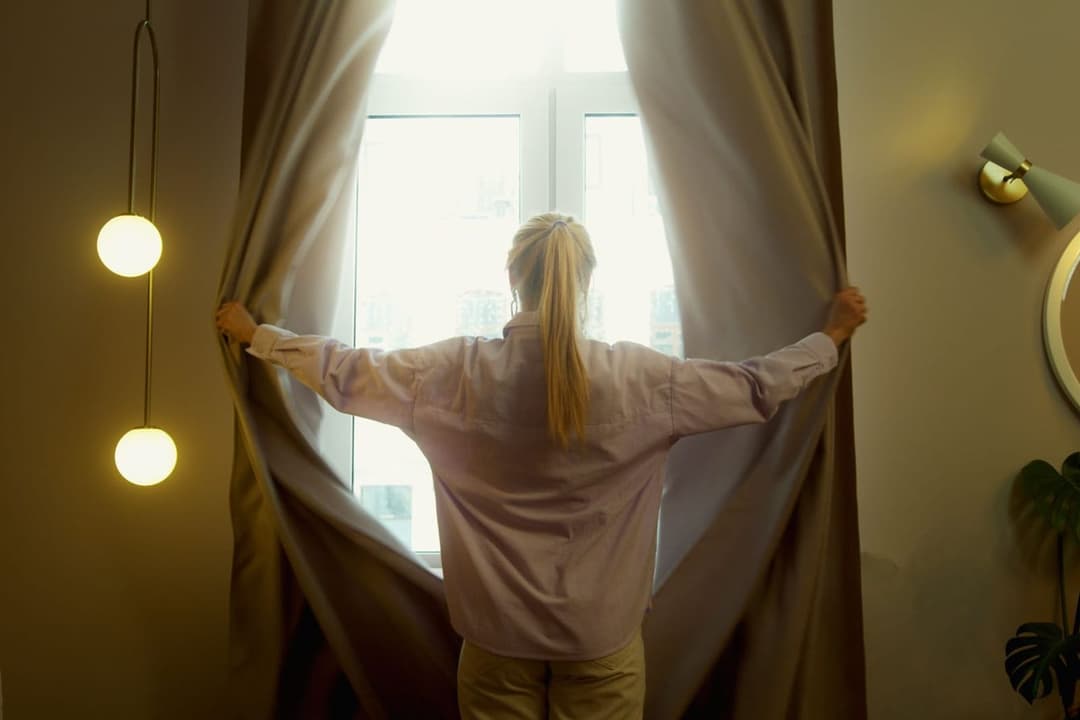
Your body clock takes much of its timing from when light reaches your eyes. Sleep late, and the morning light that pulls the clock earlier arrives late too.
That is what happened in Colorado. The weekend group woke about 3.5 to 3.9 hours later than usual, and by Monday the end of their biological night, measured by the hormone melatonin, had shifted about 1.4 hours later. They were getting up for work while their bodies still treated it as night. The authors tie this to the concept of social jetlag: a weekly time-zone change without the plane.
The metabolic results were worse than the sleep math. During the two short nights after the weekend, after-dinner snacking climbed again, and by the end both short-sleep groups had gained a similar amount of weight, about 3 pounds (1.3 to 1.4 kg). Insulin sensitivity across the whole body fell about 13% in the group that never got a weekend and about 27% in the group that did. That second figure partly reflects the weight gain; with weight taken into account, it was just short of statistical significance. These were 36 lean young adults with free access to snacks, so the study shows what can happen, not what will happen to you.
The NHLBI puts it plainly: staying up late and sleeping in late on weekends can disrupt your body clock's sleep-wake rhythm. It advises keeping the same schedule on weeknights and weekends, with no more than about an hour's difference.
Is some catch-up still better than none?
Probably, and this is where the evidence leans toward sleeping a bit more. A 2019 Karolinska Institutet study followed 38,015 Swedish adults for 13 years. Among those under 65, people who slept 5 hours or less on both weekdays and weekends had a 65% higher death rate than those who consistently slept 6 to 7 hours. People who slept little on weekdays but longer on weekends did not differ from that reference group. It is an observational study based on a single questionnaire, so it can't prove the extra weekend sleep protected anyone, and the authors say as much.
The National Sleep Foundation panel of sleep and body-clock researchers, drawing on 63 publications, reached both conclusions at once: regular bed and wake times matter for health, safety and performance, and catch-up sleep on non-work days may be beneficial when the week runs short.
What can help: None of these has been tested for weekend catch-up sleep. In our range, they make the steps below easier:
- Contoured sleep mask: blocks early light if you go to bed earlier on Friday and Saturday or allow yourself an extra hour in the morning; no study here measured a mask.
- Sunrise alarm clock: brightens before a fixed weekend wake time so getting up near your weekday time feels less abrupt; we found no trial of one on weekend schedules.
- 10,000 lux light therapy lamp: a fallback for gray mornings when you can't get outside soon after waking; the Colorado authors link the Monday shift to later light, but they did not test a lamp.
Where people go wrong
Treating Saturday as a bank. The lab studies above all point the same way: one or two long nights do not erase a week of short ones. The fix that works is weekday sleep, aiming for the 7 hours or more that three in ten adults miss.
Catching up at the wrong end of the night. The Colorado weekend group caught up at the wrong end: on Saturday night they went to bed about 1.3 hours later than usual, then woke about 3.5 hours later on Sunday. An earlier bedtime adds sleep without pushing back your morning light, which the Colorado authors link to their group's shifted clocks. No study here compared the two directly.
Making up for it Sunday. A long Sunday lie-in, a normal bedtime and an early Monday alarm is the pattern that left the Colorado weekend group sleeping less than usual on Sunday night.
Long afternoon naps. NHLBI advice is to nap no more than 20 minutes, and to limit naps or take them earlier if you have trouble falling asleep at night.
Who this may not suit: if you sleep 9 or 10 hours on days off and still wake tired, or you snore loudly or fall asleep during the day, that is worth raising with a clinician rather than solving with a longer lie-in.

A weekend plan that keeps Monday intact
- Add sleep at the start of the night: go to bed about an hour earlier on Friday and Saturday, which stays within the NHLBI's limit and inside the NSF panel's 1 to 2 extra hours.
- Keep your wake time close to your weekday time, and get daylight soon after.
- If you still need it, nap early in the afternoon for 20 minutes or less.
- Keep Sunday's bedtime normal, or a little early.
- Treat a weekend that keeps needing 3 extra hours as a sign the weekdays need fixing.
This article is general information, not medical advice. If you are tired most days despite enough time in bed, snore loudly, or doze off during the day, talk to a doctor or a sleep specialist.
Products mentioned
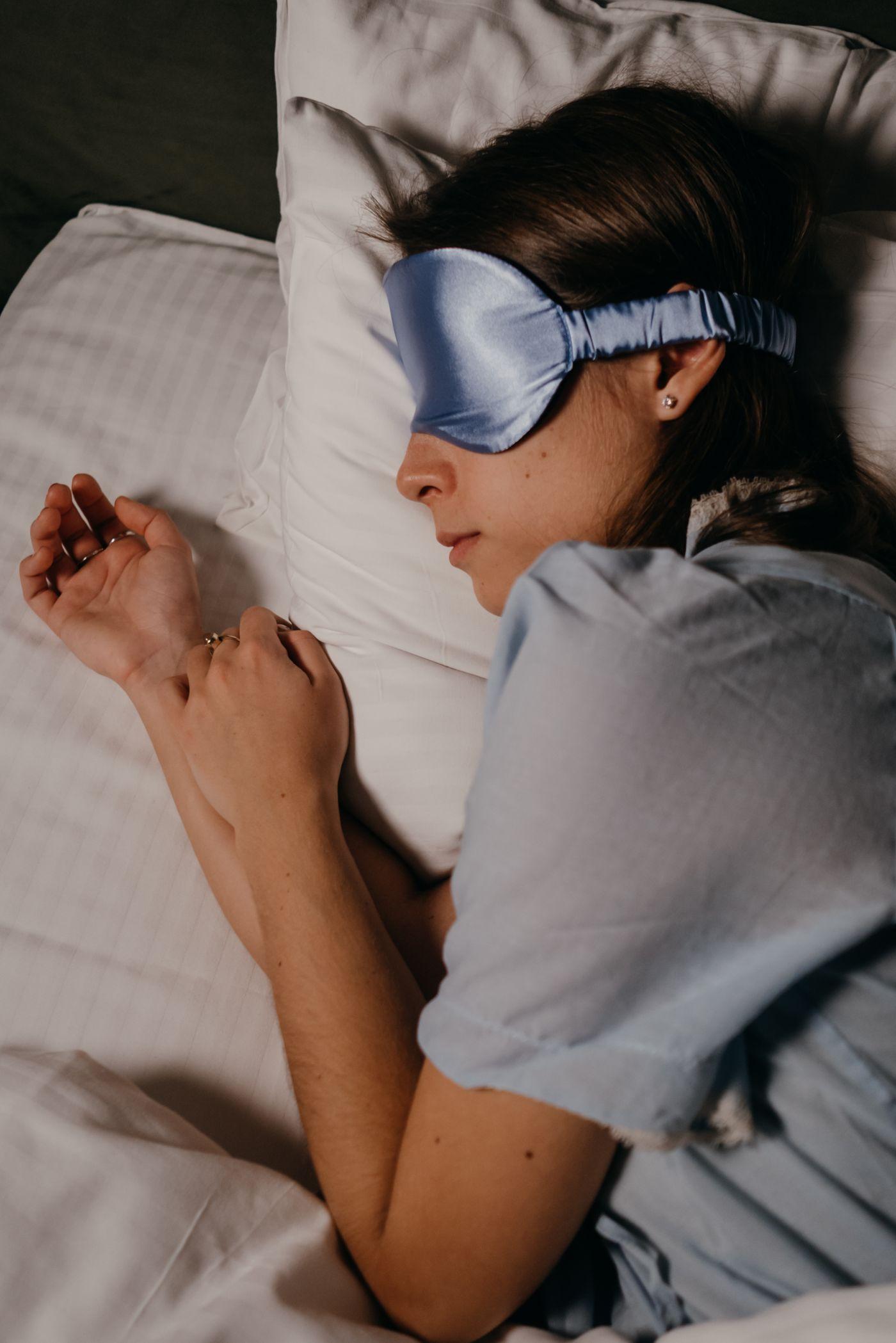
Molded eye cups, zero pressure on the eyes, no light leaks around the nose.
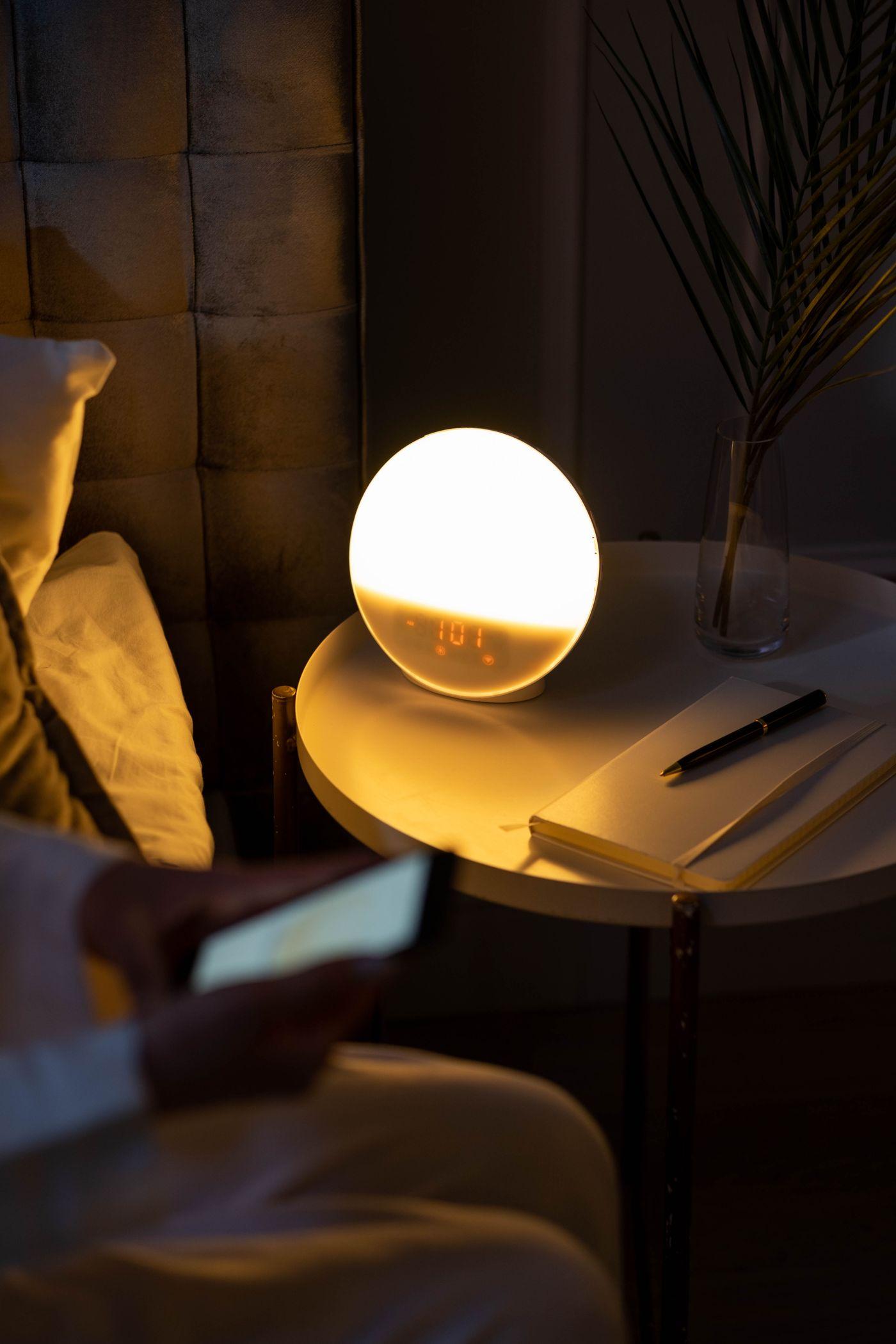
Brightens gradually over 20, 30 or 40 minutes so you wake before the sound does.
20 minutes of bright, UV-free light with breakfast anchors tonight's sleep.
Keep reading
- Gifts for Someone Who Can't Sleep: Match the Gift to What Keeps Them UpBuying for someone who sleeps badly? Match the gift to what keeps them up, and see which sleep gifts have trials behind them and which have none.6 min read
- Sleeping With a Light On: One Night at 100 Lux Raised Insulin ResistanceYou drift off with the lamp or the TV on. A 20-person lab study, a 43,722-woman cohort and 88,905 light-sensor wearers suggest what that light does.7 min read
- Clocks Fall Back Nov. 1: The Extra Hour Gave Sleepers About 33 MinutesCounting on an extra hour of sleep on Nov. 1? Studies measured 20 to 33 minutes. Why early risers wake early that week, and how to shift your body clock.7 min read
Sources
- Depner CM, Melanson EL, Eckel RH, et al. (2019). Ad libitum weekend recovery sleep fails to prevent metabolic dysregulation during a repeating pattern of insufficient sleep and weekend recovery sleep. Current Biology, 29(6):957-967.e4 — https://pubmed.ncbi.nlm.nih.gov/30827911/
- Banks S, Van Dongen HPA, Maislin G, Dinges DF (2010). Neurobehavioral dynamics following chronic sleep restriction: dose-response effects of one night for recovery. Sleep, 33(8):1013-1026 — https://pubmed.ncbi.nlm.nih.gov/20815182/
- Kitamura S, Katayose Y, Nakazaki K, et al. (2016). Estimating individual optimal sleep duration and potential sleep debt. Scientific Reports, 6:35812 — https://pubmed.ncbi.nlm.nih.gov/27775095/
- Åkerstedt T, Ghilotti F, Grotta A, et al. (2019). Sleep duration and mortality - Does weekend sleep matter? Journal of Sleep Research, 28(1):e12712 — https://pubmed.ncbi.nlm.nih.gov/29790200/
- Sletten TL, Weaver MD, Foster RG, et al. (2023). The importance of sleep regularity: a consensus statement of the National Sleep Foundation sleep timing and variability panel. Sleep Health, 9(6):801-820 — https://pubmed.ncbi.nlm.nih.gov/37684151/
- National Sleep Foundation (Sept 6, 2023). National Sleep Foundation Reinforces Consistent Sleep Schedules with New Consensus Guideline — https://www.thensf.org/sleep-schedules-sleep-timing-guideline/
- CDC National Center for Health Statistics (2026). Short Sleep Duration and Sleep Difficulties Among Adults: United States, 2024. NCHS Data Brief No. 559 — https://www.cdc.gov/nchs/products/databriefs/db559.htm
- U.S. Bureau of Labor Statistics (June 2026). American Time Use Survey, Table 2: Time spent in primary activities on weekdays and weekends, 2025 annual averages — https://www.bls.gov/news.release/atus.t02.htm
- National Heart, Lung, and Blood Institute (NIH). Healthy Sleep Habits — https://www.nhlbi.nih.gov/health/sleep-deprivation/healthy-sleep-habits