Clocks Fall Back Nov. 1: The Extra Hour Gave Sleepers About 33 Minutes
Counting on an extra hour of sleep on Nov. 1? Studies measured 20 to 33 minutes. Why early risers wake early that week, and how to shift your body clock.
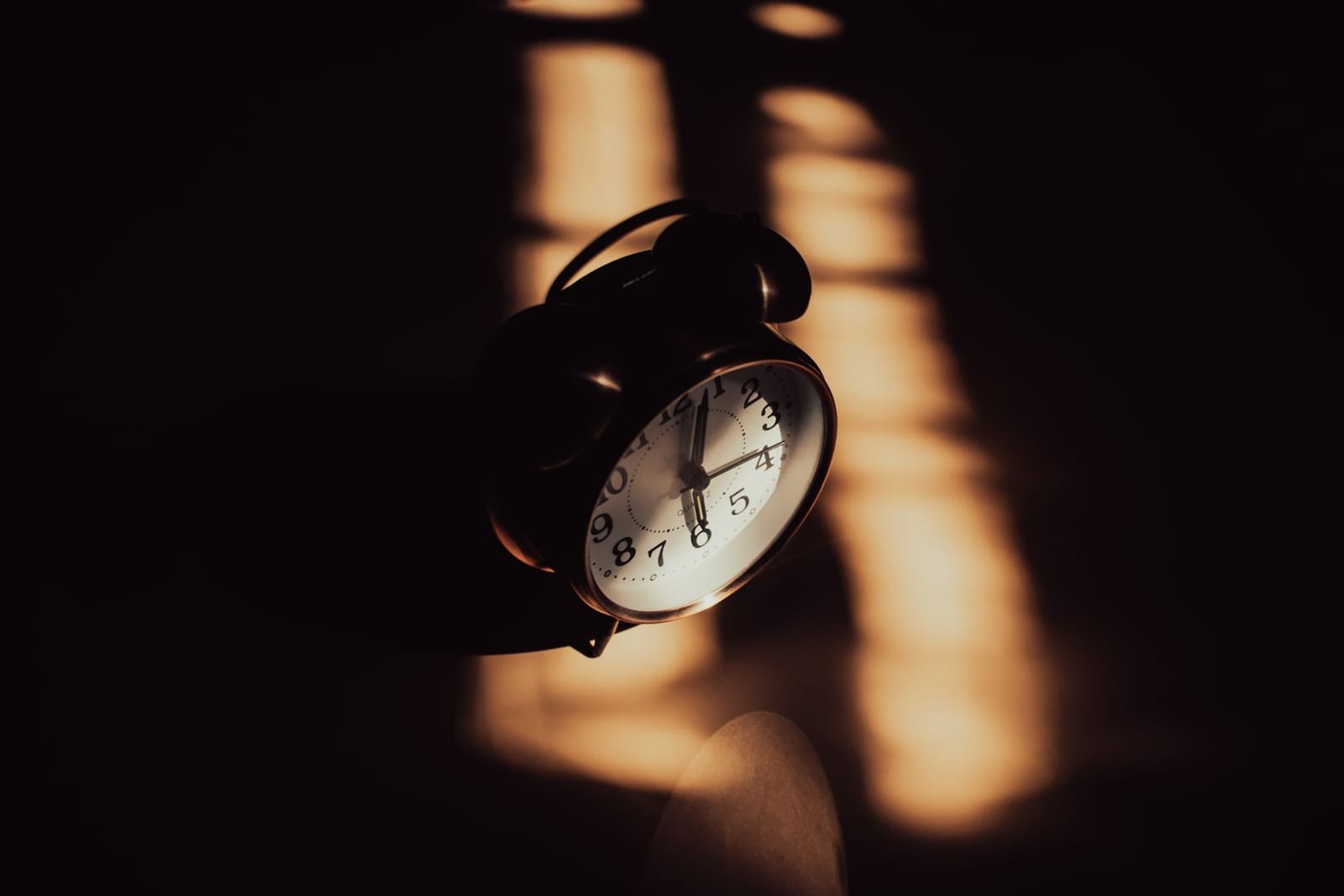
A 2025 University of Bristol study went looking for the "extra hour" in data from 7,211 British adults aged 43 to 78 who had worn a wrist accelerometer for a week. On the Sunday the clocks went back, the people wearing one that day slept 33 minutes more on average than those measured the Sunday before. Not 60. In the authors' words, people "did not (or could not)" take the whole hour.
In most of the US, clocks fall back at 2 a.m. on Sunday, Nov. 1. Here is why the hour shrinks, why the fall change is still the easy one, and how to move your body clock with it instead of waking an hour early all week.
The numbers
The date. Daylight saving time ends on the first Sunday in November at 2 a.m., which is Sunday, Nov. 1 this year, according to the American Academy of Sleep Medicine (AASM). Hawaii and Arizona stay on standard time all year.
41% plan to sleep through it. In an AASM survey of 2,003 US adults in September 2019, 41% said they would spend the extra hour sleeping, more than any other answer.
About 20 minutes, measured. In a 2022 analysis by researchers at Monash University and the tracker's maker of 24,250 US adults wearing a sleep tracker, sleep on the fall-back night was 7 hours 39 minutes against their usual 7 hours 19 minutes. Two of the authors work for the tracker's maker, three in four users were men, and the fall-back night they measured was Halloween 2020, during the pandemic.
6% more fatal crashes in spring, none extra in fall. A 2020 University of Colorado Boulder study of 732,835 fatal US crashes from 1996 to 2017 found the spring change raised fatal crash risk by 6% and found no effect of the fall change.
Heart attacks: spring only. A 2024 meta-analysis from the University Hospital of Cologne of 12 studies from 10 countries found heart attack risk about 4% higher after the spring change and no significant change after the fall one.
Why the extra hour shrinks
Your body clock is set by light, not by the clock on the microwave. On Sunday morning it still runs on the old time, so it nudges you awake an hour "early" by the new clock.
A 2013 review in Sleep Medicine Reviews found little evidence of extra sleep on the night of the fall change, and argued that five consecutive days of earlier rise times after the change add up to a net loss of sleep across the week. That paper was available to us only as its summary. The larger Bristol data did not show that net loss: on average, weekday sleep after the fall change was about 3 minutes longer than the week before.
Who loses most? In the Bristol data, the oldest participants and retirees slept less on the weekdays after the change, while younger and employed people slept slightly more. In a small Finnish study, 9 healthy adults wore wrist monitors through the fall change: sleep efficiency, the share of time in bed spent asleep, fell from 86% to 80%, nights grew more restless, and morning types were hit harder. Four days later they still had not fully adjusted. It is a tiny sample, but it fits the pattern: if you already wake early, your body clock now wakes you an hour earlier by the new clock.
The good news is that the body clock follows. A study that tracked 50 people for 8 weeks around each change found sleep and activity readily adjusted to the fall change, while the timing of activity did not adjust to the spring change, especially in night owls.
Why the fall change is the gentler one
The fall change gives an hour back instead of taking one.
The first systematic review across health outcomes, a 2026 synthesis of 157 studies (about one in five rated high quality), sums up the fall change this way: sleep duration may rise (low confidence), with no clear change in heart attacks or fatal crashes. One high-quality study of 13.9 million US deaths from 2015 to 2019 found about 2.6% fewer deaths from all causes in the 8 weeks after the fall change, an association rather than proof of cause.
It is not all upside. With darkness arriving an hour earlier by the clock, the review rates a rise in assaults and robberies after the fall change with high confidence. A Danish register study of 185,419 hospital contacts found depressive episodes rose 11% after the fall change, fading over about 10 weeks. But that is one study, and the 2026 review found no clear effect on psychiatric outcomes across 15. The AASM itself favors ending the switch for good and staying on standard time.
How to move your body clock an hour later
The AASM's sleep guidance for the fall change comes down to a few steps. Its 2016 health advisory says the disruption from either change lasts about 5 to 7 days, so the aim is to shorten that.
- Decide whether you want the hour. If you have been short on sleep, the AASM says to skip any pre-shifting and simply take the extra hour on the night itself.
- Otherwise, drift later first. For a few nights before Nov. 1, go to bed 15 to 20 minutes later each night. Three nights at 15 to 20 minutes covers 45 to 60 minutes. Move meals and exercise later along with it.
- Change the clocks on Saturday evening and go to bed at your normal bedtime by the new time.
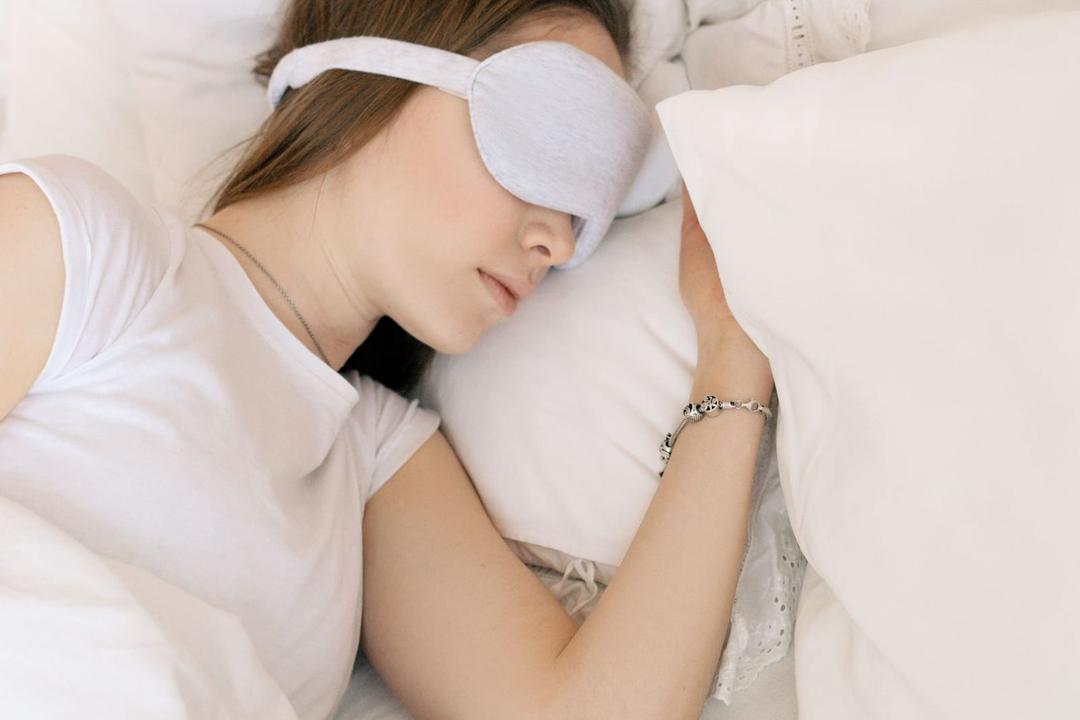
- Keep the room dark until your target wake time. In the fall, the AASM advises keeping light exposure low until the time you mean to get up.
- Then get outside. In the days after the change, morning sunlight once you are up helps set your internal clock to the new time. Our post on morning light explains why.
- Hold your wake time steady, weekends included, and skip extra caffeine late in the day.
Most people adjust within a few days, the AASM says; children may need longer.
What can help: the clock change needs no equipment, and neither item below has been tested on it. Two things in our range fit the AASM's steps.
- A contoured sleep mask keeps early light off your eyes until the wake time you are aiming for. The mask research we have covered comes from hospital wards, a lab and one home study, not from clock changes; see our eye mask post.
- A 10,000 lux light therapy lamp, used after you get up, is a fallback for days when you cannot get outside. Daylight is what the AASM recommends; none of the studies cited here tested a lamp for the fall change. For what the lamp trials did test, see what light therapy lamp trials found.
Where people go wrong
Sleeping in all week. A steady wake time helps the body clock settle; the AASM advises keeping it, weekends included.
Early risers and older adults. In the Bristol data, older adults and retirees slept less in the week after the change; morning types fared worse in the small Finnish study, though Bristol found no difference by chronotype. Drift later gradually before Nov. 1, keep the bedroom dark until your target time, and expect a few early mornings anyway.
People already short on sleep. If you have been chronically short on sleep, the AASM says not to push your bedtime later. Take the hour instead.
Drivers. The AASM's advisory recommends extra caution with tasks that need full alertness for at least 7 days after a clock change.
If low mood settles in as the evenings darken and lasts more than a couple of weeks, that is worth raising with a doctor rather than waiting out.
Your plan for the week around Nov. 1
- The 3 nights before Saturday: bedtime 15 to 20 minutes later each night, unless you are short on sleep.
- Saturday evening: set the clocks back, then go to bed at your usual time on the new clock.
- Sunday onward: dark room until your target wake time, daylight soon after it.
- Same wake time all week, weekends too.
- Go easy on afternoon caffeine and on long drives for the first week.
This article is general information, not medical advice. If you regularly have trouble sleeping, feel very sleepy during the day, or notice a change in mood that lasts, talk to a doctor or a sleep specialist.
Products mentioned
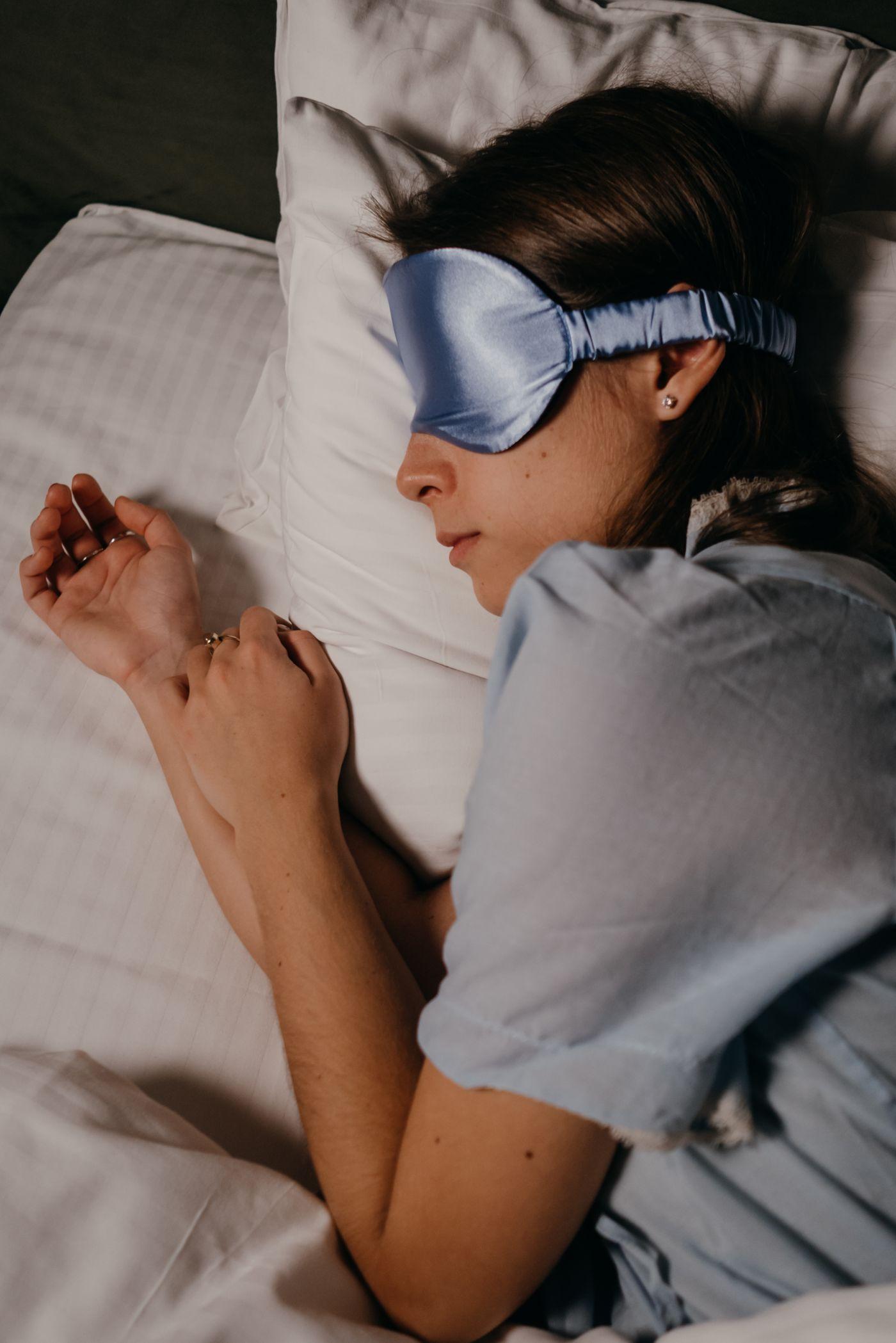
Molded eye cups, zero pressure on the eyes, no light leaks around the nose.
20 minutes of bright, UV-free light with breakfast anchors tonight's sleep.
Keep reading
- Weekend Catch-Up Sleep Repaid About 1 of 12 Lost Hours in a Lab TestShort on sleep all week and sleeping in on Saturday? What lab studies show a weekend repays, what it doesn't, and how to catch up without wrecking Monday.6 min read
- Nap for 10 to 20 Minutes: Why 30 Is Where the Grogginess StartsWake from naps groggy? In a 24-person trial, 10 minutes helped at once, 20 helped after a delay and 30 brought grogginess first. How long and when to nap.6 min read
- How to Get Over Jet Lag: Your Body Clock Moves About 1 Hour a DayLanded and wide awake at 3 a.m.? Your body clock catches up only 1 to 1.5 hours a day. Light, dark and melatonin timing can speed it up.7 min read
Sources
- de Lange MA, Richmond RC, Birnie K, Shapland CY, Tilling K, Davies NM (2025). The effects of daylight saving time clock changes on accelerometer-measured sleep duration in the UK Biobank. Journal of Sleep Research, 34(3):e14335 — https://pubmed.ncbi.nlm.nih.gov/39433070/
- Heacock RM, Capodilupo ER, Czeisler MÉ, et al. (2022). Sleep and alcohol use patterns during federal holidays and daylight saving time transitions in the United States. Frontiers in Physiology, 13:884154 — https://pubmed.ncbi.nlm.nih.gov/35899022/
- Fritz J, VoPham T, Wright KP Jr, Vetter C (2020). A chronobiological evaluation of the acute effects of daylight saving time on traffic accident risk. Current Biology, 30(4):729-735.e2 — https://pubmed.ncbi.nlm.nih.gov/32008905/
- Hurst A, Morfeld P, Lewis P, Erren TC (2024). Daylight saving time transitions and risk of heart attack. Deutsches Ärzteblatt International, 121(15):490-496 — https://pubmed.ncbi.nlm.nih.gov/38888468/
- Steponenaite A, Wallraff JP, Wild U, et al. (2026). A systematic review of epidemiological studies into daylight-saving time & health identifying beneficial & adverse effects. European Journal of Epidemiology, 41(4):419-433 — https://pubmed.ncbi.nlm.nih.gov/41721993/
- Zhao S, Cao W, Liao G, et al. (2024). All cause and cause specific mortality associated with transition to daylight saving time in US: nationwide, time series, observational study. BMJ Medicine, 3(1):e000771 — https://pubmed.ncbi.nlm.nih.gov/38464392/
- Hansen BT, Sønderskov KM, Hageman I, Dinesen PT, Østergaard SD (2017). Daylight savings time transitions and the incidence rate of unipolar depressive episodes. Epidemiology, 28(3):346-353 — https://pubmed.ncbi.nlm.nih.gov/27775953/
- Harrison Y (2013). The impact of daylight saving time on sleep and related behaviours. Sleep Medicine Reviews, 17(4):285-292 — https://pubmed.ncbi.nlm.nih.gov/23477947/
- Lahti TA, Leppämäki S, Lönnqvist J, Partonen T (2008). Transitions into and out of daylight saving time compromise sleep and the rest-activity cycles. BMC Physiology, 8:3 — https://pubmed.ncbi.nlm.nih.gov/18269740/
- Kantermann T, Juda M, Merrow M, Roenneberg T (2007). The human circadian clock's seasonal adjustment is disrupted by daylight saving time. Current Biology, 17(22):1996-2000 — https://pubmed.ncbi.nlm.nih.gov/17964164/
- Rishi MA, Cheng JY, Strang AR, et al. (2024). Permanent standard time is the optimal choice for health and safety: an American Academy of Sleep Medicine position statement. Journal of Clinical Sleep Medicine, 20(1):121-125 — https://pubmed.ncbi.nlm.nih.gov/37904574/
- American Academy of Sleep Medicine, Sleep Education (October 12, 2026). How to adjust when daylight saving time ends — https://sleepeducation.org/how-to-adjust-when-daylight-saving-time-ends/
- American Academy of Sleep Medicine, Sleep Education. Daylight Saving Time: transition sleep tips — https://sleepeducation.org/resources/daylight-saving-time/
- American Academy of Sleep Medicine (2019). Sleep Prioritization Survey: End of Daylight Saving Time — https://sleepeducation.org/wp-content/uploads/2021/04/sleep-prioritization-survey-2019-fall-daylight-saving-time-results.pdf
- American Academy of Sleep Medicine (adopted March 3, 2016). Daylight Saving Time Health Advisory — https://aasm.org/advocacy/position-statements/daylight-saving-time-health-advisory/