Do Light Therapy Lamps Work? Pooled Trials Say Yes for Winter Depression
Dark mornings, low mood, hard to get up. What trials show about 10,000-lux lamps for winter depression and winter blues, and how to use one.
Over three Canadian winters, 96 people with winter depression took part in a double-blind trial. One group sat in front of a 10,000-lux light box for 30 minutes each morning and swallowed a sugar pill. The other got a dim 100-lux box and a standard antidepressant, fluoxetine. After 8 weeks, 67% in each group had responded, and the light group improved faster in the first week. The trial had no arm in which both treatments were placebos.
That is the strongest case for a light therapy lamp: for diagnosed winter depression, it held its own against a drug. Whether it does anything for ordinary winter sluggishness is a different and less settled question.
The numbers
1.5% to 9%. A 2019 Cochrane review puts the share of people with seasonal affective disorder (SAD) in that range, depending on latitude. The National Institute of Mental Health (2023) says it is more common farther north and much more common in women than in men.
92% notice the seasons. In a 1989 NIMH telephone survey of randomly chosen households in Montgomery County, Maryland, 92% noticed seasonal changes in mood and behavior, 27% said those changes were a problem, and 4.3% to 10% rated their impairment as severe as that of SAD patients.
19 trials. A 2020 meta-analysis from the Medical University of Vienna of 19 randomized, blinded trials found bright light beat placebo for SAD; in the 16 trials (559 patients) that reported response, patients were about 1.4 times as likely to respond.
30 to 45 minutes. NIMH describes the standard treatment as a 10,000-lux light box, about 20 times brighter than ordinary indoor light, used every day for about 30 to 45 minutes, usually first thing in the morning, from fall to spring.
Why a bright box should matter
NIMH says serotonin and melatonin help keep the body's daily rhythm in step with the seasonal day-night cycle, and that in SAD those changes disrupt it. NIMH notes that people with winter-pattern SAD produce too much melatonin, which can drive oversleeping, and tend to have lower serotonin activity when days are short. A light box tries to give the brain the strong morning signal that a gray winter dawn does not. We cover the clock side in how morning light resets your body clock.
What the trials show for winter depression
The 2020 meta-analysis from the Medical University of Vienna is the best summary. It pooled 18 trials (610 patients) for depression scores and 16 trials (559 patients) for response. Bright light won on both. The size of the gain was modest: a standardized difference of 0.37, small to moderate by the usual yardstick. The authors found moderate differences between studies, a moderate-to-high risk of bias, and no sign of publication bias. They still called light "an effective treatment for SAD" and asked for larger, better trials. The review had no outside funding.
The trials varied a lot. Brightness ran from 1,350 to 10,000 lux, sessions from 30 to 360 minutes a day, and treatment from 7 to 42 days (one study tested a single session). The authors could not show that brighter light, longer sessions or more days gave bigger effects. The authors' most plausible explanation: the brightness and session lengths in these trials were already enough for a reliable effect.

Light also helped depression that does not follow the seasons. In a 2016 Canadian trial of 122 adults with nonseasonal major depression, 30 minutes of 10,000-lux light each morning beat a sham device, and light plus fluoxetine did best. A 2025 meta-analysis of 11 trials (858 patients) with nonseasonal depression found remission in 40.7% with bright light against 23.5% in the comparison groups, across the 8 trials that reported remission. Both studied people diagnosed with depression.
What about plain winter blues?
Many people asking this question are not clinically depressed. They are tired, flat and slow to start when it is dark at 7 a.m. The evidence here is thin and old.
In a 1989 NIMH study, 20 people with milder, "subsyndromal" winter symptoms improved with bright light, and 5 hours of bright light, split between morning and evening, worked better than 2 hours. In 20 healthy people with no winter difficulties, bright light did not change mood or behavior. A 2001 Seattle study gave 30 people with mild winter symptoms 2,500-lux light at work for 2 weeks; mood, energy and alertness ratings improved with morning or afternoon light alike, but there was no dim-light comparison, so expectation could explain part of it.
So a lamp is a reasonable experiment if your winters follow a pattern. If you feel fine, the one small test in healthy volunteers (20 people, in 1989) found that bright light did not change their mood or behavior.
How to use one the way the trials did
The 2016 trial is a good template. Patients used the box for 30 minutes as soon as possible after waking, preferably between 7 and 8 a.m., with a lamp rated at 10,000 lux at about 14 inches (35.56 cm) from the eyes and fitted with a UV filter.
- Check the distance in the manual. A lamp's lux figure holds only at the distance its maker rates it for; sit at that distance.
- Use it soon after waking, every day, for 30 minutes.
- Give it a few weeks. In the Can-SAD trial, the light group was ahead after 1 week, and the 2016 authors note that SAD studies often see an effect within 1 to 2 weeks. In their own trial of nonseasonal depression, light pulled ahead of placebo only after 4 weeks.
- Keep going until spring if it helps. NIMH describes daily use from fall to spring.
Starting before symptoms appear is less proven. The Cochrane review found a single small prevention trial of 46 people and could not draw a conclusion.

What can help:
- 10,000-lux light therapy lamp: the type and dose used in the Can-SAD and 2016 trials above, 30 minutes on waking at the rated distance. The evidence is for diagnosed SAD and nonseasonal depression; for plain winter tiredness it rests on a few small, older studies.
- Sunrise alarm clock: a light that brightens gradually before you wake. A 2005 meta-analysis pooled 5 dawn simulation trials and found it reduced SAD symptoms, and our look at whether sunrise alarm clocks work covers its modest effect on grogginess. It was tested in far fewer trials than a light box.
Where people go wrong
Using it at night. Most of the trials above used morning sessions, and NIMH describes use usually first thing in the morning. If the clock change has already left you waking in the dark, see what falling back does to sleep.
Expecting no side effects. In a 1999 study of 83 SAD patients using 10,000 lux for 30 minutes a day, side effects were mostly mild: nausea in 15.9%, jitteriness in 8.8% and headache in 8.4%. The authors advise warning patients about them and adjusting the dose with guidance.
Skipping the eye and medication check. NIMH says people with certain eye diseases, or who take medicines that increase sensitivity to sunlight, may need another treatment or medical supervision.
Bipolar disorder. SAD is more common in people with bipolar disorder, and clinicians are told to watch for emerging hypomania in the first days of light therapy. Use a lamp only with your doctor's agreement.
Treating real depression alone. If low mood lasts two weeks or more, or you have thoughts of suicide, a lamp is not enough on its own. Call or text 988 in a crisis.
Your winter morning plan
- Notice whether your low months repeat every year; a pattern is what the evidence covers.
- Pick a 10,000-lux lamp with a UV filter and sit at its rated distance.
- Use it for 30 minutes as soon as you can after waking, every day.
- Judge it after 2 to 4 weeks, not after 2 days.
- Get outside in daylight when the sky allows.
- Talk to a clinician first if you have eye disease, take light-sensitizing medicine or have bipolar disorder.
This article is general information, not medical advice. If low mood, sleep changes or loss of interest last more than two weeks, or you have thoughts of harming yourself, contact a doctor or call or text 988 (the Suicide and Crisis Lifeline).
Products mentioned
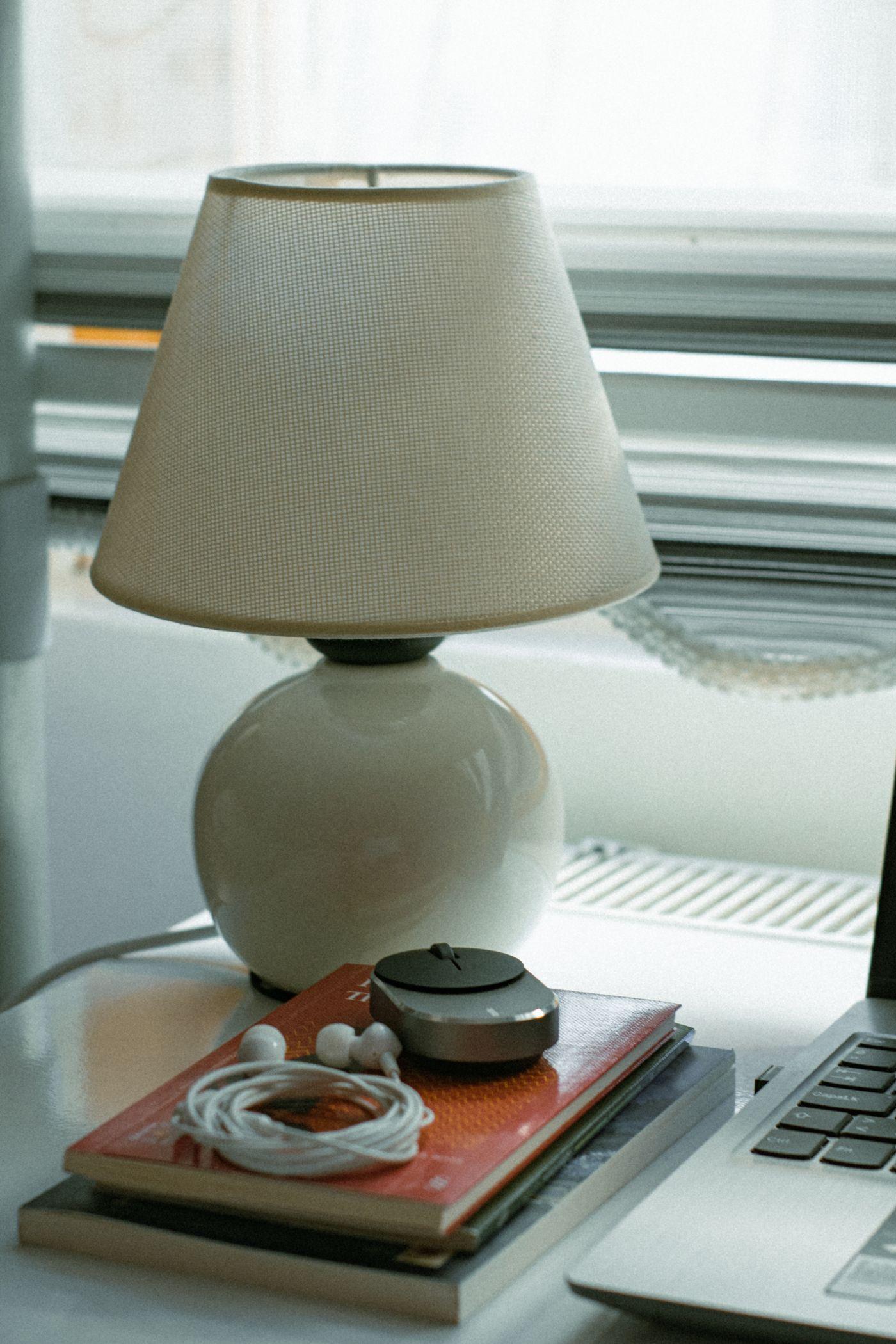
20 minutes of bright, UV-free light with breakfast anchors tonight's sleep.
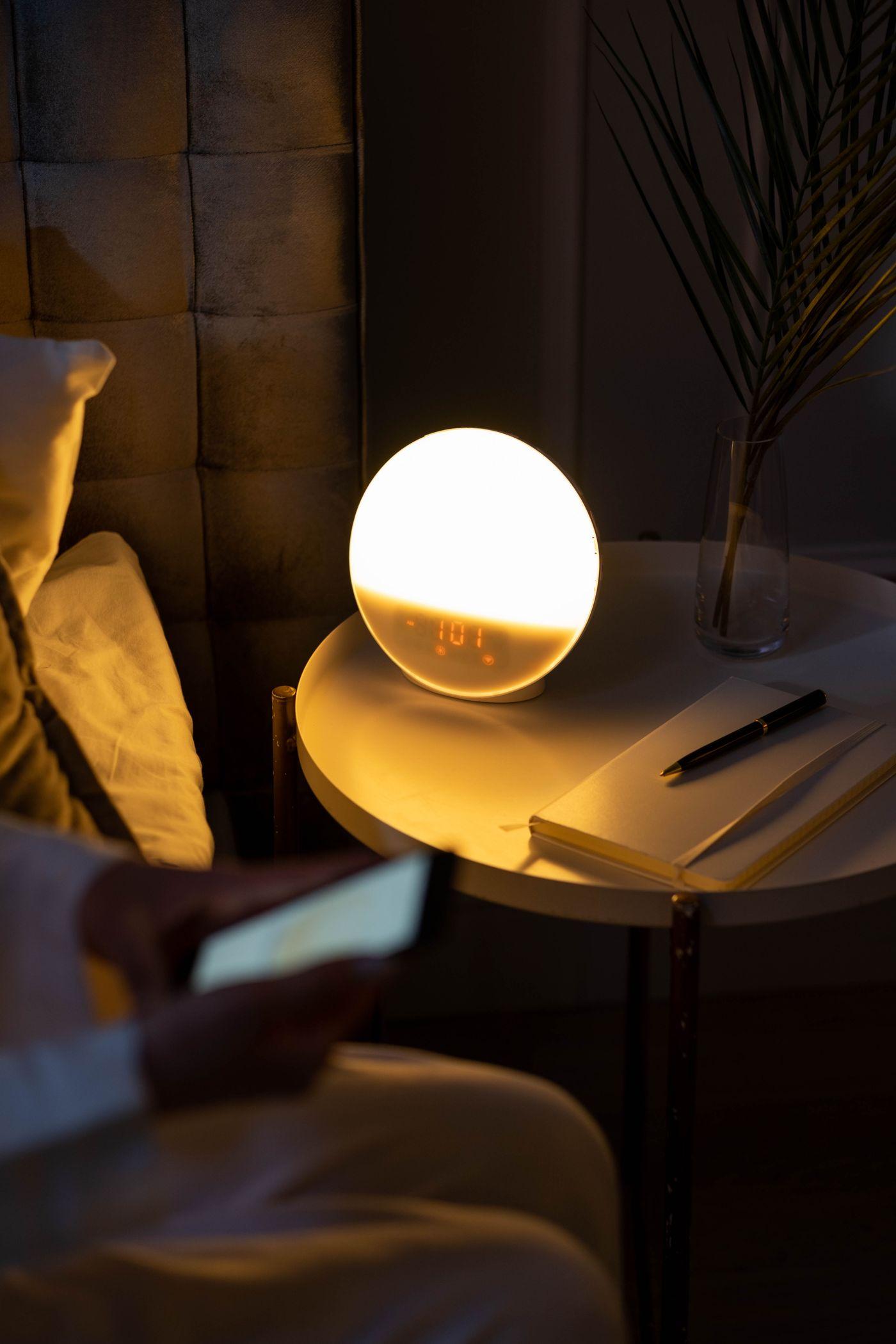
Brightens gradually over 20, 30 or 40 minutes so you wake before the sound does.
Keep reading
- Gifts for Someone Who Can't Sleep: Match the Gift to What Keeps Them UpBuying for someone who sleeps badly? Match the gift to what keeps them up, and see which sleep gifts have trials behind them and which have none.6 min read
- Do Sunrise Alarm Clocks Work? Sleepers Felt Awake About 20 Minutes SoonerGroggy for an hour after the alarm? What trials of sunrise alarm clocks found, who paid for them, and what a fake dawn will not fix.7 min read
- How to Reset Your Sleep Schedule: Fixed Early Hours Moved Clocks 1.4 HoursLate nights pushed your body clock later and the alarm now feels brutal. What the trials show about moving it back: wake time, morning light, dim evenings.6 min read
Sources
- Lam RW, Levitt AJ, Levitan RD, et al. (2006). The Can-SAD study: a randomized controlled trial of the effectiveness of light therapy and fluoxetine in patients with winter seasonal affective disorder. American Journal of Psychiatry, 163(5):805-812 — https://pubmed.ncbi.nlm.nih.gov/16648320/
- Pjrek E, Friedrich ME, Cambioli L, et al. (2020). The efficacy of light therapy in the treatment of seasonal affective disorder: a meta-analysis of randomized controlled trials. Psychotherapy and Psychosomatics, 89(1):17-24 — https://pubmed.ncbi.nlm.nih.gov/31574513/
- Lam RW, Levitt AJ, Levitan RD, et al. (2016). Efficacy of bright light treatment, fluoxetine, and the combination in patients with nonseasonal major depressive disorder: a randomized clinical trial. JAMA Psychiatry, 73(1):56-63 — https://pubmed.ncbi.nlm.nih.gov/26580307/
- Menegaz de Almeida A, Aquino de Moraes FC, Cavalcanti Souza ME, et al. (2025). Bright light therapy for nonseasonal depressive disorders: a systematic review and meta-analysis. JAMA Psychiatry, 82(1):38-46 — https://pubmed.ncbi.nlm.nih.gov/39356500/
- Kasper S, Wehr TA, Bartko JJ, Gaist PA, Rosenthal NE (1989). Epidemiological findings of seasonal changes in mood and behavior: a telephone survey of Montgomery County, Maryland. Archives of General Psychiatry, 46(9):823-833 — https://pubmed.ncbi.nlm.nih.gov/2789026/
- Kasper S, Rogers SL, Yancey A, et al. (1989). Phototherapy in individuals with and without subsyndromal seasonal affective disorder. Archives of General Psychiatry, 46(9):837-844 — https://pubmed.ncbi.nlm.nih.gov/2774849/
- Avery DH, Kizer D, Bolte MA, Hellekson C (2001). Bright light therapy of subsyndromal seasonal affective disorder in the workplace: morning vs. afternoon exposure. Acta Psychiatrica Scandinavica, 103(4):267-274 — https://pubmed.ncbi.nlm.nih.gov/11328240/
- Nussbaumer-Streit B, Forneris CA, Morgan LC, et al. (2019). Light therapy for preventing seasonal affective disorder. Cochrane Database of Systematic Reviews, CD011269 — https://pubmed.ncbi.nlm.nih.gov/30883670/
- Terman M, Terman JS (1999). Bright light therapy: side effects and benefits across the symptom spectrum. Journal of Clinical Psychiatry, 60(11):799-808 — https://pubmed.ncbi.nlm.nih.gov/10584776/
- Terman M, Terman JS (2005). Light therapy for seasonal and nonseasonal depression: efficacy, protocol, safety, and side effects. CNS Spectrums, 10(8):647-663 — https://pubmed.ncbi.nlm.nih.gov/16041296/
- Golden RN, Gaynes BN, Ekstrom RD, et al. (2005). The efficacy of light therapy in the treatment of mood disorders: a review and meta-analysis of the evidence. American Journal of Psychiatry, 162(4):656-662 — https://pubmed.ncbi.nlm.nih.gov/15800134/
- National Institute of Mental Health (revised 2023). Seasonal Affective Disorder, NIH Publication No. 23-MH-8138 — https://www.nimh.nih.gov/health/publications/seasonal-affective-disorder