Do Sunrise Alarm Clocks Work? Sleepers Felt Awake About 20 Minutes Sooner
Groggy for an hour after the alarm? What trials of sunrise alarm clocks found, who paid for them, and what a fake dawn will not fix.
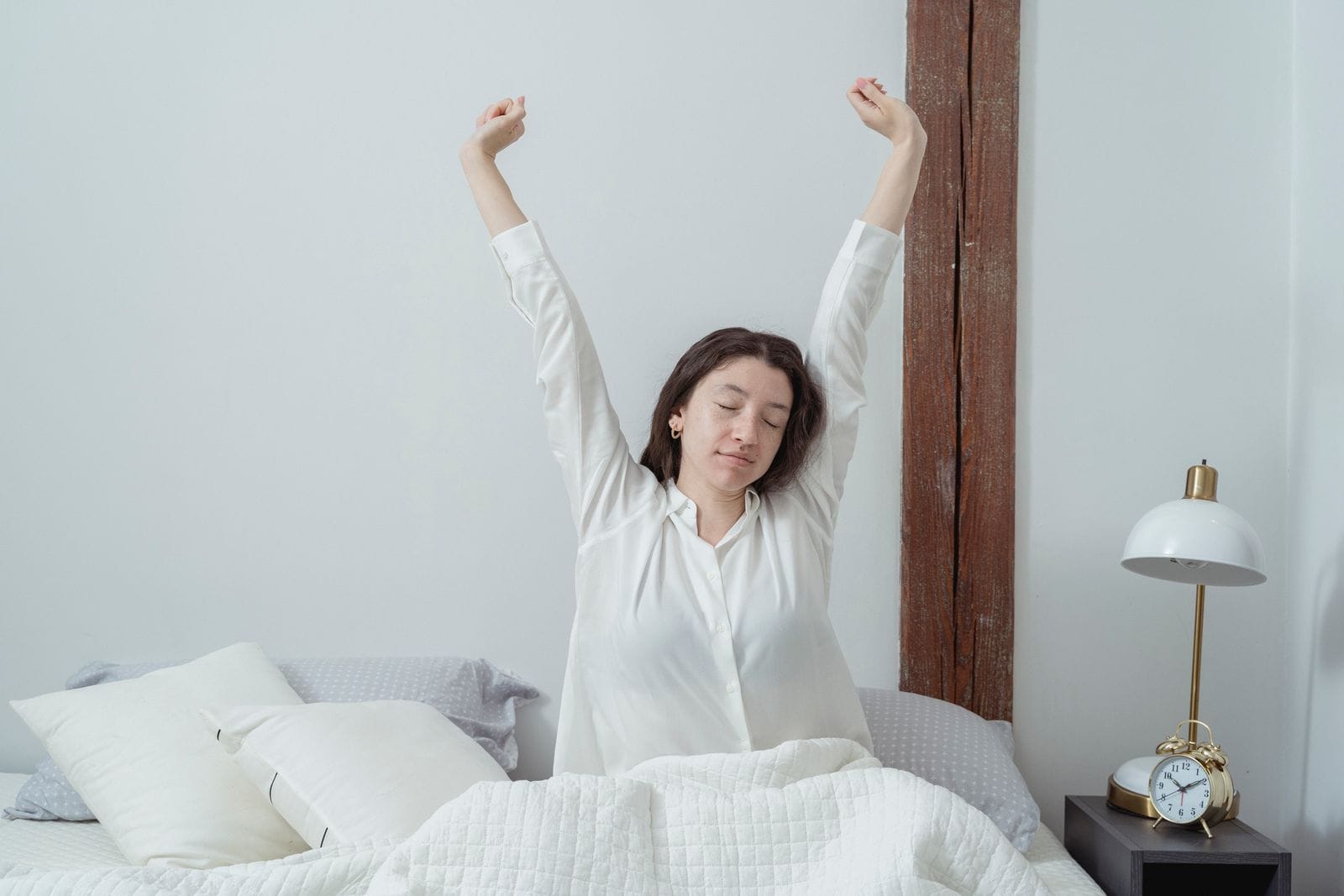
Researchers at the University of Groningen in the Netherlands recruited adults who said they needed an hour or more after waking to feel fully alert. Each took home a bedside lamp that grew brighter over the 30 minutes before the alarm, and used it for two-week stretches at different settings, with plain dark mornings as the comparison.
At the brightest setting, 250 lux, participants estimated they needed about 20 minutes less to feel fully awake than on dark mornings. In a second study, where people picked their own brightness, the gap was about 25 minutes. Then came the twist: in the first study, the only one that measured it, their body clocks had not measurably moved.
So do sunrise alarm clocks work? For grogginess, modestly, in small trials, most of them funded at least in part by companies that make wake-up lights.
The numbers
Nearly half of adults don't usually wake well-rested. In the CDC's 2024 National Health Interview Survey, 54.8% of US adults said they woke up feeling well-rested on most days or every day in the past 30 days. That leaves about 45% who did not.
Women wake well-rested less often than men. In the same 2024 survey, 51.7% of women woke well-rested most days, against 58.2% of men.
Short nights are common. The CDC found that 30.5% of US adults slept less than 7 hours a day on average in 2024.
The standard light dose is far brighter than a dawn lamp. For seasonal affective disorder, the National Institute of Mental Health describes a 10,000-lux light box, usually used first thing in the morning for about 30 to 45 minutes a day (page revised 2023). The dawn lamps in the trials below that report their brightness peaked at 400 lux or less, most at 250 to 300 lux.
A fake dawn works on the last half hour of sleep
Grogginess after waking is called sleep inertia. A slowly brightening light seems to ease it by nudging you awake a few minutes before the alarm.
That is what a 16-person lab study from the same Groningen team found. Young adults who needed an hour or more to wake up fully were tested in the lab twice, at least a week apart: one test night ended with a 30-minute artificial dawn rising to 300 lux at eye level; on the other, the light came on only at the alarm. After the dawn, they felt less sleepy and more energetic. The authors traced it to more time awake in the 30 minutes before the alarm, and to skin temperature falling faster after getting up.
What did not change matters as much. Speed on simple addition and reaction-time tests was no better, and neither was the morning cortisol rise. In the home study, the time the body's melatonin began rising in the evening barely moved (21:23 on dark mornings, 21:25 after the 50-lux dawn and 21:23 after the 250-lux one). In the Groningen home study, a 30-minute dawn eased the exit from sleep without moving the body clock, unlike a week of real morning daylight.
Both Groningen studies were funded in part by the company that made the lamps.
What the home trials found
The largest test of sleep itself came from Finland. In a community trial published in BMC Psychiatry, 77 adults aged 18 to 70, volunteers who answered letters sent to a random sample from Finland's population register, alternated two weeks with a dawn lamp and two weeks without for 8 weeks. The lamp sat at eye level about 12 inches (30 cm) from the face, in bedrooms darkened to under 1 lux, and brightened over 30 minutes to the level each person chose.
Sleep quality improved on a 0-to-14 scale, by an average of 1.7 points after two weeks. The effect took about 6 days to appear and faded once the lamp was switched off. About 9% reported side effects they put down to the light. The authors called the benefits modest. There was no placebo light; each person was their own control. The lamp maker supplied the devices and gave a grant that partly funded the study.
A small British crossover trial of 8 adults who found waking hard had more to show for performance: better-rated sleep quality and alertness, and slightly faster reaction times (0.81 against 0.86 seconds) after a dawn. A 4.7% faster cycling time trial fell short of statistical significance. The lead researcher's doctoral work was funded by a maker of dawn simulators, whose lamps the trial used.
Brighter is not clearly better. In the Groningen home study, 250 lux cut the estimated time to feel awake more than 50 lux, yet only 50 lux lowered sleepiness scores compared with dark mornings. Only 23 of the 51 people in that study returned complete data, and the authors could not rule out a placebo effect.
Older adults: less sleep, no gain
The one trial in an older group points the other way. At Stanford, 23 adults with an average age of 67 spent two nights in a lab, one with dawn light in the last 30 minutes. The light reduced their sleep before the morning awakening by 33% and did not improve alertness or balance after waking. If your sleep is already light and early, a dawn lamp may just end it sooner.
Winter mornings and winter depression
Dawn simulation has a longer record as a treatment for seasonal affective disorder (SAD), always in diagnosed patients. A 2005 meta-analysis in the American Journal of Psychiatry pooled 5 randomized trials of dawn simulation for SAD and found an effect size of 0.73, close to the 0.84 for bright-light therapy across 8 trials.
Head-to-head trials disagree. In a 6-week Seattle trial of 95 patients, a dawn peaking at 250 lux led to more remissions than both a dim placebo and a 10,000-lux light box. In a New York trial of 99 adults, improvement was 57.1% with bright light and 49.5% with dawn simulation, and dawn was not superior. A one-week trial of 50 SAD patients who slept too much found that dawn simulation eased their difficulty waking compared with a placebo light.
If dark mornings bring low mood that lasts for weeks, that is a conversation for a clinician, not a gadget.
What can help:
- Sunrise alarm clock: small trials, mostly funded in part by lamp makers, found less grogginess and better-rated sleep in people who find waking hard, but no better test performance in a 16-person lab study and no gain in older adults.
- 10,000-lux light therapy lamp: the light dose NIMH describes for winter depression; for groggy mornings without depression, it was not what these trials tested.
Where people go wrong
Blocking the light. A sleep mask, a pillow over your head or a lamp on the far side of the room defeats the point. In the Finnish trial the lamp was about 12 inches from the face.
Expecting it to replace sleep. A dawn lamp changes how you wake; it does not add sleep. If you are among the 30% of adults sleeping under 7 hours, an earlier bedtime will do more, and sleeping in on weekends repays less than you think.
Giving up after two mornings. In Finland the benefit took about 6 days to show.
Leaving it on all night. The sleep trials used light only in the last 30 minutes before the alarm; the Seattle winter-depression trial used a 90-minute dawn. Light through the whole night is a different matter: one night with the room light on raised insulin resistance in a lab study.
It may not suit you if you share a bed with someone on a different schedule, or if you are older and already wake too early. The NIMH notes that people with certain eye diseases may need light therapy under medical supervision.
A two-week trial at home
- Set the dawn to 30 minutes, ending at your alarm time.
- Put the lamp at face height, about 12 inches away, on your side of the bed.
- Keep the room dark until it starts: no mask, curtains closed.
- Use it every day for two weeks before judging it, and keep the same wake-up time.
- Note each morning how long you take to feel awake.
- Get outdoor light soon after you get up.
This article is general information, not medical advice. If you wake unrefreshed most mornings despite 7 or more hours in bed, snore loudly, or have low mood that returns each winter, see a clinician.
Products mentioned
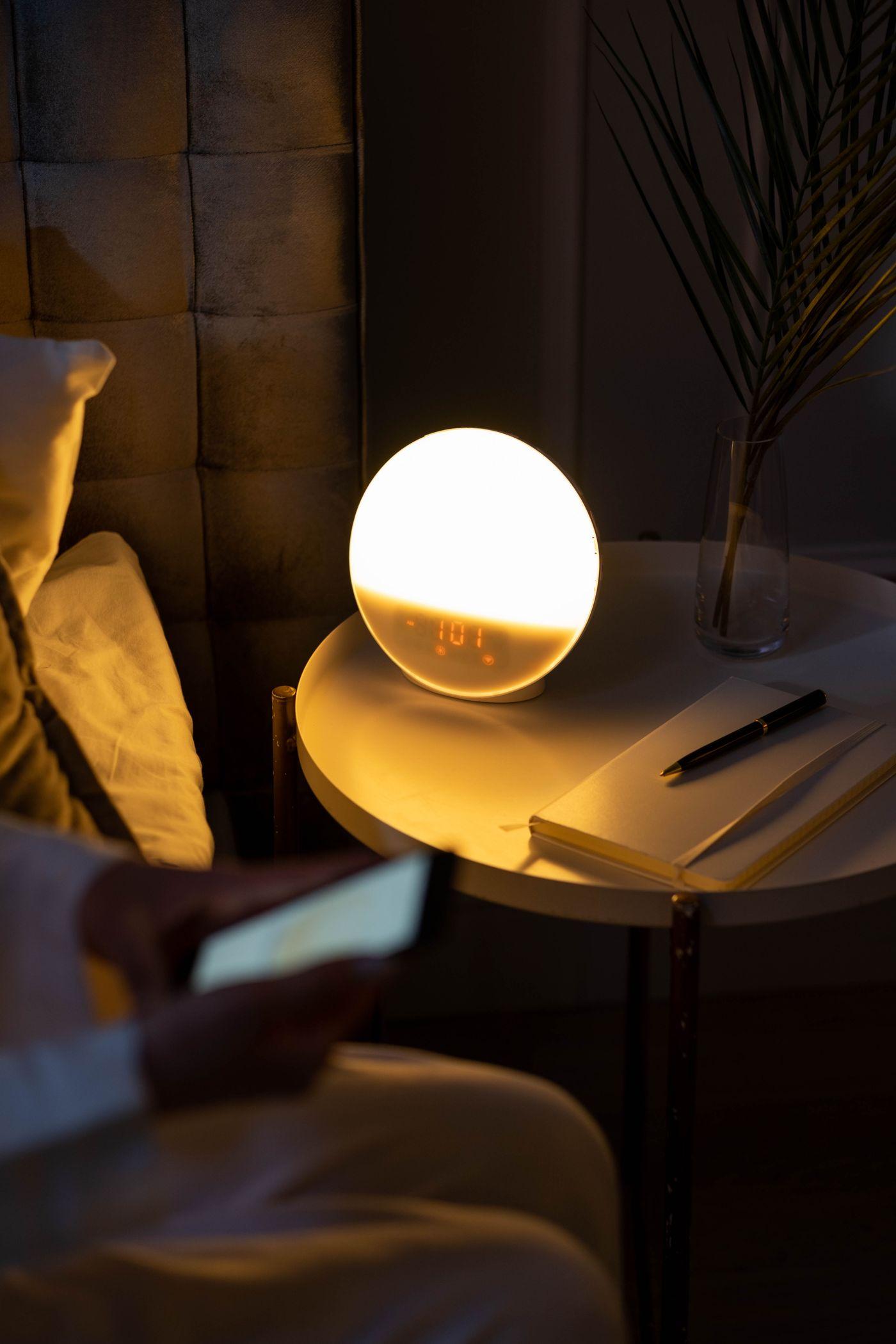
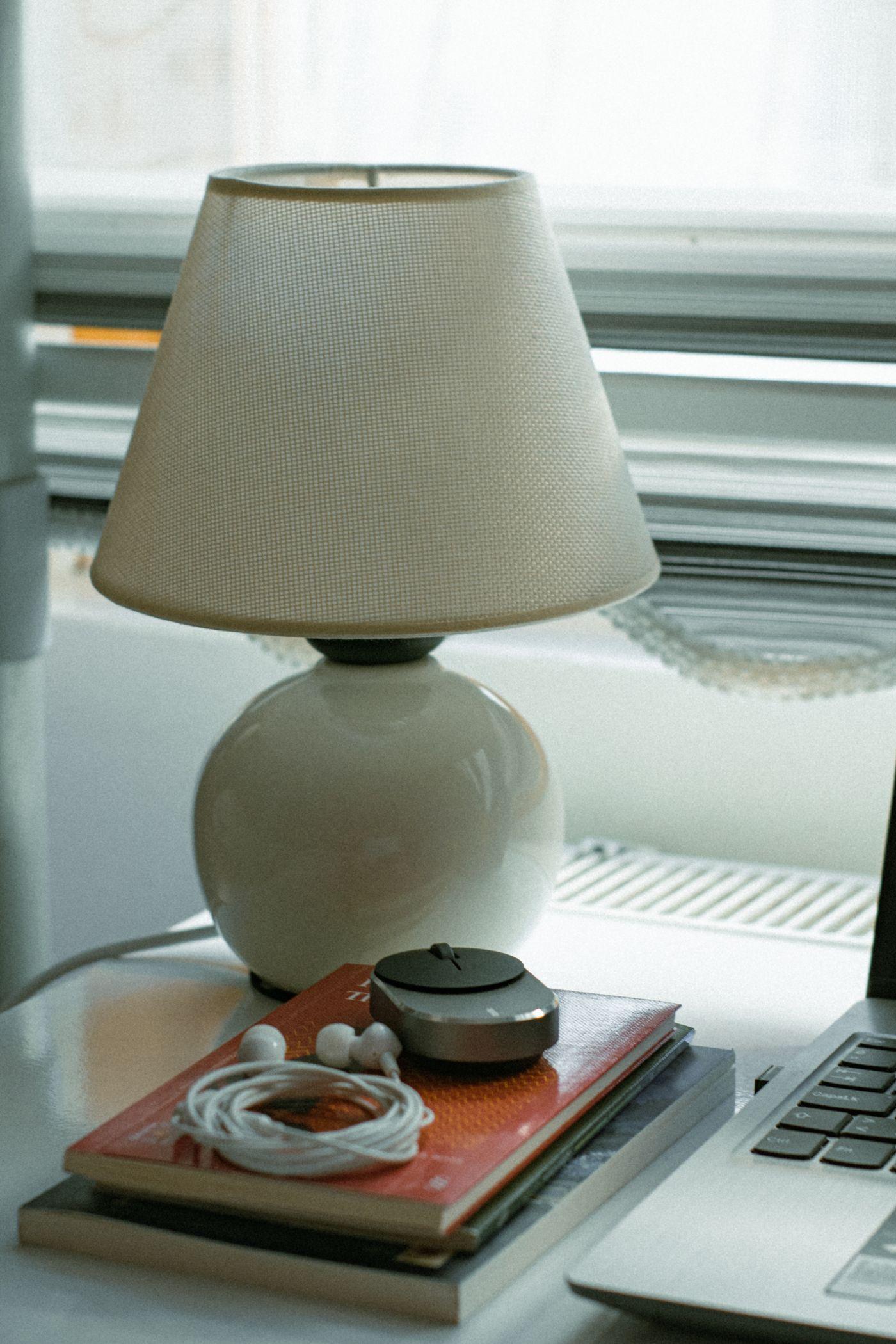
Brightens gradually over 20, 30 or 40 minutes so you wake before the sound does.
20 minutes of bright, UV-free light with breakfast anchors tonight's sleep.
Keep reading
- Weekend Catch-Up Sleep Repaid About 1 of 12 Lost Hours in a Lab TestShort on sleep all week and sleeping in on Saturday? What lab studies show a weekend repays, what it doesn't, and how to catch up without wrecking Monday.6 min read
- Do Light Therapy Lamps Work? Pooled Trials Say Yes for Winter DepressionDark mornings, low mood, hard to get up. What trials show about 10,000-lux lamps for winter depression and winter blues, and how to use one.6 min read
- Gifts for Someone Who Can't Sleep: Match the Gift to What Keeps Them UpBuying for someone who sleeps badly? Match the gift to what keeps them up, and see which sleep gifts have trials behind them and which have none.6 min read
Sources
- Giménez MC, Hessels M, van de Werken M, de Vries B, Beersma DG, Gordijn MC (2010). Effects of artificial dawn on subjective ratings of sleep inertia and dim light melatonin onset. Chronobiology International, 27(6):1219-1241 — https://pubmed.ncbi.nlm.nih.gov/20653451/
- Van De Werken M, Giménez MC, De Vries B, Beersma DG, Van Someren EJ, Gordijn MC (2010). Effects of artificial dawn on sleep inertia, skin temperature, and the awakening cortisol response. Journal of Sleep Research, 19(3):425-435 — https://pubmed.ncbi.nlm.nih.gov/20408928/
- Leppämäki S, Meesters Y, Haukka J, Lönnqvist J, Partonen T (2003). Effect of simulated dawn on quality of sleep: a community-based trial. BMC Psychiatry, 3:14 — https://pubmed.ncbi.nlm.nih.gov/14577838/
- Thompson A, Jones H, Gregson W, Atkinson G (2014). Effects of dawn simulation on markers of sleep inertia and post-waking performance in humans. European Journal of Applied Physiology, 114(5):1049-1056 — https://pubmed.ncbi.nlm.nih.gov/24509892/
- Gabel V, Miglis M, Zeitzer JM (2020). Effect of artificial dawn light on cardiovascular function, alertness, and balance in middle-aged and older adults. Sleep, 43(10):zsaa082 — https://pubmed.ncbi.nlm.nih.gov/32307533/
- Golden RN, Gaynes BN, Ekstrom RD, et al. (2005). The efficacy of light therapy in the treatment of mood disorders: a review and meta-analysis of the evidence. American Journal of Psychiatry, 162(4):656-662 — https://pubmed.ncbi.nlm.nih.gov/15800134/
- Avery DH, Eder DN, Bolte MA, et al. (2001). Dawn simulation and bright light in the treatment of SAD: a controlled study. Biological Psychiatry, 50(3):205-216 — https://pubmed.ncbi.nlm.nih.gov/11513820/
- Terman M, Terman JS (2006). Controlled trial of naturalistic dawn simulation and negative air ionization for seasonal affective disorder. American Journal of Psychiatry, 163(12):2126-2133 — https://pubmed.ncbi.nlm.nih.gov/17151164/
- Avery DH, Kouri ME, Monaghan K, et al. (2002). Is dawn simulation effective in ameliorating the difficulty awakening in seasonal affective disorder associated with hypersomnia? Journal of Affective Disorders, 69(1-3):231-236 — https://pubmed.ncbi.nlm.nih.gov/12103471/
- Ng AE, Black LI, Adjaye-Gbewonyo D (2026). Short Sleep Duration and Sleep Difficulties Among Adults: United States, 2024. NCHS Data Brief No. 559 — https://www.cdc.gov/nchs/products/databriefs/db559.htm
- National Institute of Mental Health (revised 2023). Seasonal Affective Disorder — https://www.nimh.nih.gov/health/publications/seasonal-affective-disorder