Morning Light Sets the Body Clock Earlier. A Week Outdoors Moved It 2 Hours
Morning sunlight pulls your body clock earlier; evening light pushes it later. What the studies show, how much light you need and when to get it.
One July, 8 adults in Colorado wore wrist light monitors through a normal week, then spent a night in a dim sleep lab giving saliva samples so researchers could time their melatonin. Then they camped in the Rockies for a week, with no flashlights or phones.
In the normal week, melatonin had begun rising about 2 hours before a 12:30 a.m. bedtime and was still flowing when they woke, around 8. After the week of daylight, every marker of the internal clock sat roughly 2 hours earlier: melatonin rose near sunset and had switched off more than 50 minutes before they woke. They slept the same amount, about 1.2 hours earlier.
The difference was light: more than four times as much across the day, and between sunset and sleep, less. 8 lux instead of 21.
The numbers
Three in ten American adults are short on sleep. In the CDC's 2024 National Health Interview Survey, 30.5% of US adults averaged less than 7 hours a night.
Daylight is about 50 times brighter than an office. A 2019 open-access review in Somnologie puts office lighting at about 500 lux, full daylight at about 25,000 and direct sun at up to 100,000.
A camping weekend moved the clock 1.4 hours. In a 2017 study from the same Colorado lab, melatonin onset came 1.4 hours earlier in 9 people after a weekend of camping, and about 1 hour later in 5 who spent the weekend at home.
Each extra hour outdoors, 47% higher odds of an easy morning. In a 2021 Monash University analysis of more than 400,000 UK Biobank adults aged 37 to 73, each additional self-reported hour of daytime outdoor light went with 47% higher odds of finding it easy to get up, after adjusting for age, sex, season, employment, exercise, socializing and sleep duration.
The clock takes its time from light
The master clock sits in the brain's suprachiasmatic nucleus. As the NIH's general medical sciences institute puts it, it controls melatonin production based on the light the eyes receive; in the evening it tells the brain to make more, and you get sleepy. The clock needs a daily nudge to stay on local time, and light is the nudge.
Which way it nudges depends on when. In 2003, Harvard researchers gave 21 healthy adults one 6.7-hour dose of roughly 10,000 lux, each at a different point in the cycle. Light before the body's temperature low point, in the last hours of the night, pushed the clock later, by up to 3.6 hours. Light after it pulled the clock earlier, by up to 2 hours. In plain terms: light in the hours after you wake makes you sleepy earlier tomorrow; light late in the evening makes you sleepy later. The same timing rule is how travelers get over jet lag.
The evening side needs very little. In a 2000 study of 23 volunteers, 100 lux of room light early in the night produced half the delay that 9,000 lux did.
Indoors is dimmer than it looks
The campers' normal week averaged 979 lux across waking hours; camping, it was 4,487. In 2022, 18 circadian researchers writing in PLOS Biology recommended at least the equivalent of 250 lux of daylight at the eye through the day, no more than the equivalent of 10 lux in the 3 hours before bed and no more than 1 lux while asleep. Their unit counts the blue-rich part of light that the clock responds to; by it, an office lit to 500 ordinary lux typically delivers under 200. Several of them report research funding from lighting companies.
What the trials and the surveys say
Controlled evidence comes mostly from patients. A 2016 University of Amsterdam meta-analysis of 53 studies and 1,154 people with circadian rhythm disorders, insomnia or dementia, mostly using lamps of 2,000 to 10,000 lux, found a pooled effect of 0.39, small to medium, and 0.27 in the randomized trials for circadian rhythm disorders. The authors found signs of publication bias, declared no conflicts, and called light therapy no substitute for cognitive behavioral therapy for insomnia.
Outside the clinic the evidence is observational. Among 109 office workers in five federal buildings, those getting more circadian-effective light in the morning fell asleep faster, especially in winter. The UK Biobank figure carries the usual caveat: people who sleep badly may go out less, and that paper's longitudinal models found traffic in both directions. Several of its authors have consulted for, or taken funding from, lighting companies.
So outside the lab, the best causal evidence in healthy adults is still three small camping studies from one group, and nobody has separated the morning light from the dark evenings, the walking and the absence of screens.
How much morning light you need, and when
Get the light early. The Colorado group singled out the first 2 hours after waking as when the clock is most sensitive to being pulled earlier; their campers got more than three times the light then.
Give it an hour if you can. None of the trials here sets a minimum for healthy adults. The best-supported dose is a daily 1-hour morning walk, which in a 1996 Swiss trial moved melatonin earlier within a week in people with winter depression. A randomized trial in 56 adults found that lengthening exposure from 1 to 3 hours changed the shift while brightening it from 2,000 to 8,000 lux did not, tested at a time of night that delays the clock. Time in ordinary daylight beats a short blast of something brighter.
Dim the evening. The curve runs the other way after dark. Keep the 3 hours before bed as dim as you can live with; 100 lux was enough for half the maximal delay.
Protect weekend mornings. The stay-at-home group in the 2017 study got up about 1.1 hours later on the weekend, and by Monday their clocks had drifted an hour later. The campers' wake times had not moved, and their clocks had gone 1.4 hours the other way.
What can help: daylight does the work and costs nothing. Three things in our range are relevant, with uneven evidence.
- A 10,000 lux light therapy lamp for mornings when outside is not an option, used in the first hours after waking. The 53-study meta-analysis found small-to-medium effects in people with diagnosed sleep problems, and smaller ones in the randomized trials for circadian rhythm disorders. For healthy adults who simply want an earlier clock from a lamp at home, none of the studies here is that trial. For the lamp trials themselves, see what light therapy lamp trials found.
- A sunrise alarm clock for the waking-up part. In two small trials, of 16 and 8 people who found waking difficult, half an hour of simulated dawn before the alarm left them feeling more alert afterwards. The larger trial had financial support from the maker of the wake-up light it tested. Both measured grogginess, not where the clock sat. For the full trial picture, see whether sunrise alarm clocks work.
- Amber evening glasses for the dimming side. A 2023 Cochrane review of 17 randomized trials rated the sleep evidence very low certainty: 3 of 6 trials found better sleep, 3 found none. Turning the lights down is better supported than filtering them.
Where people go wrong
Expecting the camping result from a walk. Those 8 people had bright days and dark evenings for a week. A walk at 7 a.m. followed by a bright kitchen and a laptop until midnight pushes on both ends of the curve, and the evening end moves on very little light.
Using a lamp at the wrong time. Bright light late in the evening delays the clock. If you work nights, or your trouble is falling asleep too early and waking at 4, morning light is the wrong tool; a clinician should set the timing.
Ignoring the eyes and the medicine cabinet. The Somnologie review lists retinal disease, diabetes affecting the retina, previous cataract surgery and older age as reasons for an eye exam before bright light therapy, and names photosensitizing drugs including some antidepressants and antibiotics, lithium and St John's wort.
Tomorrow, then
Wake at the weekday time, get outside within 2 hours for as long as you can spare, an hour if possible, and bring the lights down 3 hours before bed. Give it a week, as the campers had; a weekend got most of the way.
This article is general information, not medical advice. If you still cannot fall asleep or wake at the times your life requires after several weeks of consistent morning light, or if you have an eye condition or take medication that increases light sensitivity, talk to a doctor before using a bright lamp.
Products mentioned
20 minutes of bright, UV-free light with breakfast anchors tonight's sleep.
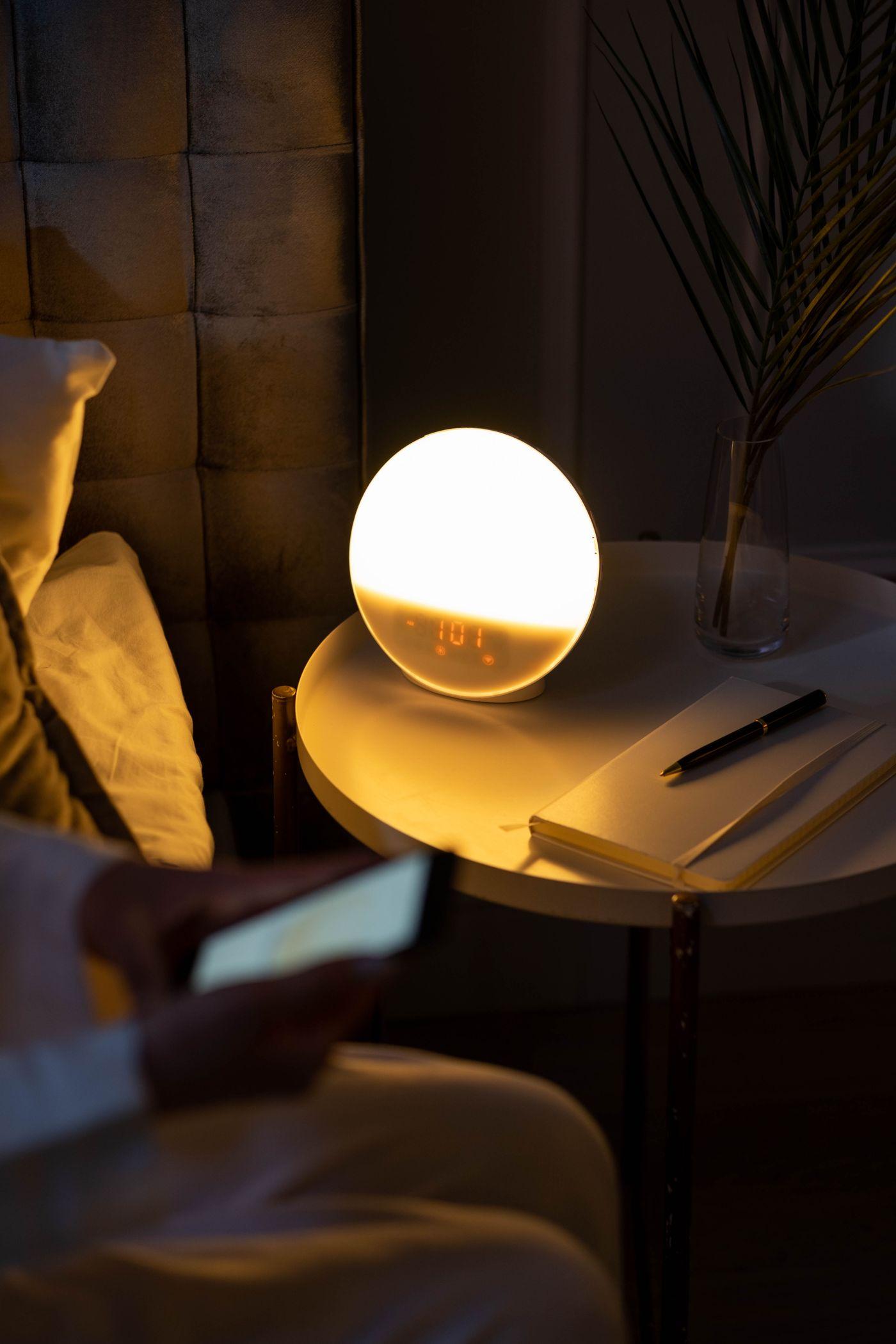
Brightens gradually over 20, 30 or 40 minutes so you wake before the sound does.
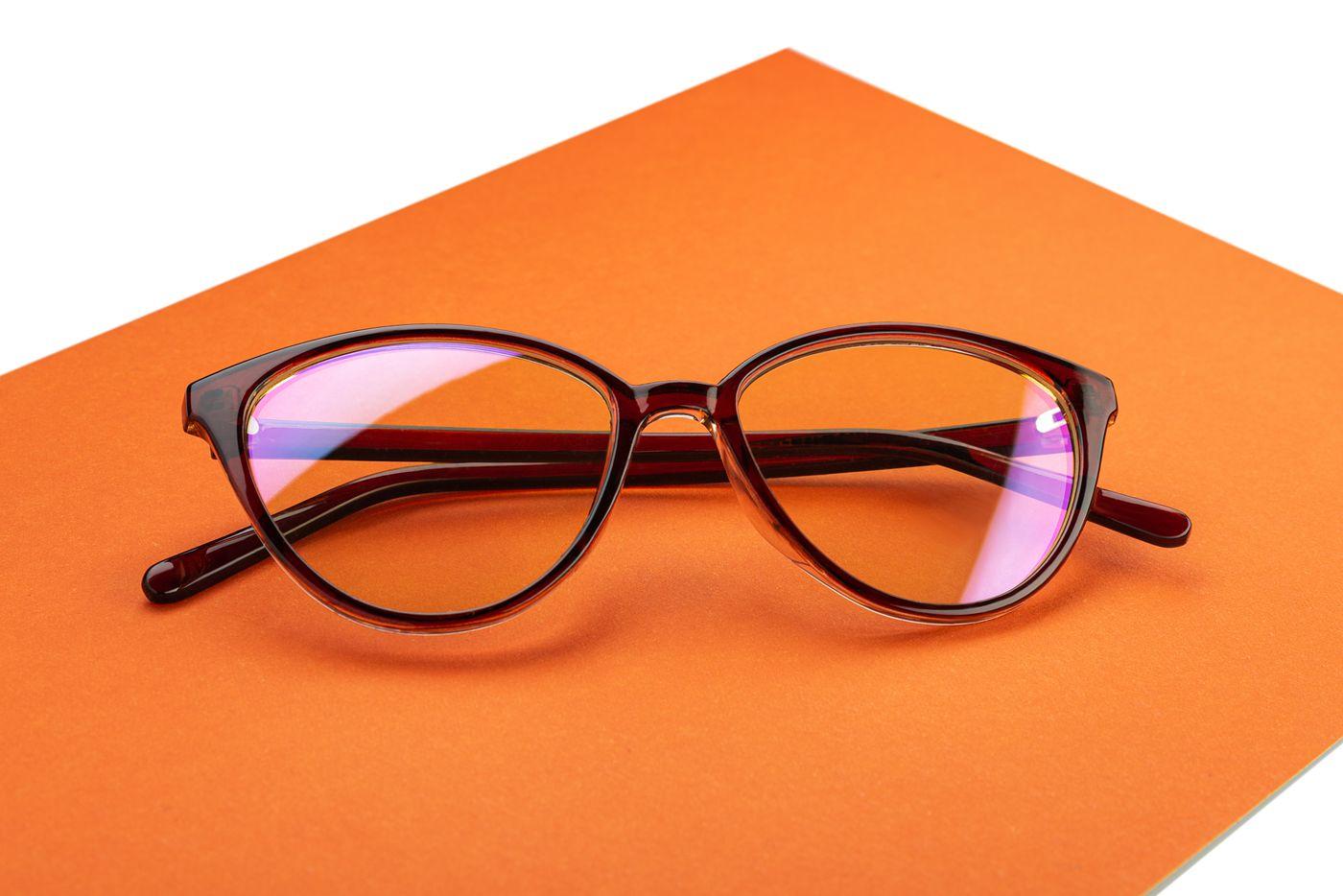
True amber lenses that cut the blue light your phone and TV pour out after dark.
Keep reading
- How to Reset Your Sleep Schedule: Fixed Early Hours Moved Clocks 1.4 HoursLate nights pushed your body clock later and the alarm now feels brutal. What the trials show about moving it back: wake time, morning light, dim evenings.6 min read
- Sleep 1.2 Hours More, Eat 270 Fewer Calories a Day: What the Trials ShowEating less is harder on short sleep. In a 2022 trial, adults who slept 1.2 hours longer ate 270 fewer calories a day, with no diet advice at all.7 min read
- Blue Light Before Bed: 4 Hours on a Tablet Delayed Sleep by 10 MinutesYou have heard that phone light ruins sleep. The lab delay is about 10 minutes, and experts split on light. Here is what the trials say to change.6 min read
Sources
- Wright KP Jr, McHill AW, Birks BR, Griffin BR, Rusterholz T, Chinoy ED (2013). Entrainment of the human circadian clock to the natural light-dark cycle. Current Biology, 23(16):1554–1558 — https://pubmed.ncbi.nlm.nih.gov/23910656/
- Stothard ER, McHill AW, Depner CM, et al. (2017). Circadian entrainment to the natural light-dark cycle across seasons and the weekend. Current Biology, 27(4):508–513 — https://pubmed.ncbi.nlm.nih.gov/28162893/
- Khalsa SBS, Jewett ME, Cajochen C, Czeisler CA (2003). A phase response curve to single bright light pulses in human subjects. Journal of Physiology, 549(3):945–952 — https://pubmed.ncbi.nlm.nih.gov/12717008/
- Zeitzer JM, Dijk DJ, Kronauer R, Brown E, Czeisler C (2000). Sensitivity of the human circadian pacemaker to nocturnal light: melatonin phase resetting and suppression. Journal of Physiology, 526(3):695–702 — https://pubmed.ncbi.nlm.nih.gov/10922269/
- Dewan K, Benloucif S, Reid K, Wolfe LF, Zee PC (2011). Light-induced changes of the circadian clock of humans: increasing duration is more effective than increasing light intensity. Sleep, 34(5):593–599 — https://pubmed.ncbi.nlm.nih.gov/21532952/
- van Maanen A, Meijer AM, van der Heijden KB, Oort FJ (2016). The effects of light therapy on sleep problems: a systematic review and meta-analysis. Sleep Medicine Reviews, 29:52–62 — https://pubmed.ncbi.nlm.nih.gov/26606319/
- Burns AC, Saxena R, Vetter C, Phillips AJK, Lane JM, Cain SW (2021). Time spent in outdoor light is associated with mood, sleep, and circadian rhythm-related outcomes: a cross-sectional and longitudinal study in over 400,000 UK Biobank participants. Journal of Affective Disorders, 295:347–352 — https://pubmed.ncbi.nlm.nih.gov/34488088/
- Figueiro MG, Steverson B, Heerwagen J, et al. (2017). The impact of daytime light exposures on sleep and mood in office workers. Sleep Health, 3(3):204–215 — https://pubmed.ncbi.nlm.nih.gov/28526259/
- Blume C, Garbazza C, Spitschan M (2019). Effects of light on human circadian rhythms, sleep and mood. Somnologie, 23(3):147–156 — https://pubmed.ncbi.nlm.nih.gov/31534436/
- Brown TM, Brainard GC, Cajochen C, et al. (2022). Recommendations for daytime, evening, and nighttime indoor light exposure to best support physiology, sleep, and wakefulness in healthy adults. PLOS Biology, 20(3):e3001571 — https://pubmed.ncbi.nlm.nih.gov/35298459/
- Wirz-Justice A, Graw P, Kräuchi K, et al. (1996). 'Natural' light treatment of seasonal affective disorder. Journal of Affective Disorders, 37(2–3):109–120 — https://pubmed.ncbi.nlm.nih.gov/8731073/
- Singh S, Keller PR, Busija L, et al. (2023). Blue-light filtering spectacle lenses for visual performance, sleep, and macular health in adults. Cochrane Database of Systematic Reviews, 8:CD013244 — https://pubmed.ncbi.nlm.nih.gov/37593770/
- Van De Werken M, Giménez MC, De Vries B, Beersma DG, Van Someren EJ, Gordijn MC (2010). Effects of artificial dawn on sleep inertia, skin temperature, and the awakening cortisol response. Journal of Sleep Research, 19(3):425–435 — https://pubmed.ncbi.nlm.nih.gov/20408928/
- Thompson A, Jones H, Gregson W, Atkinson G (2014). Effects of dawn simulation on markers of sleep inertia and post-waking performance in humans. European Journal of Applied Physiology, 114(5):1049–1056 — https://pubmed.ncbi.nlm.nih.gov/24509892/
- CDC/NCHS (April 2026). Short Sleep Duration and Sleep Difficulties Among Adults: United States, 2024. NCHS Data Brief No. 559 — https://www.cdc.gov/nchs/products/databriefs/db559.htm
- NIGMS, National Institutes of Health (reviewed September 2023). Circadian Rhythms — https://nigms.nih.gov/education/fact-sheets/Pages/circadian-rhythms