Nap for 10 to 20 Minutes: Why 30 Is Where the Grogginess Starts
Wake from naps groggy? In a 24-person trial, 10 minutes helped at once, 20 helped after a delay and 30 brought grogginess first. How long and when to nap.
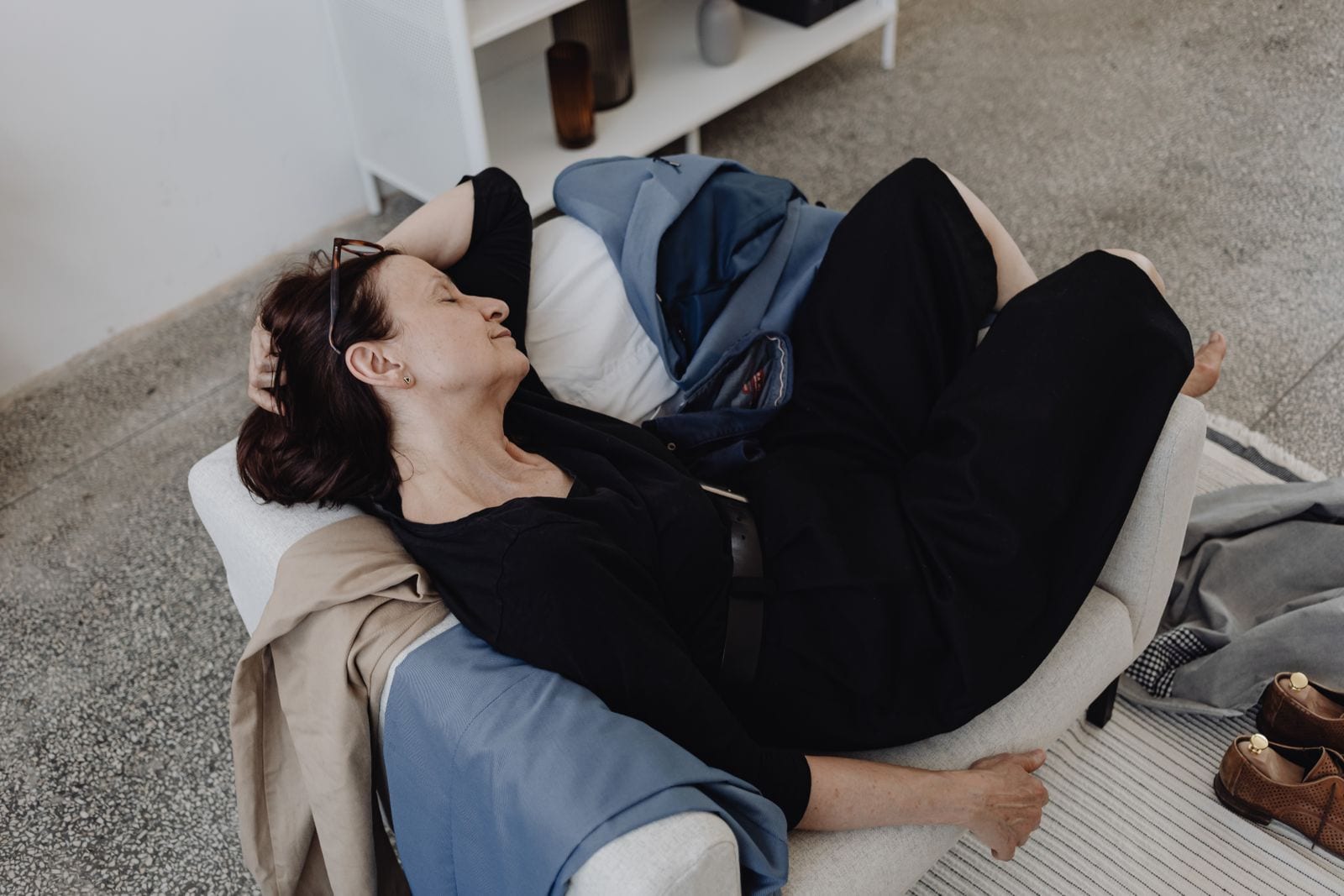
In a study published in 2006, two sleep researchers at Flinders University in Adelaide had 24 healthy young adults cut a night's sleep to about 5 hours, come into the lab the next afternoon and lie down at 3 p.m. Each volunteer did it five times: once with no nap, and four times with electrodes tracking their brain waves while a researcher woke them after exactly 5, 10, 20 or 30 minutes of sleep, followed by three hours of tests of sleepiness and performance.
The 5-minute nap did almost nothing. The 10-minute nap improved every measure straight away, and some gains were still there 155 minutes later. The 20-minute nap helped too, but its benefits only showed up 35 minutes after waking and ran up to 125 minutes. The 30-minute nap did something the shorter ones didn't: for a while after waking, people were worse off, not better. Once that passed, the benefits lasted up to 155 minutes.
The broader lesson is that between 10 and 20 minutes of sleep you get the lift without the fog, and around 30 the fog arrives.
The numbers
30.5% of US adults average less than 7 hours of sleep. That is the CDC's finding from the 2024 National Health Interview Survey.
46% of US adults nap to fight daytime sleepiness. In the American Academy of Sleep Medicine's June 2025 survey of 2,007 adults, napping was second only to caffeine (56%) as the answer to feeling sleepy in the daytime.
A nap's benefits run about 2 hours. A 2021 meta-analysis from the University Hospital of Clermont-Ferrand of 11 laboratory studies and 381 participants found cognitive performance improved mainly between 30 and 120 minutes after waking, with a modest effect size of 0.18, and naps that started before 1 p.m. did better than later ones.
Grogginess usually fades within 15 to 30 minutes, but full recovery takes at least an hour. That is the summary of a 2019 review of sleep inertia studies from NASA Ames and Oregon Health & Science University.
What changes at the half-hour mark
Sleep starts light, and deep, slow-wave sleep usually arrives about 30 minutes in. Wake from the light stages and the brain tends to come back fast. Wake from deep sleep and sleep inertia is more likely, though the review calls the evidence on that mixed; either way, blood flow through the brain stays below its pre-sleep level for up to half an hour after waking.
In a 2016 University of South Australia study of 31 adults on a simulated night shift, a 30-minute nap ending at 4 a.m. contained 14.7 minutes of slow-wave sleep on average; a 10-minute nap contained 0.8. After the 30-minute nap, reaction-time performance dropped the moment people woke and was still worse 47 minutes later. After the 10-minute nap it didn't budge.
The nap NASA put in a cockpit
The best-known nap experiment happened at cruising altitude. In a study reported in 1994, NASA and the FAA studied 21 pilots on scheduled trans-Pacific flights. Twelve were allowed a planned 40-minute rest in their seat; nine flew as usual.
The resting pilots took 5.6 minutes on average to fall asleep and slept for 26 minutes, only 8% of it deep sleep. For the rest of the flight the no-rest pilots' median reaction times ran 10% to 16% slower, and in the last 90 minutes 78% of them showed at least one brain-wave or eye-movement sign of reduced alertness, against 50% of the nappers. By day nine most of the pilots (86%) carried a sleep debt averaging about 9 hours, and the nap did nothing to reduce it: a 26-minute nap patches an afternoon, not a week.
The night after
What a nap costs the night depends mostly on timing. In a 2025 La Trobe University crossover trial of 14 student athletes, neither a 25-minute nor a 90-minute nap opportunity ending at 3 p.m. significantly changed the next night's sleep: 7 hours 13 minutes with no nap, 7 hours 5 after the short opportunity and 7 hours 1 after the long one, with bedtime and wake time no different either. MedlinePlus says don't nap after 3 p.m., and the NHLBI says adults should nap for no more than 20 minutes, and earlier in the afternoon if you have trouble falling asleep at night.
Do this
Pick early afternoon, inside the dip NIOSH puts at around 2 to 4 p.m., and be done by 3.
Set an alarm for 20 to 25 minutes. The Adelaide trial measured minutes of sleep, not time on the couch, and the pilots needed close to 6 minutes to drift off. NIOSH's version for day workers is a nap of under 20 minutes with the alarm set for 15 to 30.
If you want the coffee nap, the evidence is small but consistent. In a 1997 Loughborough University driving-simulator study, 12 sleepy drivers took 200 mg of caffeine and a nap of under 15 minutes during a half-hour break; over the 2-hour afternoon drive that followed, their driving incidents fell to 9% of the placebo level, where caffeine alone got them to 34%. A 2003 Hiroshima University trial of 10 people found that 200 mg before a 20-minute nap beat the nap alone on sleepiness and performance for the hour afterwards. Two cautions: 200 mg is a substantial dose, and caffeine has its own cost at bedtime, so the coffee nap is a 1 p.m. tool, not a 4 p.m. one.
After the alarm, allow 15 to 30 minutes before anything that matters, and longer before driving. Bright light helped the Hiroshima volunteers feel more awake without improving their scores, and a face wash gave a brief lift in alertness.
What can help: a nap needs dark, quiet and a timer. Nothing in our range has been tested for daytime naps; here is what the evidence does and doesn't say.
- A contoured sleep mask: common sense, no nap trial. Daylight is the main thing a 2 p.m. nap has to beat.
- Soft foam earplugs: the same honest answer. We found no study of earplugs for naps.
- A bright light therapy lamp: one trial of 10 people found 1 minute of 2,000-lux light after a 20-minute nap left people feeling less sleepy afterwards, without better test scores.
Where people go wrong
The commonest mistake is a 30- or 45-minute alarm, followed by a verdict on naps delivered in the groggy 20 minutes afterwards. In Adelaide the 30-minute nap impaired people at first, and its benefits still ran up to 155 minutes. Judge a nap an hour on.
The second is trusting the feeling. In the night-shift study all three groups, including the one that stayed awake, rated themselves sharper afterwards, among them the group whose reaction times were measurably worse for 47 minutes.
Some people shouldn't nap on a blog's say-so. If you have insomnia, the NHLBI's treatment page says to avoid naps, especially in the afternoon: the sleep pressure you spend at 2 p.m. is the pressure you need at 11.
People who nap long and daily, most of them in later life in the studies, get a more complicated answer. In a 2015 University of Tokyo meta-analysis of 11 cohort studies and 151,588 people, naps of an hour or more a day went with an 82% higher rate of cardiovascular disease and a 27% higher death rate than not napping; naps under an hour showed no association. In a 2023 study of 1,203 Chicago-area adults averaging 81 years old in the Rush Memory and Aging Project, those napping an hour or more a day had 1.4 times the risk of Alzheimer's dementia during follow-up, though the same data showed worse cognition predicting longer naps, so the illness may be driving the napping. All of this is association.
Set the alarm and lie down
Early afternoon, done by 3. Twenty to 25 minutes on the clock for 10 to 20 minutes of sleep, somewhere dark and quiet. Thirty easy minutes before anything with consequences. Skip it if you have insomnia, and keep it well under an hour in later life. The lift is real, and it lasts about 2 hours.
This article is general information, not medical advice. If you feel sleepy most days despite enough sleep, or a nap leaves you confused for a long time, see a doctor; daytime sleepiness can be a sign of a sleep disorder.
Products mentioned
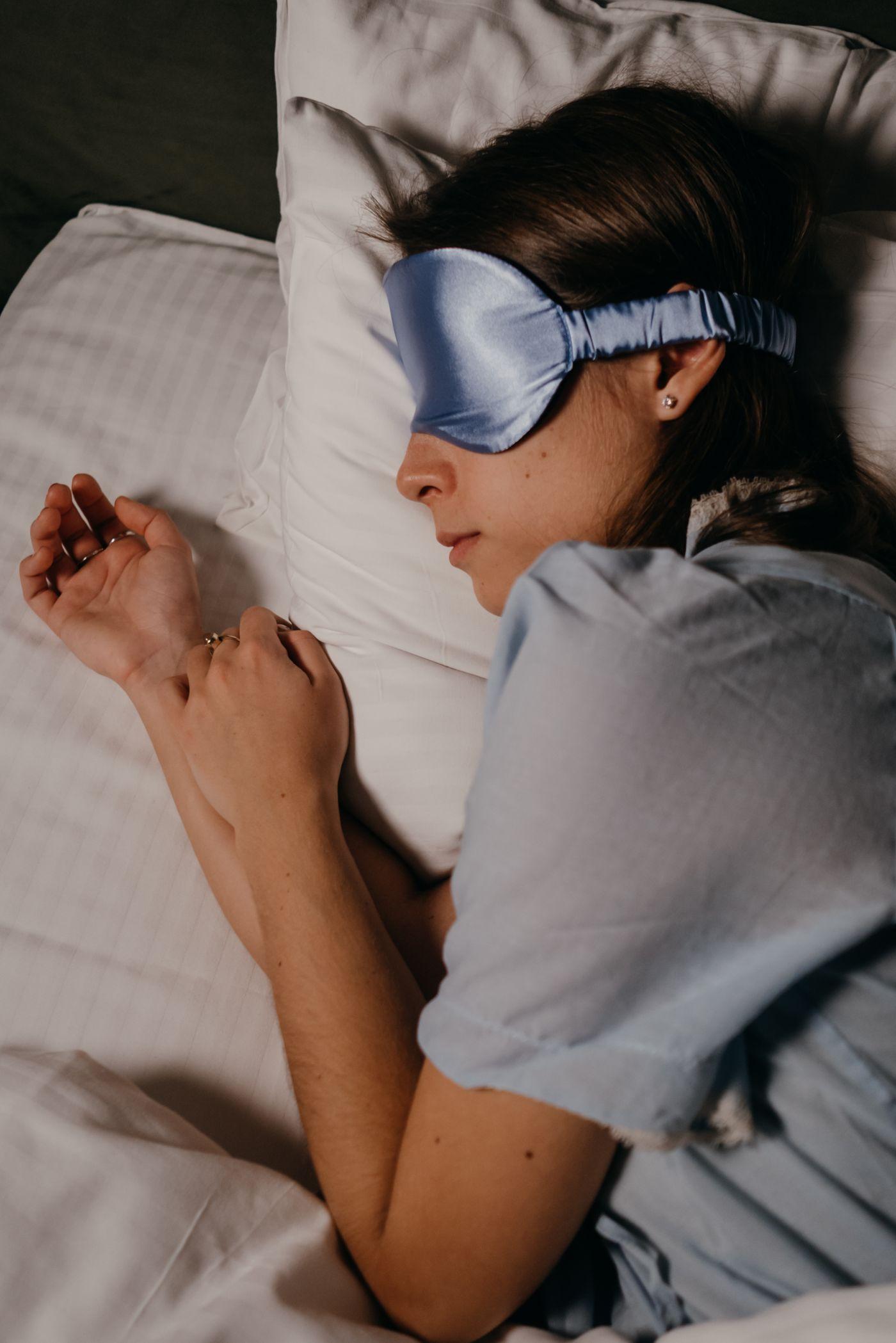
Molded eye cups, zero pressure on the eyes, no light leaks around the nose.
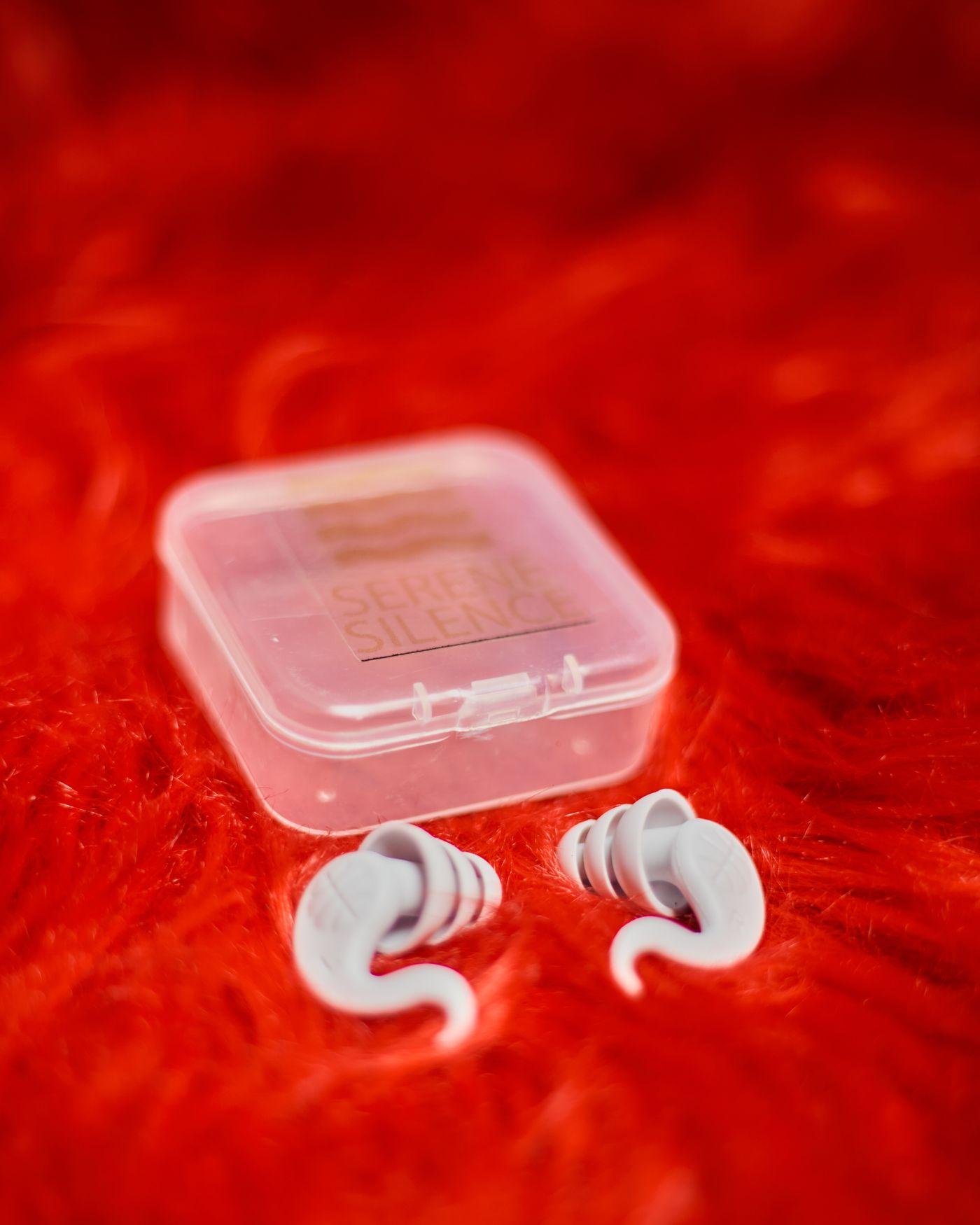
30 pairs, 33 dB rating. For snoring partners, hotels and thin walls.
20 minutes of bright, UV-free light with breakfast anchors tonight's sleep.
Keep reading
- How to Get Over Jet Lag: Your Body Clock Moves About 1 Hour a DayLanded and wide awake at 3 a.m.? Your body clock catches up only 1 to 1.5 hours a day. Light, dark and melatonin timing can speed it up.7 min read
- Gifts for Someone Who Can't Sleep: Match the Gift to What Keeps Them UpBuying for someone who sleeps badly? Match the gift to what keeps them up, and see which sleep gifts have trials behind them and which have none.6 min read
- Sleep 1.2 Hours More, Eat 270 Fewer Calories a Day: What the Trials ShowEating less is harder on short sleep. In a 2022 trial, adults who slept 1.2 hours longer ate 270 fewer calories a day, with no diet advice at all.7 min read
Sources
- Brooks A, Lack L (2006). A brief afternoon nap following nocturnal sleep restriction: which nap duration is most recuperative? Sleep, 29(6):831–840 — https://pubmed.ncbi.nlm.nih.gov/16796222/
- Hilditch CJ, Centofanti SA, Dorrian J, Banks S (2016). A 30-minute, but not a 10-minute nighttime nap is associated with sleep inertia. Sleep, 39(3):675–685 — https://pubmed.ncbi.nlm.nih.gov/26715234/
- Dutheil F, Danini B, Bagheri R, et al. (2021). Effects of a short daytime nap on the cognitive performance: a systematic review and meta-analysis. International Journal of Environmental Research and Public Health, 18(19):10212 — https://pubmed.ncbi.nlm.nih.gov/34639511/
- Rosekind MR, Graeber RC, Dinges DF, et al. (1994). Crew factors in flight operations IX: effects of planned cockpit rest on crew performance and alertness in long-haul operations. NASA Technical Memorandum 108839 — https://ntrs.nasa.gov/citations/19950006379
- Hilditch CJ, McHill AW (2019). Sleep inertia: current insights. Nature and Science of Sleep, 11:155–165 — https://pubmed.ncbi.nlm.nih.gov/31692489/
- Hayashi M, Masuda A, Hori T (2003). The alerting effects of caffeine, bright light and face washing after a short daytime nap. Clinical Neurophysiology, 114(12):2268–2278 — https://pubmed.ncbi.nlm.nih.gov/14652086/
- Reyner LA, Horne JA (1997). Suppression of sleepiness in drivers: combination of caffeine with a short nap. Psychophysiology, 34(6):721–725 — https://pubmed.ncbi.nlm.nih.gov/9401427/
- Boukhris O, Suppiah H, Driller M (2026). The influence of 25- and 90-min afternoon nap opportunities on subsequent nighttime sleep in student athletes. Journal of Sleep Research, 35(1):e70120 — https://pubmed.ncbi.nlm.nih.gov/40537913/
- Yamada T, Hara K, Shojima N, Yamauchi T, Kadowaki T (2015). Daytime napping and the risk of cardiovascular disease and all-cause mortality: a prospective study and dose-response meta-analysis. Sleep, 38(12):1945–1953 — https://pubmed.ncbi.nlm.nih.gov/26158892/
- Li P, Gao L, Yu L, et al. (2023). Daytime napping and Alzheimer's dementia: a potential bidirectional relationship. Alzheimer's & Dementia, 19(1):158–168 — https://pubmed.ncbi.nlm.nih.gov/35297533/
- CDC/NCHS (April 2026). Short Sleep Duration and Sleep Difficulties Among Adults: United States, 2024. NCHS Data Brief No. 559 — https://www.cdc.gov/nchs/products/databriefs/db559.htm
- American Academy of Sleep Medicine (2025). Sleep Prioritization Survey 2025: Improving Alertness — https://aasm.org/wp-content/uploads/2025/11/sleep-prioritization-survey-2025-improve-alertness.pdf
- NIOSH/CDC (reviewed March 31, 2020). Training for Nurses on Shift Work and Long Work Hours, Module 7: Napping, an Important Fatigue Countermeasure — Nap Duration — https://www.cdc.gov/niosh/work-hour-training-for-nurses/longhours/mod7/05.html
- NIOSH/CDC (reviewed March 31, 2020). Module 7: Nap Times — https://www.cdc.gov/niosh/work-hour-training-for-nurses/longhours/mod7/04.html
- NHLBI/NIH (updated March 24, 2022). Healthy Sleep Habits — https://www.nhlbi.nih.gov/health/sleep-deprivation/healthy-sleep-habits
- NHLBI/NIH (updated March 24, 2022). Insomnia: Treatment — https://www.nhlbi.nih.gov/health/insomnia/treatment
- MedlinePlus/NIH (updated December 9, 2025). Healthy Sleep — https://medlineplus.gov/healthysleep.html