In Pooled Hospital Trials, an Eye Mask Worked and Earplugs Alone Did Not
Pooled hospital trials: a mask alone helped self-rated sleep, earplugs alone did not, the pair did most. At home, a mask sharpened next-day learning.
The two cheapest sleep aids there are have been tested in the worst bedroom imaginable: an intensive care unit, with alarms, overhead lights and a nurse every hour. If a mask and earplugs can help there, a streetlight and a snoring partner should be easy.
The hospital trials mostly back that up, with one surprise about earplugs. A separate experiment in ordinary bedrooms found something smaller: a mask did not change how long people slept, but it changed what they could do the next day.
The numbers
Trouble staying asleep climbs through middle age. In the CDC's 2024 National Health Interview Survey, 12.7% of adults aged 18 to 34 had trouble staying asleep most days or every day; among those 50 to 64 it was 22.3%.
40 decibels is the line for night noise. The World Health Organization's 2009 night noise guidelines for Europe set 40 dB outside the bedroom as the target for protecting health, with 55 dB as an interim step for countries that cannot reach it.
13 trials, 797 patients, three different answers. In a 2021 meta-analysis of randomized trials in intensive care, eye masks alone improved self-rated sleep quality, earplugs alone did not, and the two together had the largest effect.
Nearly one patient in three did not keep the earplugs in all night. In a 2017 Paris trial, 9 of 30 patients given earplugs and a mask did not keep the earplugs in all night, mostly because of discomfort or anxiety.
About 6 milliseconds faster. That is how much quicker 85 young adults reacted on a vigilance test after a week sleeping in an eye mask, in the 2023 Cardiff study. They did not sleep longer and did not feel more alert.
Why light and noise matter at night
Light reaching the eye at night tells the brain's clock it is still day. The Cardiff researchers, writing in the journal SLEEP, ran their main experiment from late June to September on the hunch that a mask would matter most when dawn comes early, as early as 5 a.m. at midsummer in Cardiff. Participants were asked to leave their curtains open.
Noise is the other input. The WHO's night noise guidelines set 40 dB outside the bedroom as the level that protects health, including for vulnerable groups.
The clearest demonstration of both is a 2010 laboratory study from Fujian Medical University in China. Fourteen healthy volunteers slept wired to a sleep recorder: one quiet, dark night; one with noise recorded in a real ICU, averaging 66 dB, under fluorescent light; and one with the same noise and light plus earplugs and an eye mask.
The noise-and-light night brought lighter sleep, less REM, longer to reach it, and a drop in the overnight melatonin marker in urine. With the plugs and mask, in the same noise, REM rose from 9.3% to 12.9% of the night, REM arrived 41 minutes sooner, and the melatonin marker climbed back toward the quiet-night level. Fourteen people, one night per condition, in a simulation: it shows the mechanism, not what happens at home over months.
Hospital trials: masks first, earplugs second
The best summary of the randomized trials is a 2021 meta-analysis from Kaohsiung Medical University in Taiwan: 13 trials, 797 adult ICU patients, all measuring self-rated sleep quality.
Across all 13, the pooled effect was large: a standardized difference of 1.44. Split by device, into subgroups whose sizes the abstract does not give, it was lopsided. Earplugs alone: an effect size of 0.07, which is nothing, with a confidence interval running from −0.50 to 0.64. Eye masks alone: 1.56. Both together: 2.08, though with a wide interval of 0.95 to 3.21. The authors' conclusion names masks alone, or masks with earplugs, as the effective options, though their practice note to nurses still says "either one or both."
Why might earplugs underperform? The Paris trial from 2017, published in Critical Care, tested plugs and mask together and gives a clue about tolerance. It randomized 64 ICU patients to earplugs plus a mask or to usual care, and measured sleep with an 18-hour polysomnography recording, which the questionnaire trials did not; the recording was usable in 51 of the 61 who stayed in. Deep sleep, the primary outcome, was 21% of total sleep time with the devices and 11% without (p = 0.09), a difference that did not reach significance. Long awakenings were fewer: 21 against 31. And 9 of the 30 patients in the device group did not keep their earplugs in all night. In a post hoc look at the 21 who did, of whom 15 had a scorable recording, deep sleep was 74 minutes against 31 for the controls. The authors' summary: the devices "reduce long awakenings and increase N3 duration when they are well tolerated."
A Cochrane review from 2015, covering 30 ICU trials and 1,569 patients of every non-drug sleep aid, is more cautious still. Only two trials of earplugs or masks could be pooled for sleep time, 116 patients, and they showed about 2.2 hours more sleep, which the reviewers rated as low-quality evidence. Most of the earplug-and-mask trials that measured sleep objectively found no benefit.
The mask study in real bedrooms
The one sizeable test in healthy adults at home is the Cardiff University experiment published in 2023 and funded by a European Research Council grant.
Ninety-four adults aged 18 to 35 slept at home for one week in an eye mask and one week without, in counterbalanced order, with curtains open. From the second year, the control was a mask with holes cut over the eyes. Eighty-nine finished; after technical failures, 83 counted for the word-pair test and 85 for the reaction-time test. On the two mornings after each week, they took a word-pair learning test and a reaction-time test.
After the mask week, they learned slightly more word pairs (a mean score of 65.1 against 63.9) and reacted about 6 milliseconds faster (310 against 316 ms). Both differences were statistically significant and small (effect sizes 0.19 and 0.16). The mask did not change how many hours they reported sleeping (8.24 against 8.26) or how alert they said they felt.
A second experiment put sleep-recording headbands on 33 more people, 29 with usable recordings. The learning benefit appeared again. The headbands showed no change in sleep stages, but people who got more slow-wave sleep in the mask learned more the next day; without the mask there was no such link.
So in ordinary bedrooms, a mask did not produce more sleep, but a small, measurable improvement in what people could do with the sleep they had.
What can help: both of these are in our range.
- A contoured sleep mask is the better-supported of the two. In the pooled hospital trials a mask alone improved self-rated sleep; at home, a week in one brought small gains in learning and reaction time with no change in sleep length. People in the Paris trial gave discomfort as their main reason for giving up on the devices, so pick a shape you can forget about; a contoured mask keeps pressure off the eyelids.
- Foam earplugs are the weaker half, and the honest line is that in the earplugs-only trials within the 2021 meta-analysis, earplugs showed no significant effect on self-rated sleep. They did best paired with a mask. If noise is your specific problem, they are still the tool for it; the lab study used plugs rated at 29 dB.
Making them stay on
Comfort is the whole game, according to the trials. The Paris patients gave discomfort and anxiety as their reasons; in some, the plugs and mask simply shifted during the night, and earlier trials cited in the same paper reported plugs that would not stay in and sore ears. In the lab study, six of 14 volunteers rated earplugs comfortable, against ten of 14 for the mask. The Cardiff participants in the second experiment, none of whom had worn a mask before, rated the real mask more comfortable than the one with holes.
- Fit foam plugs properly: roll them thin, pull the ear up and back, insert, and hold until they expand.
- Side sleeper? Choose a mask with molded eye cups and a flat strap, so nothing presses on the eye or catches in your hair.
- Give it a week. The main Cardiff experiment used five habituation nights before testing anything.
- Keep the room dark and quiet anyway; the devices are a patch for what you cannot remove. Our guide to light, noise and temperature covers the rest.
This article is general information, not medical advice. If you wake repeatedly at night, snore loudly, or stop breathing in your sleep, see a doctor; earplugs and a mask treat the room, not the cause.
Products mentioned
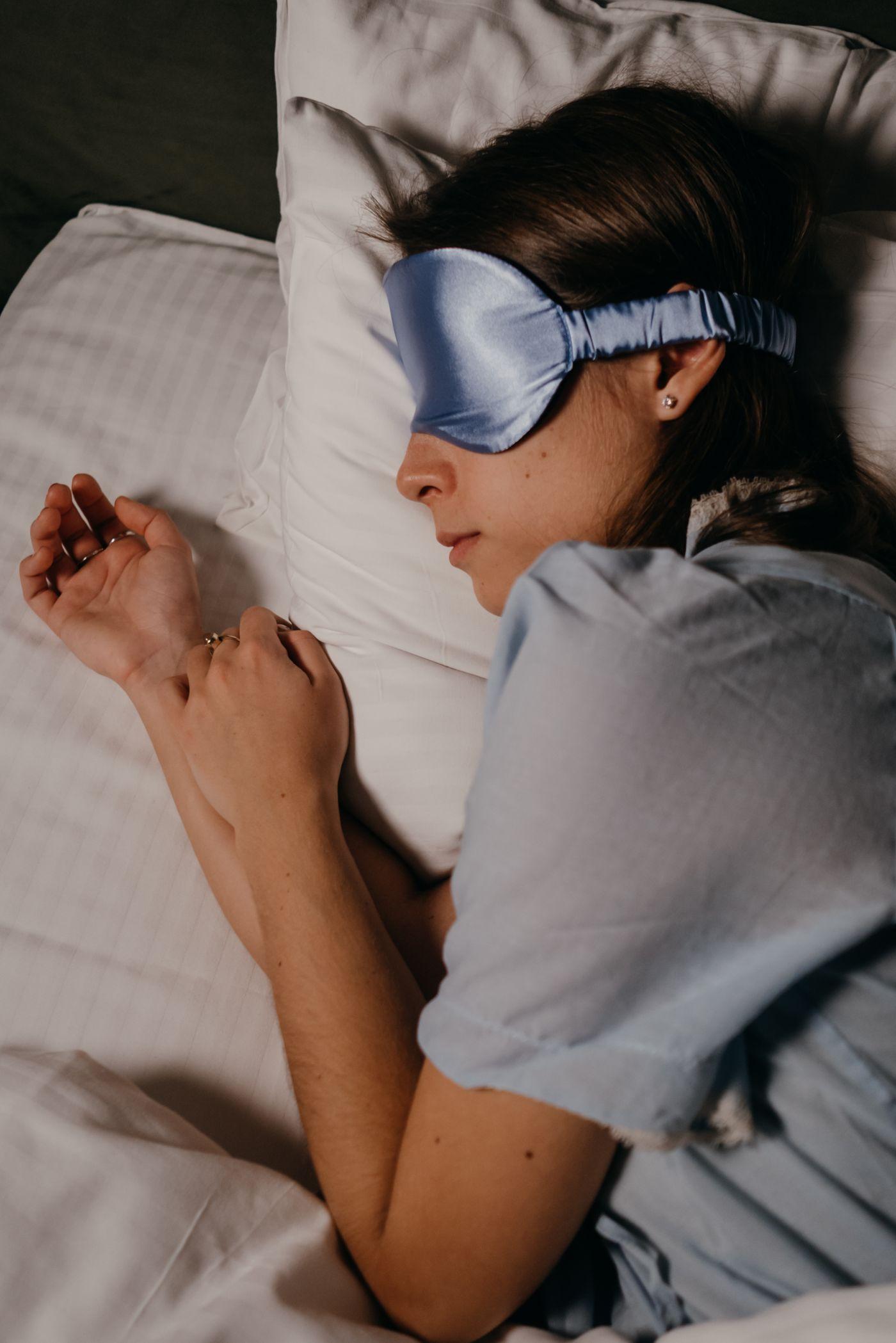
Molded eye cups, zero pressure on the eyes, no light leaks around the nose.
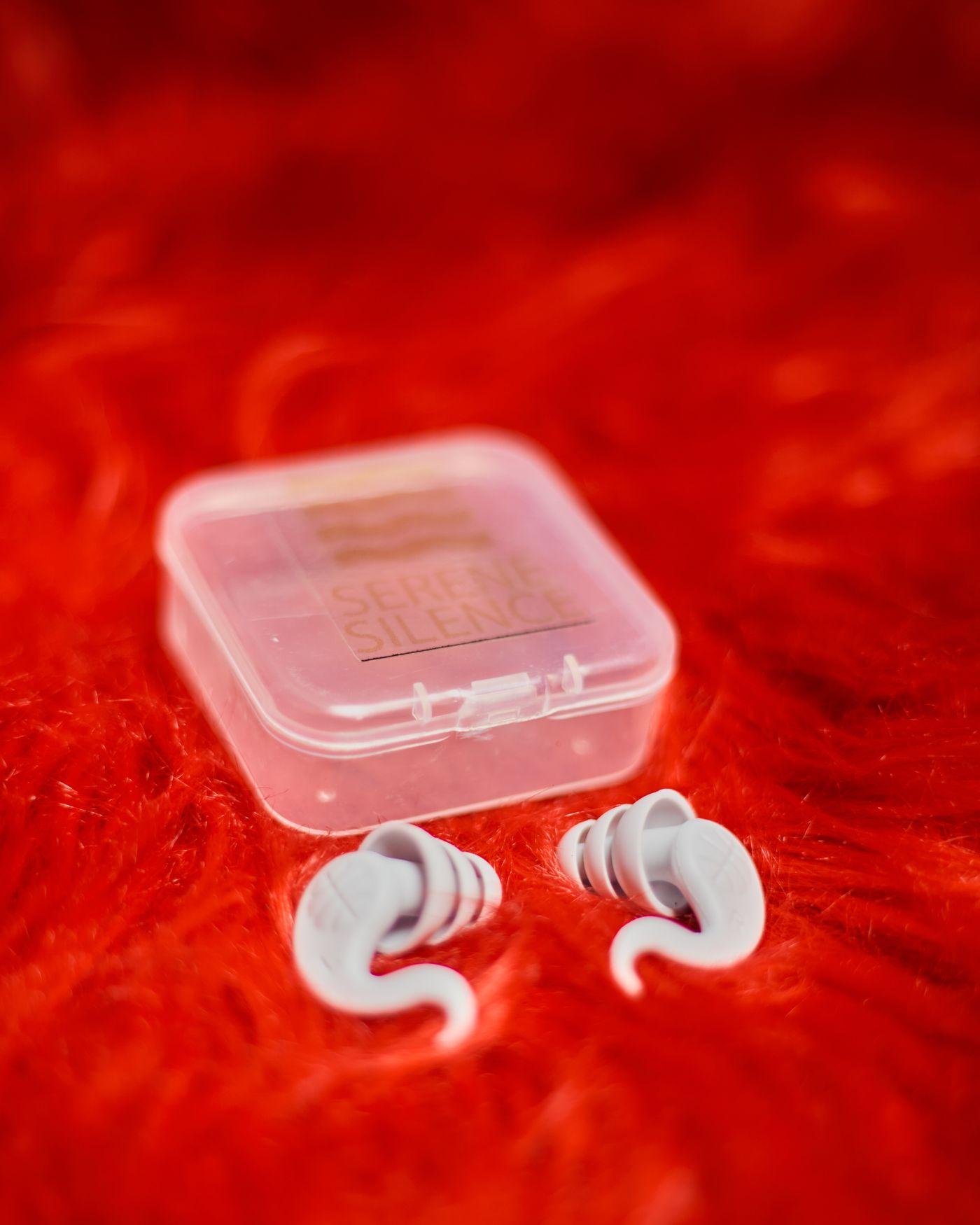
30 pairs, 33 dB rating. For snoring partners, hotels and thin walls.
Keep reading
- Six Hours a Night for Two Weeks: You Feel Fine. Your Reaction Time Doesn'tIn a lab study, two weeks of 6-hour nights hurt attention as much as a full night with no sleep, and people barely felt it. What that means for you.6 min read
- Nap for 10 to 20 Minutes: Why 30 Is Where the Grogginess StartsWake from naps groggy? In a 24-person trial, 10 minutes helped at once, 20 helped after a delay and 30 brought grogginess first. How long and when to nap.6 min read
- Sleep 1.2 Hours More, Eat 270 Fewer Calories a Day: What the Trials ShowEating less is harder on short sleep. In a 2022 trial, adults who slept 1.2 hours longer ate 270 fewer calories a day, with no diet advice at all.7 min read
Sources
- Fang CS, Wang HH, Wang RH, Chou FH, Chang SL, Fang CJ (2021). Effect of earplugs and eye masks on the sleep quality of intensive care unit patients: a systematic review and meta-analysis. Journal of Advanced Nursing, 77(11):4321-4331 — https://pubmed.ncbi.nlm.nih.gov/34096647/
- Greco V, Bergamo D, Cuoccio P, Konkoly KR, Muñoz Lombardo K, Lewis PA (2023). Wearing an eye mask during overnight sleep improves episodic learning and alertness. SLEEP, 46(3):zsac305 — https://pubmed.ncbi.nlm.nih.gov/36521010/
- Hu RF, Jiang XY, Zeng YM, Chen XY, Zhang YH (2010). Effects of earplugs and eye masks on nocturnal sleep, melatonin and cortisol in a simulated intensive care unit environment. Critical Care, 14(2):R66 — https://pubmed.ncbi.nlm.nih.gov/20398302/
- Demoule A, Carreira S, Lavault S, et al. (2017). Impact of earplugs and eye mask on sleep in critically ill patients: a prospective randomized study. Critical Care, 21(1):284 — https://pubmed.ncbi.nlm.nih.gov/29157258/
- Hu RF, Jiang XY, Chen J, et al. (2015). Non-pharmacological interventions for sleep promotion in the intensive care unit. Cochrane Database of Systematic Reviews, (10):CD008808 — https://pubmed.ncbi.nlm.nih.gov/26439374/
- World Health Organization Regional Office for Europe (2009). Night Noise Guidelines for Europe — https://www.who.int/europe/publications/i/item/9789289041737
- CDC/NCHS Data Brief No. 559 (April 2026). Short Sleep Duration and Sleep Difficulties Among Adults: United States, 2024 — https://www.cdc.gov/nchs/products/databriefs/db559.htm