Menopause Night Sweats: The Sleep Fix That Did Best in Trials
Night sweats after menopause can last for years. What treats them, what helped sleep most in trials, and what cool bedding can and can't do.
In a 2014 study at SRI International's sleep lab in California, 34 women in perimenopause slept wired to brain monitors and to a skin sensor on the breastbone that picks up the sudden sweat of a hot flash. Across 63 nights the sensor caught 222 hot flashes. Seven in 10 of them came with an awakening, and on an average night those flashes accounted for 16.6 minutes awake.
The women also tended to underestimate how often they woke and how many hot flashes they had. That is worth holding on to, because the fix that helped sleep most in later trials did not cool anyone down.
The numbers
More than half of perimenopausal women sleep short. In the CDC's National Health Interview Survey for 2015, 56.0% of perimenopausal women aged 40 to 59 slept less than 7 hours in a 24-hour period on average, against 32.5% of premenopausal and 40.5% of postmenopausal women. The perimenopausal group was small, 3.7% of the women in the analysis.
Staying asleep gets harder after the change. In the same CDC survey, 35.9% of postmenopausal women aged 40 to 59 had trouble staying asleep four or more times in the past week, against 23.7% of premenopausal women.
Hot flashes are common and slow to leave. The North American Menopause Society's 2023 position statement says hot flashes and night sweats occur in up to 80% of women going through menopause, last a mean of 7 to 9 years, and in a third of women more than 10.
A large share of the night's waking traces to them. In a 2014 sleep-lab study of 34 perimenopausal women at SRI International in California, hot-flash waking made up on average 27.2% of the time the women spent awake after first falling asleep.
Night sweats after menopause: short answers
Do night sweats go on after menopause? Often, for years. The menopause society's 2023 statement gives hot flashes and night sweats a mean duration of 7 to 9 years in all, counting the years before the final period, and more than 10 years in a third of women. In a large US study the statement cites, women with frequent hot flashes or night sweats kept having them for a median of 4.5 years after their final period. In the CDC survey above, trouble staying asleep was more common in postmenopausal than in premenopausal women aged 40 to 59, though that survey did not ask about night sweats.
What treats menopause night sweats? The same statement calls hormone therapy the most effective treatment for hot flashes and night sweats, to be considered by women under 60 who are within 10 years of their final period and have no reason to avoid it. For women who should not take it, for example after an estrogen-dependent cancer or with cardiovascular disease, or who prefer not to, its recommended options include cognitive behavioral therapy (which makes the flashes less bothersome rather than less frequent), clinical hypnosis, certain SSRI and SNRI antidepressants, gabapentin and fezolinetant on good and consistent evidence, and oxybutynin on good to limited evidence. Since then, the FDA has added a boxed warning about rare but serious liver injury to fezolinetant (Veozah), with blood tests before and during treatment. The statement does not recommend supplements and herbal remedies, soy, paced breathing or cooling techniques. Which option fits you is a question for a clinician.
What helps you sleep through them? Treating the insomnia as well as the flashes. In the trials below, cognitive behavioral therapy for insomnia improved sleep the most of the treatments compared, although hot flashes, by day or at night, fell no more than in the comparison group.
Could it be something else? Yes. If night sweats come with fever, weight loss or other new symptoms, see a clinician.
Why a small rise in temperature wakes you
Your body keeps its core temperature inside a band. Above the band you sweat, below it you shiver. In women with hot flashes that band seems to shrink to almost nothing.
In a 1999 experiment at Wayne State University in Detroit, researchers heated and cooled 12 postmenopausal women with hot flashes and 8 without. Measured in the rectum, the gap between the sweating and shivering thresholds was 0.4°C (about 0.7°F) in the women without symptoms and effectively zero in the women with them. The authors concluded that small rises in core temperature, acting inside that narrowed zone, may be what sets off a flash. It is a small study, but it may explain why a warm duvet can be enough to tip things over.
Does the flash cause the waking? A small 2013 experiment at Massachusetts General Hospital in Boston tested it directly. Researchers gave 20 healthy premenopausal volunteers a drug that switches off the ovaries for a while. Fourteen developed hot flashes. In those 14, objectively measured sleep efficiency fell (median 2.6%); in the women who had no flashes, it rose (median 4.2%).
What helped sleep most in the trials
The surprise is that the option that did best for sleep leaves the hot flashes alone. Cognitive behavioral therapy for insomnia (CBT-I) retrains the habits and worries that keep a broken night broken: a fixed wake time, a shorter window in bed at first, getting up when you cannot sleep, and work on the thoughts that come with lying awake.
In a 2016 randomized trial led by the University of Washington and funded by the National Institutes of Health, 106 women aged 40 to 65 with insomnia and at least 2 hot flashes a day got six phone sessions of 20 to 30 minutes over 8 weeks, either CBT-I or general menopause education. On the 28-point Insomnia Severity Index, scores fell 9.9 points with CBT-I against 4.7 with education after 8 weeks. At 8 weeks, 70% of the CBT-I group scored in the no-insomnia range, against 24%; at 24 weeks, 84% against 43%. The number of hot flashes did not differ between the groups, but the CBT-I group said the flashes got in the way of their lives less.
Then the same research network pooled four of its randomized trials, 546 women with insomnia symptoms and frequent bothersome hot flashes, and compared 7 treatments against their controls. CBT-I cut the insomnia score most, by 5.2 points beyond control. Exercise (2.1) and the antidepressant venlafaxine (2.3) came next, and the reductions with escitalopram, yoga and a low dose of estradiol (0.5 mg a day) were comparably small. Omega-3 capsules did not improve insomnia symptoms. One caveat: hormone therapy at usual doses was not in that comparison, and the menopause society still calls hormone therapy the most effective treatment for the hot flashes themselves.
The American Academy of Sleep Medicine's 2021 guideline gives CBT-I a strong recommendation for chronic insomnia in adults, and the 2023 menopause statement gives cognitive-behavioral therapy a Level I recommendation for making hot flashes less bothersome (that version targets the flashes rather than insomnia). Our piece on getting out of bed at 3 a.m. covers one of CBT-I’s core steps.
What cooling can and can't do
The menopause society looked at cooling techniques as a treatment for hot flashes: dressing in layers, fans, cold packs under the pillow, a cooler room. Its verdict was "not recommended" at Level II, which means limited or inconsistent evidence. The verdict reflects too few trials.
The two trials it cited were small. A 2021 pilot by researchers at SRI International gave 20 women a forehead-cooling device to use every night for 4 weeks, with sleep hygiene advice and no control group; diary sleep and hot-flash severity improved. The study was funded by a therapeutics company where one of its authors worked. A 2021 crossover study from Saint Joseph's University in Philadelphia, of 39 women compared 2 weeks with a wrist-worn warming and cooling device to 2 weeks without; women reported falling asleep faster and sleeping more, and fewer said hot flashes disturbed their sleep, but all of these results came from questionnaires the women filled in. The study was funded by a consumer-products company that employed one of its authors.
So cooler bedding is a comfort measure. It may make the minutes after a flash easier to get through. Nobody has shown it prevents one.
What can help: none of these has been tested for hot flashes, and none replaces CBT-I or a talk with a clinician. They can make a hot bed less hot.
- A cooling duvet cover in a breathable weave traps less heat than a heavy cover. We found no sleep study that tested one.
- A cooling pillowcase gives a cool surface to turn onto after a flash. We found no study of one; turning the pillow is one of the cooling tips the menopause society lists.
Where people go wrong
Treating it as only a temperature problem. Months of broken nights teach the brain to expect waking. That is the part CBT-I works on.
Waiting it out. With a mean of 7 to 9 years of symptoms, waiting is a long plan. Hormone therapy, several nonhormone medicines and CBT-I all have trial evidence; which fits you is for a clinician to discuss, especially if you have had breast cancer, a blood clot or heart disease.
Blaming everything on hot flashes. Loud snoring, gasping, or legs that will not keep still are different problems and need their own check.
A plan for tonight and the next 8 weeks
- Keep the bedroom cool and dress the bed in layers you can shed without waking fully.
- After a flash, turn the pillow, push the cover back and give yourself a few minutes.
- If you cannot get back to sleep, get up and do something quiet in dim light until you feel sleepy, then go back to bed.
- Hold one wake-up time every day, weekends included.
- Ask your clinician about CBT-I, in person, by phone or online, and about treatments for the hot flashes themselves.
This article is general information, not medical advice. If night sweats come with fever, weight loss or other new symptoms, or your sleep problems last more than a few weeks, see a clinician.
Products mentioned
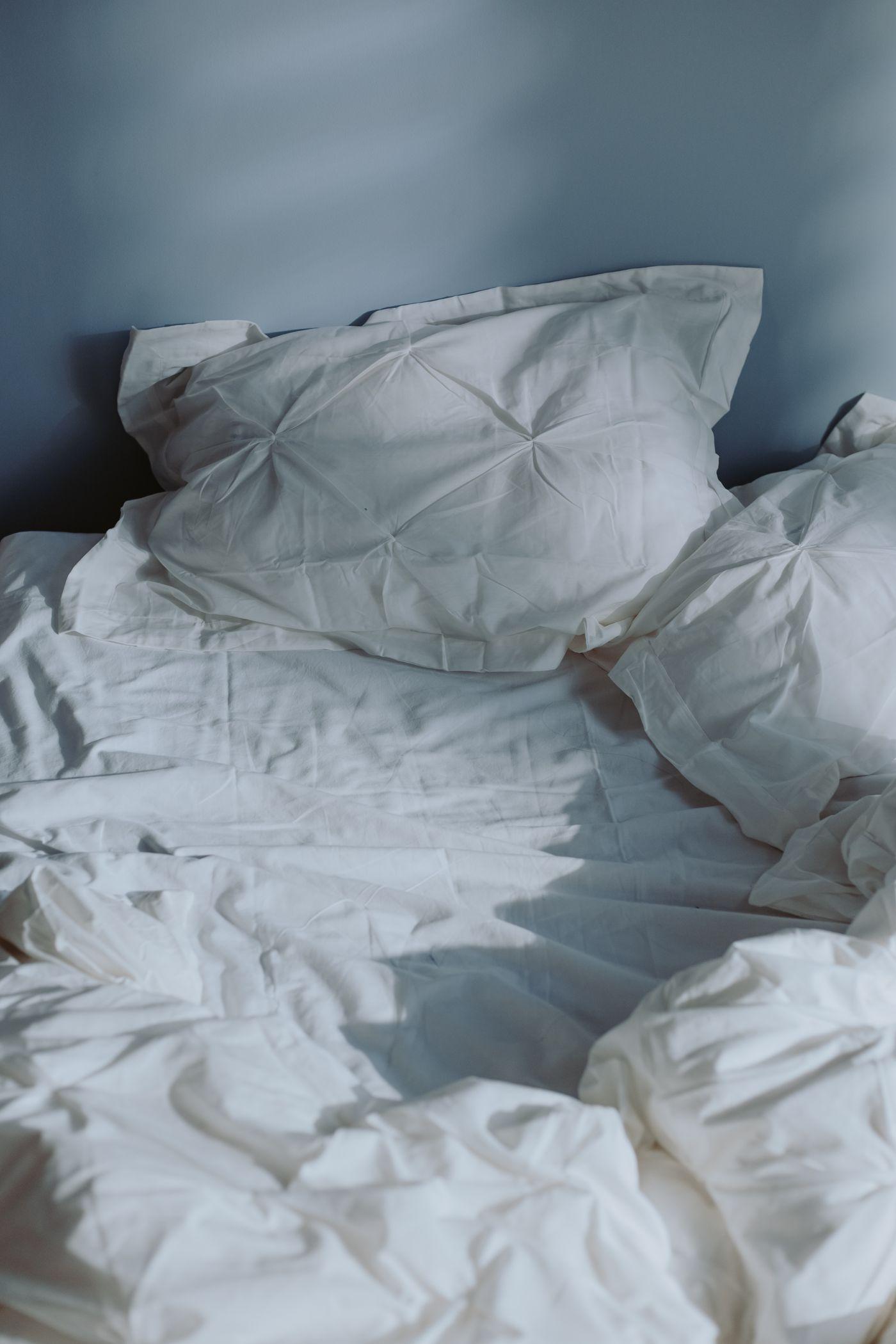
Tencel lyocell and cotton cover for hot sleepers. Queen, with two shams.
A pair of cool-to-the-touch cases that pull heat away from your face.
Keep reading
- Hot Nights Cost You Sleep: 14 Minutes Above 86°F, and More After 65Seven million nights of wearable data: 14 minutes lost on nights above 86°F, mostly from falling asleep later. Why heat does this, and what cools you.7 min read
- Evening Workouts Don't Ruin Your Sleep. Long, Hard Ones That End Late CanLab trials find working out at night doesn't harm sleep. In 4 million nights of wearable data, long hard sessions ending late went with later, shorter sleep.7 min read
- A Warm Bath an Hour or Two Before Bed Can Help You Fall Asleep FasterTen minutes in warm water one to three hours before bed is linked to falling asleep several minutes sooner. The evidence is modest. How to try it safely.6 min read
Sources
- Vahratian A (2017). Sleep Duration and Quality Among Women Aged 40–59, by Menopausal Status. NCHS Data Brief No. 286, National Center for Health Statistics — https://www.cdc.gov/nchs/products/databriefs/db286.htm
- The North American Menopause Society (2023). The 2023 nonhormone therapy position statement of The North American Menopause Society. Menopause, 30(6):573-590 — https://pubmed.ncbi.nlm.nih.gov/37252752/
- de Zambotti M, Colrain IM, Javitz HS, Baker FC (2014). Magnitude of the impact of hot flashes on sleep in perimenopausal women. Fertility and Sterility, 102(6):1708-1715 — https://pubmed.ncbi.nlm.nih.gov/25256933/
- Freedman RR, Krell W (1999). Reduced thermoregulatory null zone in postmenopausal women with hot flashes. American Journal of Obstetrics and Gynecology, 181(1):66-70 — https://pubmed.ncbi.nlm.nih.gov/10411797/
- Joffe H, White DP, Crawford SL, et al. (2013). Adverse effects of induced hot flashes on objectively recorded and subjectively reported sleep: results of a gonadotropin-releasing hormone agonist experimental protocol. Menopause, 20(9):905-914 — https://pubmed.ncbi.nlm.nih.gov/23481119/
- McCurry SM, Guthrie KA, Morin CM, et al. (2016). Telephone-based cognitive behavioral therapy for insomnia in perimenopausal and postmenopausal women with vasomotor symptoms: a MsFLASH randomized clinical trial. JAMA Internal Medicine, 176(7):913-920 — https://pubmed.ncbi.nlm.nih.gov/27213646/
- Guthrie KA, Larson JC, Ensrud KE, et al. (2018). Effects of pharmacologic and nonpharmacologic interventions on insomnia symptoms and self-reported sleep quality in women with hot flashes: a pooled analysis of individual participant data from four MsFLASH trials. Sleep, 41(1):zsx190 — https://pubmed.ncbi.nlm.nih.gov/29165623/
- Edinger JD, Arnedt JT, Bertisch SM, et al. (2021). Behavioral and psychological treatments for chronic insomnia disorder in adults: an American Academy of Sleep Medicine clinical practice guideline. Journal of Clinical Sleep Medicine, 17(2):255-262 — https://pubmed.ncbi.nlm.nih.gov/33164742/
- Baker FC, de Zambotti M, Chiappetta L, Nofzinger EA (2021). Effects of forehead cooling and supportive care on menopause-related sleep difficulties, hot flashes and menopausal symptoms: a pilot study. Behavioral Sleep Medicine, 19(5):615-628 — https://pubmed.ncbi.nlm.nih.gov/33040586/
- Kräuchi K, Fattori E, Giordano A, et al. (2018). Sleep on a high heat capacity mattress increases conductive body heat loss and slow wave sleep. Physiology & Behavior, 185:23-30 — https://pubmed.ncbi.nlm.nih.gov/29247670/
- Composto J, Leichman ES, Luedtke K, Mindell JA (2021). Thermal comfort intervention for hot-flash related insomnia symptoms in perimenopausal and postmenopausal-aged women: an exploratory study. Behavioral Sleep Medicine, 19(1):38-47 — https://pubmed.ncbi.nlm.nih.gov/31801384/
- Avis NE, Crawford SL, Greendale G, et al. (2015). Duration of menopausal vasomotor symptoms over the menopause transition. JAMA Internal Medicine, 175(4):531-539 — https://pubmed.ncbi.nlm.nih.gov/25686030/
- U.S. Food and Drug Administration (September 2024; boxed warning added December 2024). FDA adds warning about rare occurrence of serious liver injury with use of Veozah (fezolinetant) for hot flashes due to menopause. Drug Safety Communication — https://www.fda.gov/drugs/drug-safety-communications/fda-adds-warning-about-rare-occurrence-serious-liver-injury-use-veozah-fezolinetant-hot-flashes-due