Evening Workouts Don't Ruin Your Sleep. Long, Hard Ones That End Late Can
Lab trials find evening exercise doesn't harm sleep. In 4 million nights of wearable data, long hard sessions ending late went with later, shorter sleep.
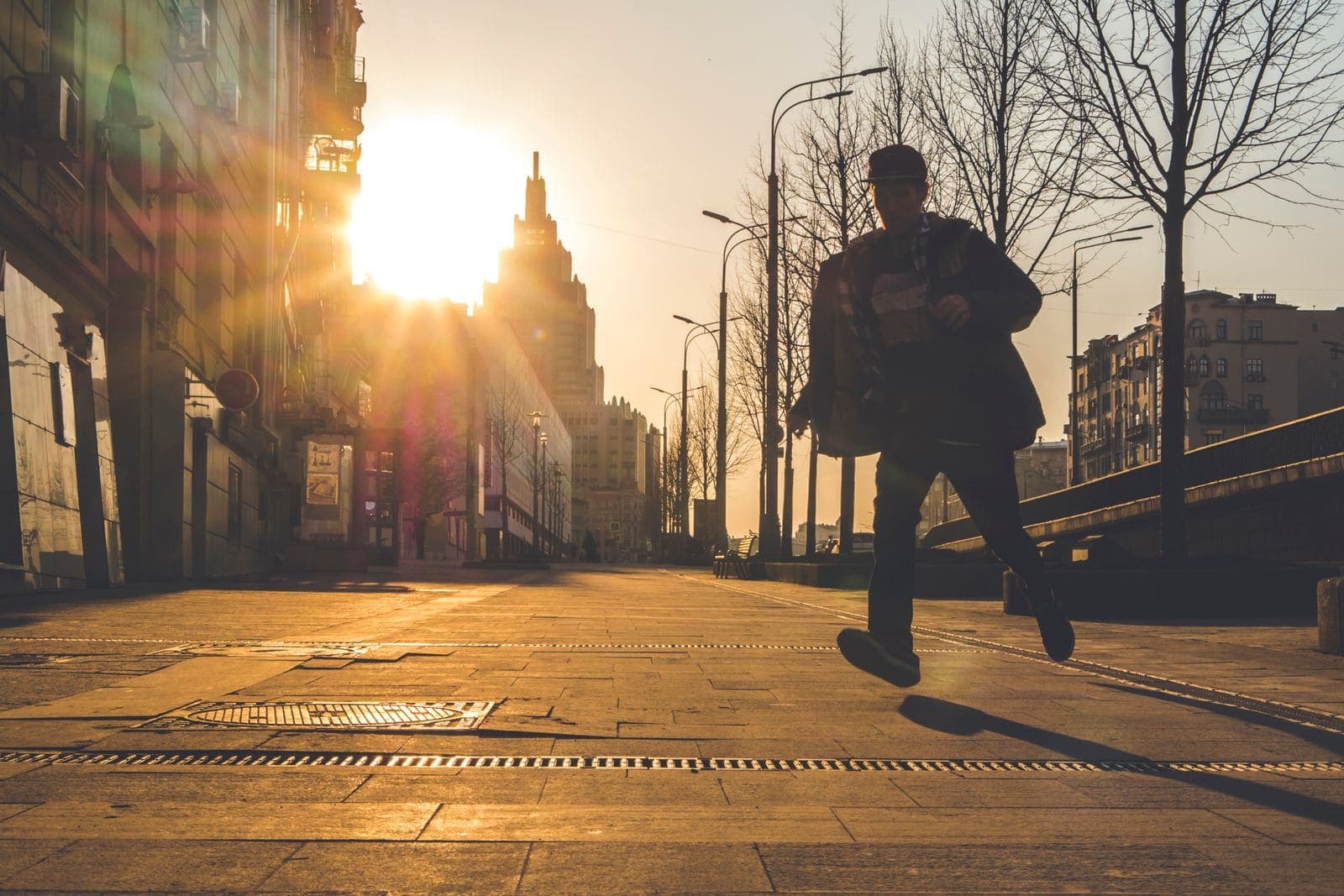
The standard advice used to be simple: don't exercise in the evening, it'll keep you up. As recently as 2019, the authors of one major review opened by noting that current recommendations still said exactly that.
It was never a great rule for people with jobs. If you leave the house at 7:30 and get home at 6, the evening is the only slot you have. A rule that tells working adults to skip the one workout they can fit in had better be right. It mostly isn't.
The numbers
Most American adults don't move enough. In the CDC's 2020 National Health Interview Survey, 24.2% of US adults met the federal guidelines for both aerobic and muscle-strengthening activity. Fewer than half, 46.9%, met the aerobic guideline at all.
The target is 150 minutes a week. That is the CDC's minimum for moderate activity, plus two days of strength work.
In the lab: 23 studies, no harm found. A 2019 review of single evening workouts in healthy adults concluded that they do not damage sleep.
In the wild: 4,084,354 nights, and a cost for the hardest sessions. In a 2025 study of 14,689 physically active people, a maximal session ending two hours before the usual sleep time went with falling asleep 36 minutes later than a light one.
What happens in the lab
In 2019, three researchers at ETH Zurich pulled together 23 studies in which healthy adults did a single bout of evening exercise and had their sleep compared with a no-exercise night.
Sleep did not get worse. The measurable changes were small: a little more slow-wave sleep (up 1.3 percentage points), a little less of the lightest stage (down 0.9), and REM arriving 7.7 minutes later. The authors' conclusion was blunt. The studies don't support the idea that evening exercise harms sleep, and point, in their words, "rather the opposite" way.
They attached one warning. Falling asleep, total sleep time and sleep efficiency might suffer after vigorous exercise that ends an hour or less before bedtime.
Two years later a Canadian group asked the harder question: what about properly intense sessions? They pooled 15 trials with 194 participants, all healthy good sleepers between 18 and 50. High-intensity exercise finishing between half an hour and four hours before bed lowered REM sleep slightly, by 2.34% in the pooled analysis. Nothing else changed significantly. Their bottom line was that hard exercise two to four hours before bed does not disrupt sleep in healthy young and middle-aged adults. Regular evening high-intensity training didn't disrupt it either.
What happens across four million nights
In 2025, a team led from Monash University published an analysis in Nature Communications of people who wore a biometric wristband for a year. No lab, no assigned workouts.
"Strain" needs a definition, because it isn't the same as intensity. It's a score built from heart rate and duration together. In the paper's own examples, light strain is a brisk walk or a slow jog. Moderate is a gym class or a 5-mile run. High is a 10-mile run. Maximal, which made up only 2.4% of the workouts logged, is a half marathon or a full hockey match: something like two hours at 85% of maximum heart rate.
Both timing and strain mattered, and they compounded. Later exercise and higher strain went with later sleep onset, shorter sleep, lower sleep quality, a higher resting heart rate overnight and lower heart rate variability. Alongside the 36 minutes, that maximal session two hours out was associated with 22.2 minutes less sleep than a light one.
The authors put the line at four hours. In their summary, sessions ending four or more hours before sleep onset were not associated with changes in sleep, whatever the strain. Their supplementary tables are a little less tidy. At exactly four hours a maximal session still went with falling asleep about 12 minutes later, and sleeping about 10 minutes less, than on a rest day. By six hours that was gone.
Why the two don't really clash
Both kinds of study say easy evening exercise is fine, and moderate exercise too if it ends well before bed. Both say the last hour is a poor time for a hard effort.
Where they seem to part, they are partly measuring different things. The lab trials test intensity. The wearable study tests strain, which piles duration on top, and by the wearable team's count 82% of the studies in those two lab reviews would score as light or moderate strain. A 30-minute interval class and a half marathon are both "hard." Only the second is what produced that 36-minute figure.
Neither kind of evidence is clean. The lab trials are small and mostly test one session on one night. The wearable study can only show association. Its authors say the device couldn't detect when people first tried to sleep, so nobody knows how long they lay awake. Light exposure wasn't controlled. Everyone in it was a physically active subscriber to the device. And two of the authors work for WHOOP, the company that makes the band, which they disclose.
How to time it
Sort your sessions by how long and hard they are, then count back from when you usually fall asleep.
Long, hard sessions (a match, a 10-mile run, 90 minutes of hard training) want four hours of clearance, and six is cleaner. If you usually fall asleep at 11, that means done by 7.
Moderate sessions (a gym class, a 5-mile run) want more room than people assume. At two hours out, they went with falling asleep about 15 minutes later and sleeping about 15 minutes less than on a rest day. By four hours the difference had all but disappeared.
Light work (a brisk walk, an easy jog) is fine until about two hours before sleep. At that mark the cost was roughly 4 minutes later and 8 minutes less.
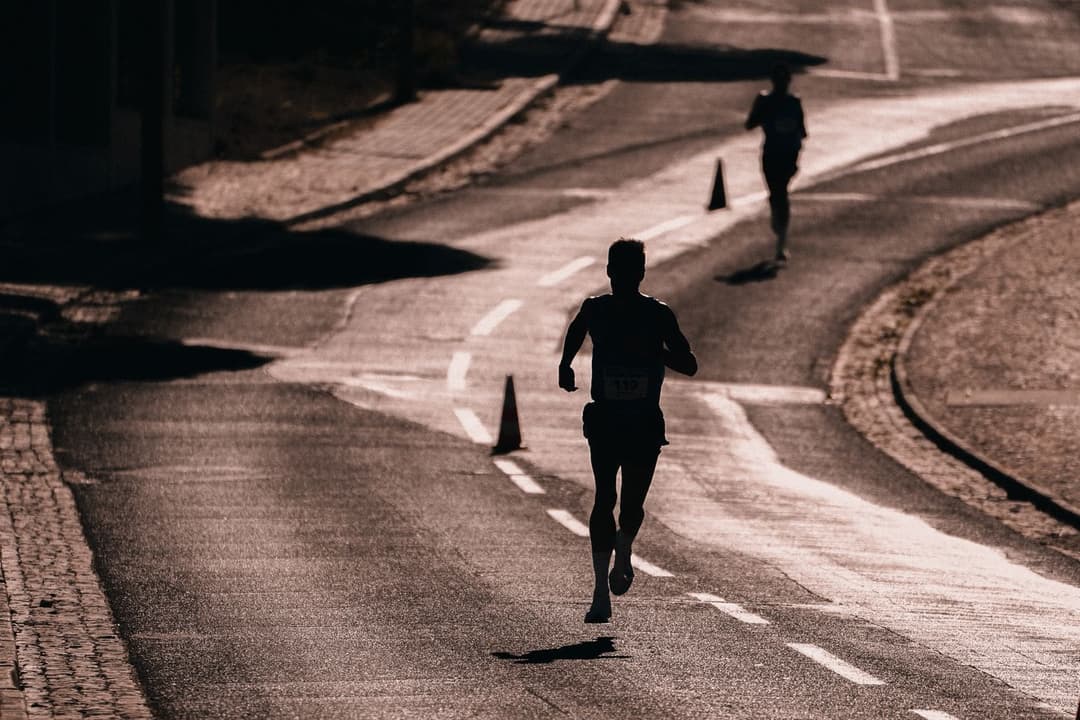
Intense sessions under about 40 minutes can't reach high strain on the study's score, however hard they are. That is closer to what the lab trials tested, and the high-intensity trials clear the window two to four hours before bed. Nothing in this research defends a hard effort that ends inside the last hour.
Two gaps to know about. Yoga and stretching weren't in the wearable study at all, since it excluded them as relaxation. And its authors say their strain score may undercount strength training. For those, you're running your own experiment.
If the only slot you have is late, turn the effort down rather than cancelling. That is the wearable study's own advice: within the four-hour window, choose lighter strain.
In the Zurich review, a higher temperature at bedtime went with lower sleep efficiency and more time awake, though that link vanished when a single study was removed. The timing in our warm-bath piece rests on a related idea.
What can help: timing does most of the work here. Two product types fit around it.
- A sunrise alarm clock, if the answer is moving the hard session to the morning. In two small trials, of 16 and 8 people who found waking difficult, half an hour of simulated dawn before the alarm left them feeling more alert afterwards. Reaction times were faster in the smaller trial; the larger one, which had financial support from the maker of the wake-up light it tested, found no effect on performance.
- Cooling bedding, such as a cooling pillowcase or cooling duvet cover, for nights after a late session. These weren't tested in any of the studies above. They follow from the Zurich finding on temperature at bedtime, which was itself fragile.
Two ways people get this wrong
Skipping exercise because the evening is "too late." Regular exercise helps sleep on its own terms: a meta-analysis of 66 studies found it produced small gains in total sleep time and sleep efficiency, small-to-medium gains in how fast people fall asleep, and moderate gains in sleep quality.
Assuming all this applies to you if you already sleep badly. It may not. The lab trials studied healthy adults, and the high-intensity ones recruited good sleepers specifically. They can't tell you how late exercise sits with a sleep problem.
So, the rule
Go ahead and train in the evening. Put the long, hard sessions early in it, and keep the last hour before bed for anything but that.
This article is general information, not medical advice. If you have a heart condition or haven't exercised in a long time, check with a doctor before starting vigorous training. If poor sleep persists whatever you do with your workouts, that deserves a doctor's attention too.
Products mentioned
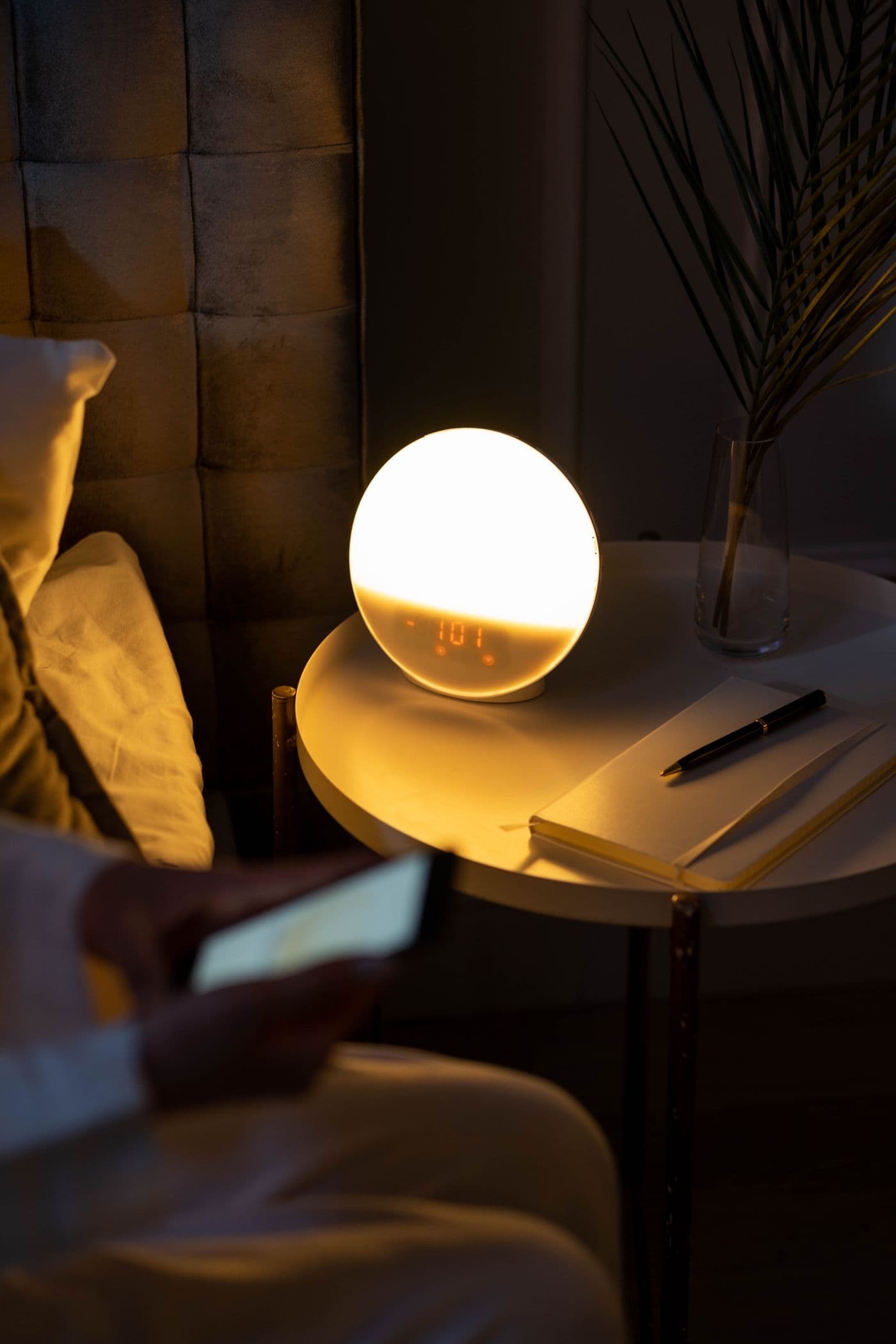
Brightens gradually over 30 minutes so you wake before the sound does.

Cool-to-the-touch fiber that pulls heat away from your face.
Breathable eucalyptus-blend cover for hot sleepers. Queen and King.
Sources
- Stutz J, Eiholzer R, Spengler CM (2019). Effects of evening exercise on sleep in healthy participants: a systematic review and meta-analysis. Sports Medicine, 49(2):269-287 — https://pubmed.ncbi.nlm.nih.gov/30374942/
- Frimpong E, Mograss M, Zvionow T, Dang-Vu TT (2021). The effects of evening high-intensity exercise on sleep in healthy adults: a systematic review and meta-analysis. Sleep Medicine Reviews, 60:101535 — https://pubmed.ncbi.nlm.nih.gov/34416428/
- Leota J, Presby DM, Le F, et al. (2025). Dose-response relationship between evening exercise and sleep. Nature Communications, 16(1):3297 — https://pubmed.ncbi.nlm.nih.gov/40234380/
- Kredlow MA, Capozzoli MC, Hearon BA, Calkins AW, Otto MW (2015). The effects of physical activity on sleep: a meta-analytic review. Journal of Behavioral Medicine, 38(3):427-449 — https://pubmed.ncbi.nlm.nih.gov/25596964/
- CDC/NCHS Data Brief No. 443 (August 2022). Physical Activity Among Adults Aged 18 and Over: United States, 2020 — https://www.cdc.gov/nchs/products/databriefs/db443.htm
- CDC (20 Dec 2023). Adult Activity: An Overview — https://www.cdc.gov/physical-activity-basics/guidelines/adults.html
- Van de Werken M, Gimenez MC, de Vries B, Beersma DG, Van Someren EJ, Gordijn MC (2010). Effects of artificial dawn on sleep inertia, skin temperature, and the awakening cortisol response. Journal of Sleep Research, 19(3):425-435 — https://pubmed.ncbi.nlm.nih.gov/20408928/
- Thompson A, Jones H, Gregson W, Atkinson G (2014). Effects of dawn simulation on markers of sleep inertia and post-waking performance in humans. European Journal of Applied Physiology, 114(5):1049-1056 — https://pubmed.ncbi.nlm.nih.gov/24509892/