Hot Nights Cost You Sleep: 14 Minutes Above 86°F, and More After 65
Seven million nights of wearable data: 14 minutes lost on nights above 86°F, mostly from falling asleep later. Why heat does this, and what cools you.
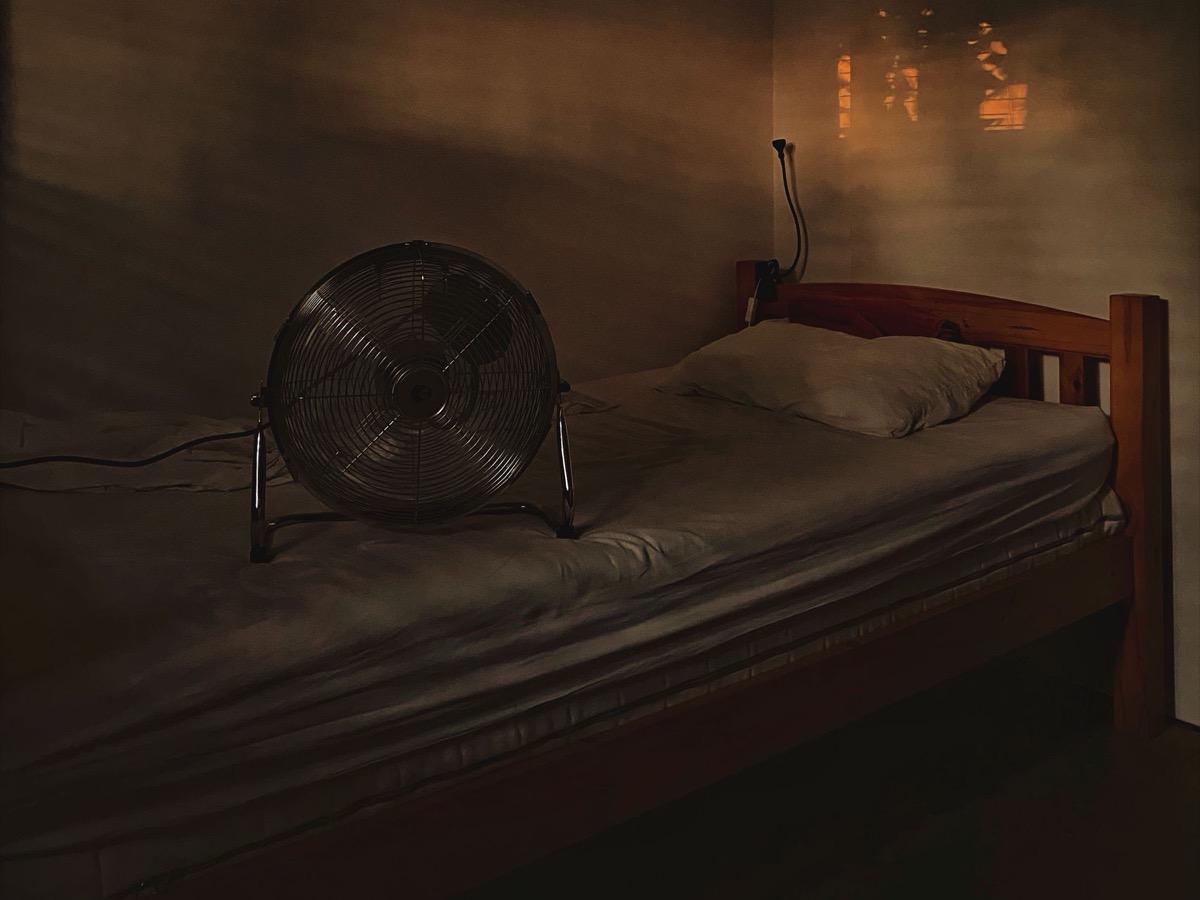
Everyone knows a hot night is a bad night. What was missing until recently was the size of the loss, measured in people's own beds.
Now there is a number, from 47,628 adults wearing sleep trackers across 68 countries. It is smaller than the misery suggests and larger than it looks, because it lands on the same people every summer.
The numbers
14 minutes on a very hot night. In the 2022 One Earth study of 7.4 million nights, sleep on nights with a minimum temperature above 30°C (86°F) was an estimated 14.08 minutes shorter than on the best nights in the data.
Three and a half percentage points more short nights. In the same study, nights above 25°C (77°F) raised the chance of sleeping under seven hours by 3.5 points compared with nights of 5 to 10°C (41 to 50°F).
Twice the effect after 65. Per degree of warming, adults over 65 lost sleep at more than double the rate of middle-aged adults.
An hour less, from 72°F to 86°F. A 2023 Boston study of 50 adults aged 65 and over, 10,903 nights, predicted total sleep time falling by 60 minutes as bedroom temperature rose from 22°C to 30°C.
Six heat waves a year, up from two. Across 50 large US cities, the EPA's climate indicator counts an average of six heat waves a year in the 2010s and 2020s, against two in the 1960s, with the heat wave season 46 days longer. The indicator is defined by nighttime lows, adjusted for humidity, not daytime highs.
88% of US households use air conditioning. That was the 2020 figure from the Energy Information Administration's residential survey. In the West it was 73%, and in the marine climate zone along the Pacific coast 49%.
Why heat keeps you awake
Falling asleep and cooling down are the same event. A 2019 review in Frontiers in Neuroscience puts it plainly: in mammals, sleep onset and a drop in core temperature happen together, and the heat leaves through the skin of the hands and feet. The extent of that vasodilation, the review notes, citing earlier work, is a good predictor of sleep onset.
A hot room blocks the exit. Japanese laboratory work summarized in a 2012 review found that heat suppresses the normal overnight drop in core temperature, increases wakefulness and cuts both deep sleep and REM. Humidity makes it worse: sweat that cannot evaporate does not cool you, and humid heat "further increases wakefulness, decreases REM and SWS, and excessively suppresses the decrease in Tcore." The damage is front-loaded. Humid heat in the first part of the night reduced deep sleep then and raised wakefulness all night; humid heat only in the second half disturbed only the second half.
The same review notes that older adults are more sensitive. In the elderly, it reports, "even mild heat exposure increases wakefulness and decreases REM."
Heat can also come from inside the body. Our piece on menopause night sweats covers the hot flashes that wake many women in midlife, and what helped their sleep most in trials.
Seven million nights
The One Earth study is the largest study of this using measured rather than self-reported sleep. The researchers took 7.41 million nightly sleep records from accelerometer wristbands worn by 47,628 adults in 68 countries between 2015 and 2017, and matched each night to the local minimum temperature. Each person is compared with themselves across nights, so differences between people drop out.
Three results stand out. Hotter nights meant less sleep across almost the whole range of temperatures, and the loss accelerated as nights got hotter: an estimated 14 minutes on nights above 86°F, with the probability of a short night rising faster once the minimum passed 10°C (50°F). The loss came from the front end: people fell asleep later on hot nights and woke a little earlier; the delay in falling asleep did most of the damage. And there was no sign of getting used to it. The effect was as large at the end of summer as at the start, and people living in warmer places lost more sleep per degree, not less.
Older adults, women and residents of the poorer countries in the sample lost the most. The per-degree effect for people over 65 was more than twice that of middle-aged adults; the authors say the sensitivity "may emerge rapidly after age 60." For women it was slightly larger than for men.
The authors list their limits. The sample was about 69% male, mostly middle-aged, and entirely from high- and middle-income countries, so the real global effect is probably larger. The wristbands measure sleep by movement, not brain activity. And outdoor station temperatures are not bedroom temperatures, which likely blurs the effect toward zero.
The US picture
An earlier study by one of the same authors, published in Science Advances in 2017, used 765,000 answers from the CDC's Behavioral Risk Factor Surveillance System between 2002 and 2011. Each person had been asked on how many of the past 30 days they had not gotten enough rest or sleep. A month whose nights ran 1°C warmer than normal added about three nights of insufficient sleep per 100 people. In summer the effect was nearly three times that of any other season. Among respondents earning under $50,000 it was over three times that of higher earners, and among lower-income older adults in summer it was roughly ten times the rest of the sample.
Those are self-reports, recalled over a month. But the pattern matches the wristband data: summer, age and money.
Inside the bedroom
The wristband and survey studies used outdoor temperatures. One 2023 study from the Marcus Institute for Aging Research in Boston, affiliated with Harvard Medical School, put a thermometer in the bedroom instead.
Fifty adults aged 65 and over in the Boston area wore a sleep-tracking ring for an average of 212 nights each while a sensor logged bedroom temperature and humidity. Sleep was most efficient and least restless between 20 and 25°C, which is 68 to 77°F. Above that it deteriorated: the model predicted an hour less total sleep and a 10% drop in sleep efficiency between 22°C and 30°C. Humidity mattered less, with 50% the best point.
Two caveats from the authors. The participants had a relatively high standard of living, so the effect in poorer households may be larger. And individuals varied: among the people whose own sleep efficiency tracked temperature significantly, 14 slept worse as it warmed and 8 slept better (the paper gives the total as 21). The 68 to 77°F range is a population answer, and it sits warmer than the 65 to 68°F often quoted for younger adults.
What can help: air conditioning and a fan do the heavy lifting; nothing in our range replaces them. What bedding can do is stop trapping the heat your body is trying to shed.
- The closest thing to a test is a cooling mattress, which we do not sell. In a small 2018 lab trial, 15 healthy young men slept on a mattress designed to draw heat away; against a conventional mattress, their core temperature fell further, by up to 0.28°C, and they got 16% more deep sleep. That was a mattress, in a temperature-controlled lab, and it measured deep sleep rather than hot-night sleep loss, so read it as a pointer.
- A cooling pillowcase or a cooling duvet cover. Neither has been tested in a sleep study. They fit the mechanism, which is all that can be said for them.
What to do on a hot night
- Cool the room before bed, not after. The lab evidence says humid heat in the first part of the night does the most harm. Run the air conditioning or fan in the hour before you lie down.
- Aim for the low 70s or below. The older-adult study found sleep best between 68 and 77°F; the usual advice for younger adults is cooler.
- Dry the air if you can. Humid heat disturbed sleep more than dry heat in the Japanese experiments, and 50% humidity was the best point in the Boston homes.
- Expect to fall asleep later, and plan for it. That was the main way heat cost sleep in the wristband data.
- If you are over 65, or caring for someone who is, take it seriously. The effect roughly doubles after 65, and the US survey data put lower-income older adults at the sharpest end.
This article is general information, not medical advice. Heat is also a direct health risk, especially for older adults and anyone with heart or breathing problems; a bedroom that will not cool below the high 80s at night is a reason to find somewhere cooler to sleep, not just to lose sleep over.
Products mentioned
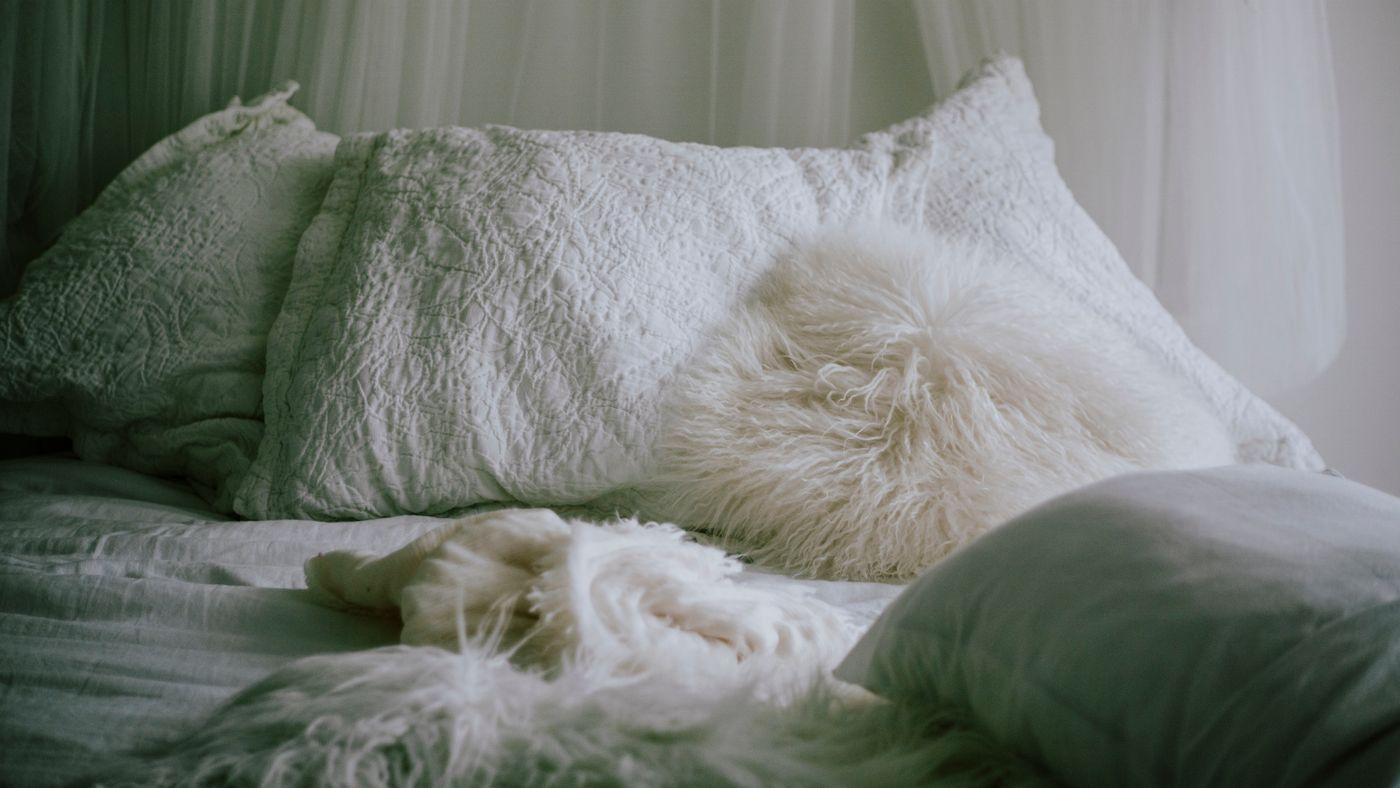
A pair of cool-to-the-touch cases that pull heat away from your face.
Tencel lyocell and cotton cover for hot sleepers. Queen, with two shams.
Keep reading
- Evening Workouts Don't Ruin Your Sleep. Long, Hard Ones That End Late CanLab trials find working out at night doesn't harm sleep. In 4 million nights of wearable data, long hard sessions ending late went with later, shorter sleep.7 min read
- A Warm Bath an Hour or Two Before Bed Can Help You Fall Asleep FasterTen minutes in warm water one to three hours before bed is linked to falling asleep several minutes sooner. The evidence is modest. How to try it safely.6 min read
- Menopause Night Sweats: The Sleep Fix That Did Best in TrialsNight sweats after menopause can last for years. What treats them, what helped sleep most in trials, and what cool bedding can and can't do.8 min read
Sources
- Minor K, Bjerre-Nielsen A, Jonasdottir SS, Lehmann S, Obradovich N (2022). Rising temperatures erode human sleep globally. One Earth, 5(5):534-549 — https://doi.org/10.1016/j.oneear.2022.04.008
- Obradovich N, Migliorini R, Mednick SC, Fowler JH (2017). Nighttime temperature and human sleep loss in a changing climate. Science Advances, 3(5):e1601555 — https://pubmed.ncbi.nlm.nih.gov/28560320/
- Baniassadi A, Manor B, Yu W, Travison T, Lipsitz L (2023). Nighttime ambient temperature and sleep in community-dwelling older adults. Science of The Total Environment, 899:165623 — https://pubmed.ncbi.nlm.nih.gov/37474050/
- Okamoto-Mizuno K, Mizuno K (2012). Effects of thermal environment on sleep and circadian rhythm. Journal of Physiological Anthropology, 31(1):14 — https://pubmed.ncbi.nlm.nih.gov/22738673/
- Harding EC, Franks NP, Wisden W (2019). The temperature dependence of sleep. Frontiers in Neuroscience, 13:336 — https://pubmed.ncbi.nlm.nih.gov/31105512/
- Kräuchi K, Fattori E, Giordano A, et al. (2018). Sleep on a high heat capacity mattress increases conductive body heat loss and slow wave sleep. Physiology & Behavior, 185:23-30 — https://pubmed.ncbi.nlm.nih.gov/29247670/
- US Environmental Protection Agency. Climate Change Indicators: Heat Waves (data through 2023; January 2025 snapshot of epa.gov) — https://19january2025snapshot.epa.gov/climate-indicators/climate-change-indicators-heat-waves
- US Energy Information Administration (31 May 2022). Nearly 90% of U.S. households used air conditioning in 2020 — https://www.eia.gov/todayinenergy/detail.php?id=52558