The Nightcap Problem: Two or Three Drinks Are Enough to Cut Into Your REM Sleep
Nearly one in five US adults uses alcohol to sleep. A 2025 meta-analysis of 27 studies found REM sleep delayed and cut from about two to three drinks.
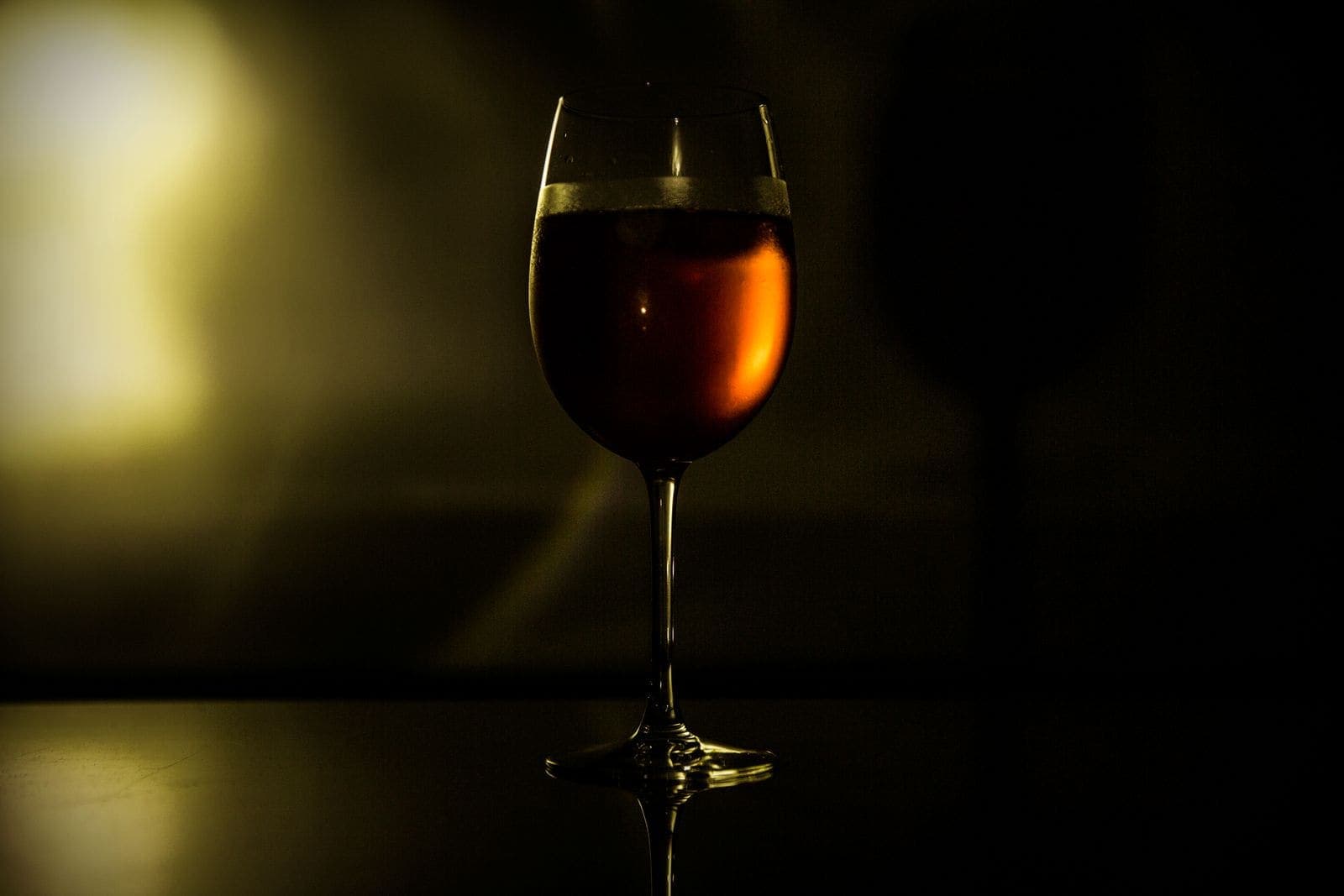
A drink or two in the evening, a sense of dropping off easily, then awake at 3:40 with a dry mouth and a busy head. It's easy to blame stress for that.
A lot of people are running this experiment. In a 2023 survey, nearly one American adult in five said they use alcohol to help them sleep.
The numbers
Nearly one in five adults drinks to sleep. In March 2023 the American Academy of Sleep Medicine asked 2,005 US adults what they use, now and then or regularly, to fall asleep or stay asleep. Nineteen percent said alcohol: 26% of men and 12% of women.
A US standard drink holds 14 grams of alcohol. That is NIAAA's definition (page updated December 2025): 12 ounces of 5% beer, 5 ounces of 12% wine or a 1.5-ounce shot of 40% spirits.
Moderate drinking is two a day at most for men, one for women. That is the CDC's definition (January 2025), and it adds that even this may carry health risks.
After alcohol, REM sleep starts 18 minutes later. That is the pooled figure from the 14 studies that measured it, in a 2025 meta-analysis of 27 studies in healthy adults, published in Sleep Medicine Reviews.
Why the nightcap feels like it works
Because for the first few hours, it does something. A 2013 review in Alcoholism: Clinical and Experimental Research went through the studies of alcohol and sleep in healthy volunteers and found a consistent shape to the night. People fell asleep faster. The first half of the night was more consolidated, with more slow-wave (deep) sleep than usual in most studies. Then the second half came apart, with more disruption at every dose the reviewers looked at.
You remember the first half. That's the trouble. Falling asleep is the only part of the night you're awake to witness, so it gets the credit.
The second half is where most of your REM sleep lives. According to the NHLBI, you usually get more REM later in the night, and it's the stage when dreaming usually happens. Alcohol pushes the first REM period back and then disturbs the stretch of night that holds most of the rest.
What the newest numbers say
The 2025 meta-analysis is the best current evidence.
First, REM. Besides starting later, REM sleep was shorter after alcohol. Both effects grew with the dose, and both were present at what the authors call a low dose: REM onset was already delayed from about 0.35 grams of alcohol per kilogram of body weight, and REM duration was reduced from 0.50 g/kg.
Second, the famous benefit turned out to be narrower than its reputation. Falling asleep faster showed up only at a high dose, 0.85 g/kg or more. And the authors add that getting to sleep that way probably makes the later REM disruption worse.
What that is in actual drinks
The paper's "standard drink" isn't the American one. The authors, who are based in Australia, count a drink as 10 grams of alcohol and do their sums for a 62 kg adult. On that basis their abstract calls 0.50 g/kg approximately two standard drinks, though their own results section puts it nearer three, and 0.85 g/kg about five.
At the US standard of 14 grams a drink, for a 154-pound (70 kg) person:
- REM starts later from about 0.35 g/kg, which is 24.5 grams, or one and three-quarter US drinks.
- REM is shortened from 0.50 g/kg, which is 35 grams, or two and a half.
- Falling asleep faster needs 0.85 g/kg, about 60 grams, or a little over four.
That's my arithmetic, not the paper's, and it scales with body weight.
The cost arrives at about two drinks. The supposed benefit arrives at four-plus.
Where the evidence is thin
The two reviews don't fully agree. The 2013 one found faster sleep onset at all doses and no clear trend in total REM at low doses. The 2025 analysis found faster sleep onset only at high doses, and less REM even at low ones. The newer paper deserves more weight, since it pools the numbers. But the disagreement tells you low-dose effects are small enough to be hard to pin down.
The meta-analysis also couldn't say what alcohol does to total sleep time, sleep efficiency or minutes awake in the night. The uncertainty was too large. So "alcohol makes you sleep less" goes further than the pooled data do. "Alcohol changes what kind of sleep you get" is the claim that holds.
And timing has barely been tested. In the pooled trials the alcohol was mostly given within three hours of bedtime, so they can't say much about drinking earlier. The one study worth knowing gave ten healthy men, average age 61.6, a moderate dose six hours before bedtime. By lights-out their breath alcohol read zero. Their sleep was still worse than on a mineral-water night: less total sleep, less REM, and twice as much wakefulness in the second half. Ten middle-aged men is a small base to build a rule on.
What to do on a night you're drinking
Start by retiring alcohol as a sleep aid. If the reason for the glass is sleep, the evidence says it's working against the thing you poured it for.
For ordinary social drinking, the lever with real support behind it is the dose. Every drink you skip matters, because the REM effect is graded and starts low. One is better than two. Two is a lot better than four.
Measure honestly. A generous pour of wine, or a beer stronger than 5%, is more than one standard drink. NIAAA makes the same point: the size of the glass doesn't tell you how much alcohol is in it.
Earlier is sensible, but don't lean on it. The ten-man study suggests a six-hour gap doesn't fully protect you, and the research above doesn't test a three- or four-hour gap well enough to give you a number.
What can help: if the drink was how you switched off, the job is to replace the ritual. Neither of these is a sleeping pill, which is the point.
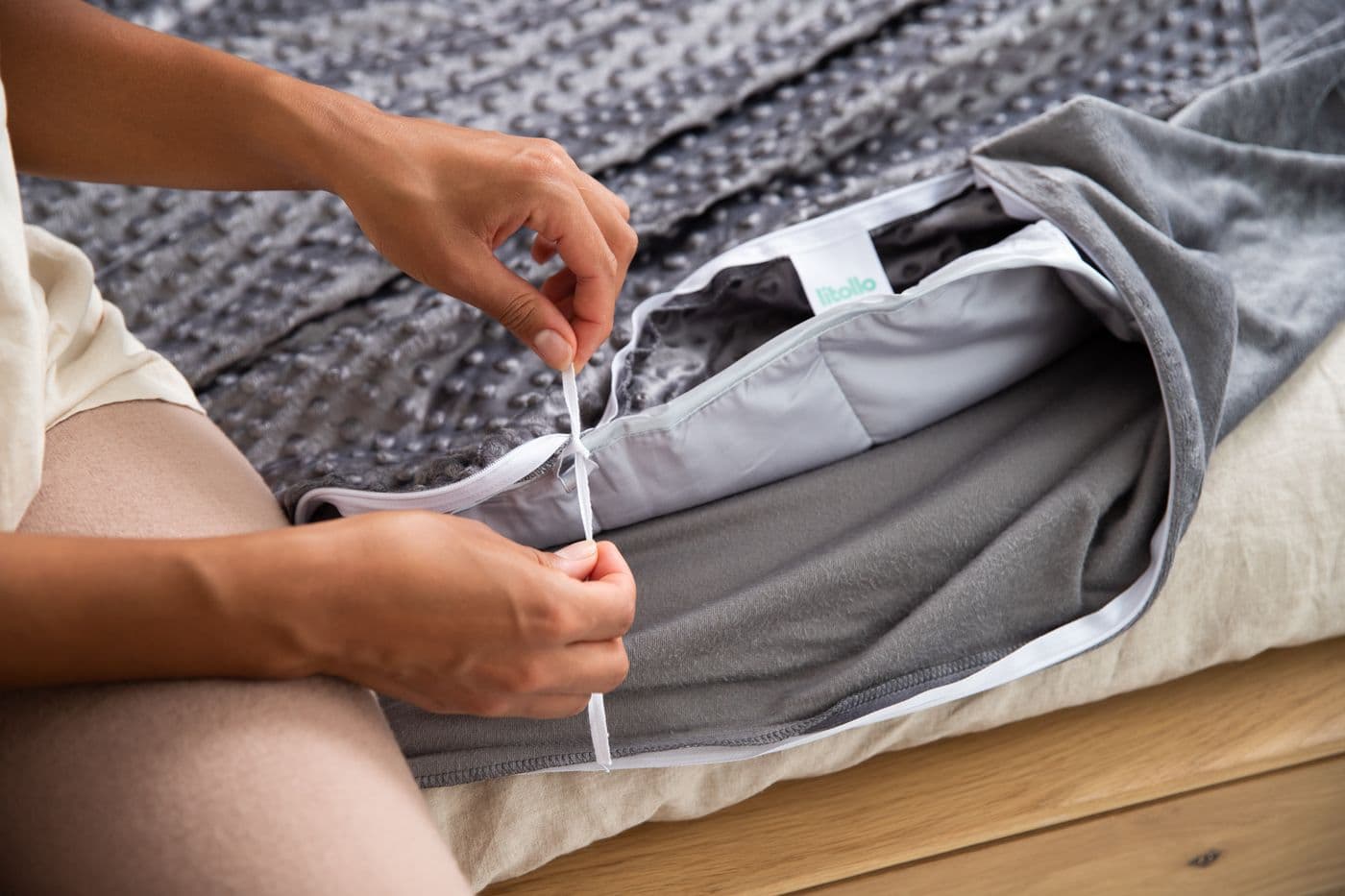
- A weighted blanket. In a 2020 randomized trial, 120 patients with depression, bipolar disorder, anxiety or ADHD slept under either a weighted blanket or a light one for four weeks, and insomnia scores improved far more with the weighted one. That is one trial in a specific group of patients. Choose about 10% of your body weight. Not for children under 3, or for anyone who can't remove the blanket on their own.
- Magnesium in the evening, which is often said to help sleep. The evidence is weak: a 2021 meta-analysis found three trials in 151 older adults. In the two that timed it (55 people), they fell asleep about 17 minutes sooner on magnesium than on placebo, and the authors rated the evidence low to very low quality.
If you snore, this applies double
Alcohol is a muscle relaxant, and on breathing the pooled trial data point one way. A meta-analysis of 14 trials covering 422 people found that the apnea-hypopnea index, an objective measure of disturbed breathing during sleep, rose by 2.33 events per hour after alcohol. The rise was concentrated in people who already had a problem: 4.20 in snorers and 7.10 in people with diagnosed obstructive sleep apnea. In non-snorers, alcohol did not significantly worsen the index. Blood oxygen dipped slightly, in snorers and non-snorers alike.
Separately, a pooled analysis of 21 observational studies linked higher alcohol consumption to a 25% higher risk of sleep apnea. That one comes with caveats: it shows association rather than cause, the authors found signs of publication bias, and the link was stronger in low- and middle-income countries than in high-income ones.
If your partner says you stop breathing at night, or you wake up gasping, evening alcohol is the first thing to drop and a doctor is the next call.
One line to keep
The nightcap promises a quicker start and charges you for it in the second half of the night. On the newest numbers the quicker start only shows up at four-plus drinks, while the REM cost starts at about two.
This article is general information, not medical advice. If you rely on alcohol to get to sleep, have trouble sleeping most nights, or think you may have sleep apnea, talk to a doctor. Statements about dietary supplements have not been evaluated by the Food and Drug Administration, and supplements are not intended to diagnose, treat, cure or prevent any disease.
Products mentioned
 Save $20
60×80 in, glass-bead fill, removable washable cover.
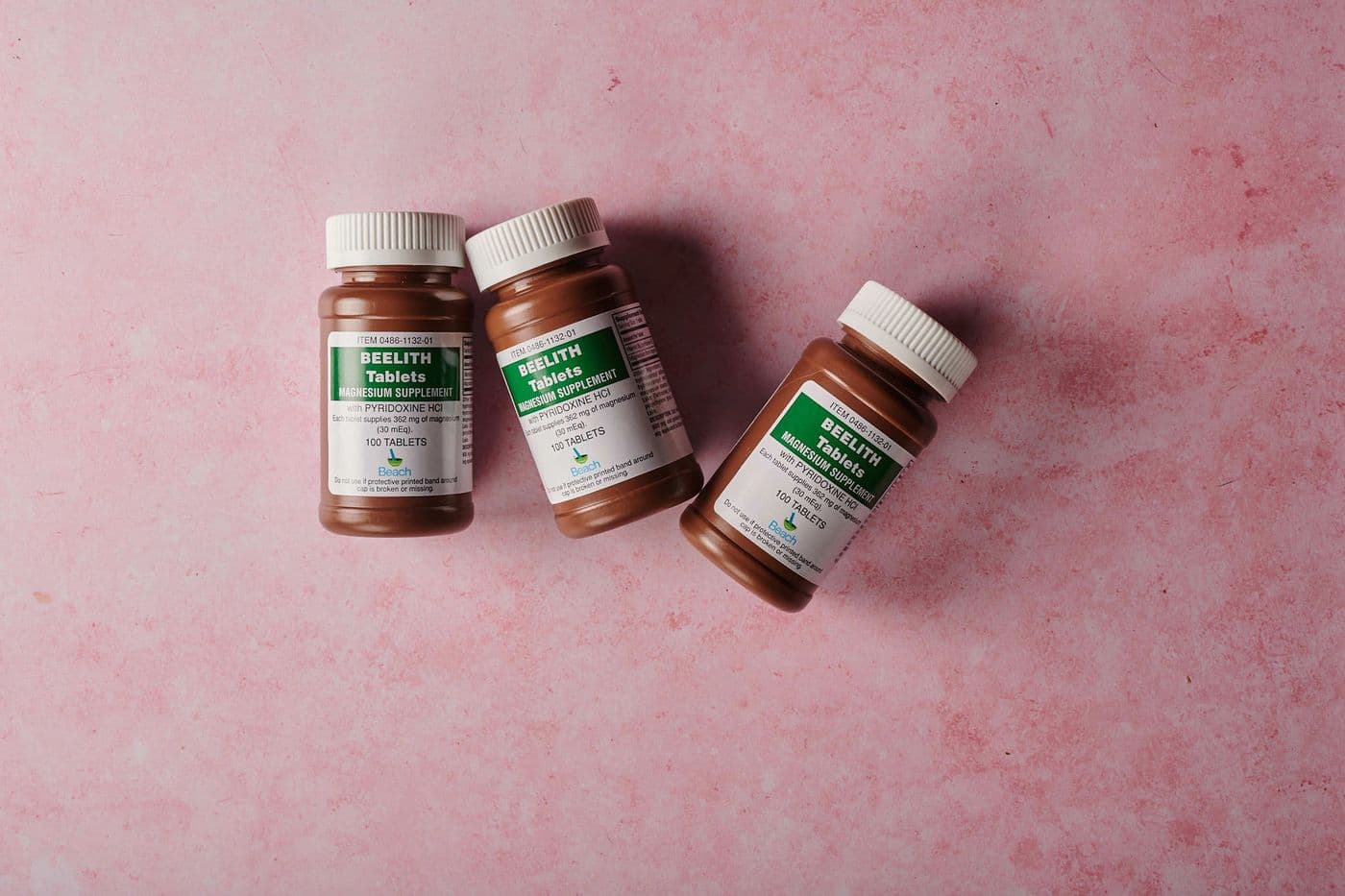
60 capsules. The gentle form of magnesium, made in the USA.
Sources
- Gardiner C, Weakley J, Burke LM, et al. (2025). The effect of alcohol on subsequent sleep in healthy adults: a systematic review and meta-analysis. Sleep Medicine Reviews, 80:102030 — https://pubmed.ncbi.nlm.nih.gov/39631226/
- Ebrahim IO, Shapiro CM, Williams AJ, Fenwick PB (2013). Alcohol and sleep I: effects on normal sleep. Alcoholism: Clinical and Experimental Research, 37(4):539-549 — https://pubmed.ncbi.nlm.nih.gov/23347102/
- Landolt HP, Roth C, Dijk DJ, Borbely AA (1996). Late-afternoon ethanol intake affects nocturnal sleep and the sleep EEG in middle-aged men. Journal of Clinical Psychopharmacology, 16(6):428-436 — https://pubmed.ncbi.nlm.nih.gov/8959467/
- Kolla BP, Foroughi M, Saeidifard F, et al. (2018). The impact of alcohol on breathing parameters during sleep: a systematic review and meta-analysis. Sleep Medicine Reviews, 42:59-67 — https://pubmed.ncbi.nlm.nih.gov/30017492/
- Simou E, Britton J, Leonardi-Bee J (2018). Alcohol and the risk of sleep apnoea: a systematic review and meta-analysis. Sleep Medicine, 42:38-46 — https://pubmed.ncbi.nlm.nih.gov/29458744/
- American Academy of Sleep Medicine (2023). Sleep Prioritization Survey: Sleep Aid Use, 2,005 US adults, fieldwork 24-29 March 2023 — https://aasm.org/wp-content/uploads/2023/06/sleep-prioritization-survey-2023-sleep-aids.pdf
- National Institute on Alcohol Abuse and Alcoholism (updated Dec 2025). What Is A Standard Drink? — https://www.niaaa.nih.gov/alcohols-effects-health/what-standard-drink
- CDC (14 Jan 2025). About Moderate Alcohol Use — https://www.cdc.gov/alcohol/about-alcohol-use/moderate-alcohol-use.html
- NHLBI, National Institutes of Health (updated 24 Mar 2022). Sleep Phases and Stages — https://www.nhlbi.nih.gov/health/sleep/stages-of-sleep
- Ekholm B, Spulber S, Adler M (2020). A randomized controlled study of weighted chain blankets for insomnia in psychiatric disorders. Journal of Clinical Sleep Medicine, 16(9):1567-1577 — https://pubmed.ncbi.nlm.nih.gov/32536366/
- Mah J, Pitre T (2021). Oral magnesium supplementation for insomnia in older adults: a systematic review and meta-analysis. BMC Complementary Medicine and Therapies, 21(1):125 — https://pubmed.ncbi.nlm.nih.gov/33865376/